Key takeaways
- Fit and posture: Measure the full installation area, not just the cabin footprint. You need clearance for the door, ventilation, entry, and comfortable sitting without your knees pressing against the opposite wall.
- Construction: Hemlock wood is common because it is relatively light and stable, but inspect panel thickness, joinery, door hardware, bench support, and finish quality. These details matter more than decorative lighting.
- Heat and controls: Look for evenly distributed heaters, accessible controls, a useful timer, and a temperature range that suits your routine. Faster heating is convenient, but uniform warmth and simple operation are more valuable over time.
- Electrical planning: Confirm voltage, wattage, plug location, and circuit requirements before assembly. Avoid relying on an extension cord unless the manufacturer specifically permits it and an electrician confirms the setup is appropriate.
- Cleaning and longevity: A smooth, wipeable interior, removable floor protection, sturdy seating, and a reliable door seal make frequent use easier. Keep any sauna dry between sessions and follow the care instructions for wood and electronics.
What's inside
Choosing an infrared sauna for home use is less straightforward than the marketing suggests. Room dimensions, seat comfort, heater placement, electrical demand, ventilation, assembly quality, and long-term wood stability all affect whether a sauna feels like a durable wellness fixture or an awkward appliance that rarely gets used. A compact cabin may fit beautifully yet feel cramped, while a fabric tent saves space but offers a very different experience.
This guide evaluates the leading options from an ergonomics-and-durability perspective. The focus is practical: usable interior space, materials, access, heat delivery, maintenance, portability, and the details most likely to influence comfort after months of regular use. As with any sauna, verify the manufacturer’s specifications, electrical requirements, warranty, and safe operating guidance before purchase.
As an Amazon Associate we earn from qualifying purchases.


🛒 Best Price Today on Amazon
Prime members get fast, free shipping on everything above, plus member-only deals. New members get a 30-day free trial — cancel anytime.
How to Choose a/an At Home Infrared Sauna (2026)
- Fit and posture: Measure the full installation area, not just the cabin footprint. You need clearance for the door, ventilation, entry, and comfortable sitting without your knees pressing against the opposite wall.
- Construction: Hemlock wood is common because it is relatively light and stable, but inspect panel thickness, joinery, door hardware, bench support, and finish quality. These details matter more than decorative lighting.
- Heat and controls: Look for evenly distributed heaters, accessible controls, a useful timer, and a temperature range that suits your routine. Faster heating is convenient, but uniform warmth and simple operation are more valuable over time.
- Electrical planning: Confirm voltage, wattage, plug location, and circuit requirements before assembly. Avoid relying on an extension cord unless the manufacturer specifically permits it and an electrician confirms the setup is appropriate.
- Cleaning and longevity: A smooth, wipeable interior, removable floor protection, sturdy seating, and a reliable door seal make frequent use easier. Keep any sauna dry between sessions and follow the care instructions for wood and electronics.
The Best At Home Infrared Sauna (2026)s Reviewed
Best Overall: 1-2 Person Infrared Sauna with Red Light Therapy
This 1-2 Person Infrared Sauna combines a relatively generous 40-by-36-inch footprint with features such as Bluetooth audio, red light therapy, and seven-color lighting. Its wider format should feel less restrictive than a narrow one-person cabin, although buyers should confirm the usable bench depth and the doorway clearance before committing. It is a strong choice for couples who value a more furniture-like enclosure and a richer feature set.
Best Premium Cabin: Ceramic Infrared Sauna for Two
The Ceramic Infrared Sauna 2 Person model stands out for its combination of far- and near-infrared heating, low-EMF positioning, red light therapy, and a glass-and-granite visual finish. The solid-looking backdrop may suit a dedicated wellness room, but heavier materials can complicate delivery and assembly. Choose it when a stable, permanent installation and a more substantial interior matter more than easy relocation.
Best Compact Wood Sauna: OUTEXER Far Infrared Sauna
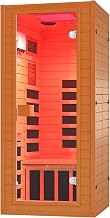
The OUTEXER Far Infrared Sauna uses Canadian hemlock, a tempered-glass door, 1,200 watts of power, and a seven-color light system in a compact cabin measuring approximately 35.2 by 27.6 by 61.6 inches. Its shallow depth is helpful in smaller rooms, though taller users should pay close attention to the 61.6-inch height and seated posture. The glass door also makes entry feel less enclosed while allowing a quick visual check from outside.
Best One-Person Cabin: 1050W Canadian Hemlock Infrared Sauna
This Far Infrared Sauna for 1 Person is designed around a straightforward individual setup, with 1,050-watt heating, Canadian hemlock construction, Bluetooth audio, chromotherapy, and an oxygen ionizer. A one-person bench can encourage efficient heating and a smaller footprint, but it leaves little room to shift position. It is best for users who prioritize a dedicated daily routine over shared use or stretching space.
Best Portable Option: Infrared Sauna Tent with 3L Steamer
The Infrared Sauna Tent offers nine heat levels, a 99-minute timer, remote control, five-layer waterproof insulated fabric, and a folding chair. Its main ergonomic advantage is flexibility: it can be stored between sessions and does not require a permanent wooden enclosure. However, the chair, zipper access, fabric drying time, and steamer maintenance deserve careful attention; it is a practical personal heat station, not a substitute for the solid feel of a cabin sauna.
Frequently Asked Questions
How much space does an indoor infrared sauna need?
Start with the assembled dimensions, then add room to open the door, enter safely, clean around the unit, and route the power cord without strain. A tight fit can make routine use inconvenient and may interfere with ventilation.
Is a one-person infrared sauna comfortable?
It can be, provided the bench length, depth, and internal height suit your body. One-person cabins heat efficiently and occupy less space, but they offer limited ability to change posture or share the session.
Do infrared saunas require special electrical work?
Requirements vary by wattage and manufacturer. Check whether the unit uses a standard household outlet and whether the circuit can safely handle the load. For uncertain installations, consult a qualified electrician rather than improvising with adapters or extension cords.
How should a home infrared sauna be maintained?
Wipe the bench and interior after use with a manufacturer-approved cleaner, allow moisture to evaporate, and keep the surrounding floor dry. Inspect the door seal, hinges, heater covers, and power cord periodically, and never operate the unit if electronic components show damage.
Final Thoughts
The 1-2 Person Infrared Sauna with Red Light Therapy is the most versatile pick for buyers wanting roomier seating and integrated features, while the Ceramic Infrared Sauna for Two is better suited to a substantial, permanent wellness space. For compact individual use, the OUTEXER model or the 1050W Canadian Hemlock Sauna offers a more conventional cabin experience; choose the Infrared Sauna Tent when storage and portability are the deciding factors.