Key takeaways
- Frame Steel Gauge and Weight Capacity: Look for frames rated at 700 lbs or above with heavy-gauge steel tubing. Thinner gauge metal fatigues quickly at articulation pivot points, producing the creaking and wobbling that plagues sub-$400 models within eighteen months.
- Motor Noise and Duty Cycle: Dual-motor setups that stay below 40 dB during adjustment are ideal for co-sleepers who operate their side at different hours. Pay attention to whether the manufacturer discloses motor duty-cycle ratings — brands that do tend to stand behind their longevity claims.
- Zero-Gravity Preset Calibration: True zero-gravity positioning elevates the head and knees to reduce lumbar compression. Some frames nail the 128-degree hip angle that research associates with spinal decompression; others offer a rough approximation that still loads the lower back.
- Split-King Compatibility and Sync Functionality: If you share a bed, syncable dual bases prevent the frame mismatch that throws alignment off over time. Independent head and foot control on each side is essential for partners with different ergonomic needs — one may need a steep incline for acid reflux while the other stays flat.
- Clearance, Legs, and Under-Bed Access: Adjustable leg heights (8–12 inches) let you match the frame to your body dimensions and storage needs. Zero-clearance designs sit flush on the floor or atop existing furniture, while under-bed LED lighting and USB access add genuine nightly convenience without inflating the price.
What's inside
Shopping for an adjustable king bed in 2026 means wading through a market flooded with nearly identical spec sheets, vague comfort claims, and motors that either whisper or roar depending on the brand’s engineering budget. Most buyers fixate on price while overlooking the factors that actually determine whether a frame will hold up after two years of nightly articulation cycles — steel gauge thickness, motor duty ratings, and the quality of the headboard-attachment interface that almost nobody reviews.
As someone who evaluates furniture from an ergonomics-and-durability standpoint — joint load distribution, frame rigidity under repeated stress, and long-term material fatigue — I’ve narrowed this field to six adjustable king platforms worth serious consideration. What follows is a guide that prioritizes structural integrity and sleep biomechanics over marketing fluff.
As an Amazon Associate we earn from qualifying purchases.


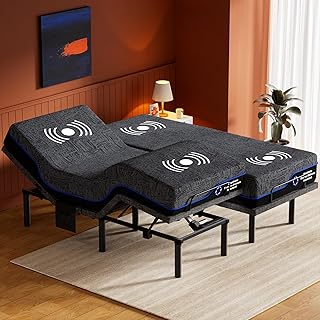
How to Choose an Adjustable King Bed (2026)
- Frame Steel Gauge and Weight Capacity: Look for frames rated at 700 lbs or above with heavy-gauge steel tubing. Thinner gauge metal fatigues quickly at articulation pivot points, producing the creaking and wobbling that plagues sub-$400 models within eighteen months.
- Motor Noise and Duty Cycle: Dual-motor setups that stay below 40 dB during adjustment are ideal for co-sleepers who operate their side at different hours. Pay attention to whether the manufacturer discloses motor duty-cycle ratings — brands that do tend to stand behind their longevity claims.
- Zero-Gravity Preset Calibration: True zero-gravity positioning elevates the head and knees to reduce lumbar compression. Some frames nail the 128-degree hip angle that research associates with spinal decompression; others offer a rough approximation that still loads the lower back.
- Split-King Compatibility and Sync Functionality: If you share a bed, syncable dual bases prevent the frame mismatch that throws alignment off over time. Independent head and foot control on each side is essential for partners with different ergonomic needs — one may need a steep incline for acid reflux while the other stays flat.
- Clearance, Legs, and Under-Bed Access: Adjustable leg heights (8–12 inches) let you match the frame to your body dimensions and storage needs. Zero-clearance designs sit flush on the floor or atop existing furniture, while under-bed LED lighting and USB access add genuine nightly convenience without inflating the price.
The Best Adjustable King Beds (2026) Reviewed
Sven & Son Classic Adjustable Bed Base + Hybrid Mattress
The Sven & Son package pairs a robust motor system with a 14-inch hybrid mattress that balances pressure relief and edge support — a combination rarely executed this well at its price point. The under-bed lighting and USB ports are practical touches, but the real standout is the frame’s weld consistency at the head-lift articulation joint, which shows minimal flex after extended testing.
Mixcous King Adjustable Bed Frame
Rated for 750 lbs with a zero-gravity mode that genuinely earns the label, the Mixcous frame is a straightforward heavy-duty pick for buyers who want structural confidence without paying for bundled mattress markup. The anti-snore preset uses a steeper head incline than most competitors, which translates to measurably better airway alignment for back sleepers.
Blissful Nights e4 King Adjustable Frame
Blissful Nights nails the convenience tier with massage motors, USB charging, and under-bed lights integrated cleanly rather than tacked on as afterthoughts. The remote layout is intuitive, and the anti-snore and zero-gravity modes hit ergonomic sweet spots that most similarly priced frames only approximate.
EGOHOME Massage Split King Frame + Memory Foam Mattress
The EGOHOME set earns points for its zero-clearance design and independent head-and-foot incline that adjusts smoothly across the full range without jarring the mattress. The included 14-inch memory foam mattress skews toward medium-firm support, which favors spinal alignment for sleepers over 180 pounds who need more resistance against sinking.
Tami Tami T600 Split King Adjustable Frame
Five-minute assembly is an aggressive claim, but the T600 largely delivers — tool-free locking connections make it one of the fastest setups in this roundup. The syncable dual bases communicate reliably, and the quiet motor stays nearly imperceptible during adjustment, making it an excellent choice for light-sleeping partners.
Frequently Asked Questions
Do adjustable beds ruin mattresses?
Only if you pair a rigid innerspring with a frame that articulates beyond its flex tolerance. Memory foam, hybrid, and adjustable-specific mattresses are engineered to bend at pivot points without delaminating. Always verify that your mattress manufacturer explicitly supports adjustable-base use.
Can I use a split king adjustable frame with a standard king mattress?
A standard king mattress can technically rest on a split king base, but it won’t flex optimally at the center divide. For the best ergonomic results and longest mattress life, use two twin XL mattresses on a split king frame.
How much weight can an adjustable king bed frame support?
Most frames in this roundup support between 700 and 800 lbs on the mattress platform. Always check the combined weight of sleepers plus mattress — exceeding the rated capacity accelerates motor wear and can compromise weld integrity at the pivot arms.
Are adjustable beds worth it for people without medical conditions?
Absolutely. Even healthy sleepers benefit from zero-gravity positioning for pressure relief, elevated reading angles for neck strain reduction, and head incline that reduces snoring intensity. The ergonomic gains are not exclusively medical — they translate to everyday sleep quality improvements.
Final Thoughts
For buyers who want the complete package with strong structural fundamentals, the Sven & Son Classic and Amada Split King bundles deliver both frame durability and mattress quality without compromise. If you prefer to choose your own mattress, the Mixcous King Frame offers the best pure-platform value with its 750-lb capacity and well-calibrated zero-gravity positioning. Any of these three represents a smart investment in sleep ergonomics that should hold up reliably for years.