Key takeaways
- Detail attachments that actually reach grout: A flat mop head glides over recessed joints. Look for a detachable handheld unit with a stiff nylon or brass detail brush and a concentrator nozzle, since narrow apertures raise velocity where you need it and let you work a joint line without flooding the surrounding tile.
- Weight placement, not just total weight: Two mops can both weigh six pounds and feel entirely different. Tanks mounted low and close to the foot reduce the lever arm your wrist fights on every pivot. High-mounted tanks and top-heavy handles cause forearm fatigue long before your arms give out.
- Swivel range and handle pivot: A joint that articulates in two axes lets you steer with the wrist rather than the shoulder. Test for a head that lies near-flat for under-toekick reach; anything that binds at extension forces you into a stooped posture.
- Boiler durability and descaling access: Hard water is what kills these machines. Prefer stainless or well-gasketed aluminum boilers, a visible fill line, and a manufacturer that publishes a descaling procedure. Replaceable pads, seals, and brush heads signal a design meant to be maintained rather than binned.
- Cord length and strain relief: Twenty feet or more keeps you off the outlet-hopping treadmill, and a molded strain relief at the housing prevents the internal conductor fatigue that ends most cheap steamers. Variable steam control matters too — full output on sealed grout is wasteful and stresses the pump.
What's inside
Grout is the part of a tile floor that keeps score. The glazed surface wipes clean and looks fine, but the porous joint sitting a millimeter or two below it collects soap film, foot traffic grit, and moisture, and no amount of mopping with a cotton head will lift it. That is why so many tile owners cycle through cleaners and end up on hands and knees with a brush anyway — the tool never delivered heat and mechanical agitation to the depth where the soil actually lives.
This guide looks at steam mops through a narrower lens than most: how they feel in the wrist and shoulder over a forty-minute session, and whether the boiler, seals, and cord survive a few hundred cycles of that work. Steam cleaning is repetitive by nature — you push, pivot, lean, and reheat — so handle geometry, weight distribution, and serviceability matter as much as raw steam output. Below are the models worth your money in 2026, plus the specifications that separate a five-year tool from a one-season purchase.
As an Amazon Associate we earn from qualifying purchases.


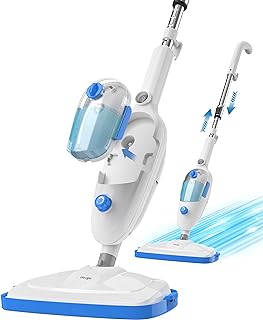


How to Choose a Steam Mop For Tile Floors And Grout (2026)
- Detail attachments that actually reach grout: A flat mop head glides over recessed joints. Look for a detachable handheld unit with a stiff nylon or brass detail brush and a concentrator nozzle, since narrow apertures raise velocity where you need it and let you work a joint line without flooding the surrounding tile.
- Weight placement, not just total weight: Two mops can both weigh six pounds and feel entirely different. Tanks mounted low and close to the foot reduce the lever arm your wrist fights on every pivot. High-mounted tanks and top-heavy handles cause forearm fatigue long before your arms give out.
- Swivel range and handle pivot: A joint that articulates in two axes lets you steer with the wrist rather than the shoulder. Test for a head that lies near-flat for under-toekick reach; anything that binds at extension forces you into a stooped posture.
- Boiler durability and descaling access: Hard water is what kills these machines. Prefer stainless or well-gasketed aluminum boilers, a visible fill line, and a manufacturer that publishes a descaling procedure. Replaceable pads, seals, and brush heads signal a design meant to be maintained rather than binned.
- Cord length and strain relief: Twenty feet or more keeps you off the outlet-hopping treadmill, and a molded strain relief at the housing prevents the internal conductor fatigue that ends most cheap steamers. Variable steam control matters too — full output on sealed grout is wasteful and stresses the pump.
The Best Steam Mops For Tile Floors And Grout (2026), Reviewed
BISSELL PowerFresh 1940A
The most refined ergonomics in this group: a genuinely low center of mass, a 12-inch path that reduces pass count, and a flip-down scrubber you deploy with your foot instead of bending. Variable steam and a proven boiler design make it the safest long-term bet for daily tile.
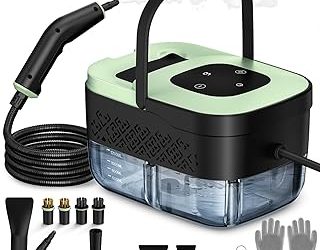
McCulloch MC1385 Canister Steam Cleaner
A canister layout moves all the weight to the floor, so your hands hold only a hose and wand — the least fatiguing option here for extended grout work. With 23 accessories and a serviceable tank, it is the tool for restoration-level joint cleaning rather than quick maintenance passes.
H2O X5 5-in-1 Steam Mop
The detachable handheld locks in confidently and the included grout and window attachments cover the awkward transitions around tubs and baseboards. Balance is upright and slightly handle-heavy, which suits shorter, more frequent sessions.
10-in-1 Multipurpose Handheld Steam Cleaner
Strong value in the convertible category, with 11 accessories that let one unit handle floors, shower grout, and upholstery. Build tolerances are unremarkable, so treat the seals gently and descale on schedule to get real longevity out of it.
10-in-1 Steam Mop with Adjustable Steam & Height
The adjustable handle height is the standout feature for taller users, who otherwise round their backs over most mops on the market. A 23-foot cord and 15-ounce tank give it enough range to finish a kitchen and bath without a refill.
Frequently Asked Questions
Will steam damage tile grout?
Sealed grout in good condition tolerates steam well. Cracked, crumbling, or unsealed grout can lose material under high-velocity steam, so repair and reseal first, then use a moderate setting.
How often should I descale?
Every 25 to 30 tanks on hard water, or roughly quarterly on softened water. Distilled water in the tank largely eliminates the problem and meaningfully extends boiler life.
Do I still need to pre-sweep?
Yes. Loose grit turns into abrasive slurry under the pad, dulling glaze and shortening pad life. A quick vacuum pass first is non-negotiable.
Handheld convertible or dedicated canister?
Convertibles suit routine upkeep across mixed flooring. Canisters win when grout is your primary target, because the hose-and-wand format spares your arms during long detail sessions.
Final Thoughts
For most tile homes, the BISSELL PowerFresh 1940A offers the best combination of low-fatigue handling and long-run reliability. If your grout needs genuine restoration rather than maintenance, the McCulloch MC1385 canister is the more capable and more comfortable tool, while the H2O X5 remains the sensible middle ground for anyone who wants one machine for floors, fixtures, and fabric.