Key takeaways
- Bucket handling over bucket size: A 0.8-gallon tank empties more often but weighs roughly seven pounds full, which most people can carry one-handed and level. Larger reservoirs cut trips but push past fifteen pounds — awkward on stairs and rough on wrists. Look for a recessed top handle plus a bottom grip so you can tip rather than lift-and-pour.
- Drainage you will actually commit to: Gravity hoses only work when the outlet sits above the drain. If your floor drain is level with the unit or upstairs, an internal pump is the difference between a set-and-forget appliance and a chore. Check that the port uses a standard garden-hose thread with a captive gasket, not a friction-fit nub.
- Caster and chassis quality: Small hard-plastic wheels bind on expansion joints and old basement slabs. Wider casters with some swivel travel, mounted to a reinforced base rather than the shell, keep the cabinet from flexing every time you reposition it.
- Filter access and coil protection: A washable filter that slides out from the side or front, with no fasteners, gets cleaned monthly. One hidden behind a rear panel gets ignored, and a starved coil is the fastest route to premature compressor wear. Inspect fin density and guard coverage while you are at it.
- Controls, memory, and auto-restart: Digital humidistats with a real percentage readout beat vague dial positions. Prioritize models that remember your setpoint after a power blip, include a defrost cycle for cool basements, and offer a child lock so the panel is not reprogrammed by a passing elbow.
What's inside
A 50-pint dehumidifier is the size most homeowners land on after their first damp season: big enough for a full basement or an open main floor, small enough to move between rooms without recruiting help. The trouble is that most buying advice stops at coverage area and Energy Star badges, which tells you almost nothing about the two things that actually decide whether the unit is still running in year five. Those are how the machine handles under load, and how it handles in your hands — every day you carry a sloshing bucket up a stair tread or crouch to snap a filter back into place.
This guide looks at the current 50-pint field from an ergonomics-and-durability standpoint. That means bucket geometry and grip placement, caster rollability on unfinished concrete, hose port thread quality, filter access without tools, compressor and coil construction, and how the control panel behaves when your hands are wet or the room is dim. Coverage claims still matter, but they are the entry fee, not the reason to buy.
As an Amazon Associate we earn from qualifying purchases.



How to Choose a 50 Pint Dehumidifier (2026)
- Bucket handling over bucket size: A 0.8-gallon tank empties more often but weighs roughly seven pounds full, which most people can carry one-handed and level. Larger reservoirs cut trips but push past fifteen pounds — awkward on stairs and rough on wrists. Look for a recessed top handle plus a bottom grip so you can tip rather than lift-and-pour.
- Drainage you will actually commit to: Gravity hoses only work when the outlet sits above the drain. If your floor drain is level with the unit or upstairs, an internal pump is the difference between a set-and-forget appliance and a chore. Check that the port uses a standard garden-hose thread with a captive gasket, not a friction-fit nub.
- Caster and chassis quality: Small hard-plastic wheels bind on expansion joints and old basement slabs. Wider casters with some swivel travel, mounted to a reinforced base rather than the shell, keep the cabinet from flexing every time you reposition it.
- Filter access and coil protection: A washable filter that slides out from the side or front, with no fasteners, gets cleaned monthly. One hidden behind a rear panel gets ignored, and a starved coil is the fastest route to premature compressor wear. Inspect fin density and guard coverage while you are at it.
- Controls, memory, and auto-restart: Digital humidistats with a real percentage readout beat vague dial positions. Prioritize models that remember your setpoint after a power blip, include a defrost cycle for cool basements, and offer a child lock so the panel is not reprogrammed by a passing elbow.
The Best 50 Pint Dehumidifiers (2026) Reviewed
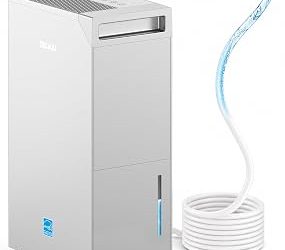
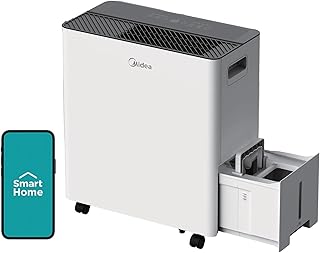
Midea 50 Pint Dehumidifier with Pump
The strongest all-round pick here: an Energy Star compressor rated to 4,500 sq. ft., a built-in pump that solves upward drainage, and a reusable filter that pulls clear without tools. Wi-Fi and Alexa control are genuinely useful in a basement, since you can verify the setpoint without walking down to read a panel.
Hisense 50-Pint Portable Dehumidifier
Hisense builds a heavier, well-braced cabinet than the price suggests, and the airflow path is generous enough that the coil stays clean longer between filter washes. Its 4,500 sq. ft. rating and low running noise make it a sensible choice for attics and finished garages where the unit will run unattended for weeks.
Whirlpool 50 Pint Dehumidifier
The most compact footprint on this list, with a bucket that seats squarely and a handle position that keeps the load close to your body. Energy Star certified and quiet enough for a living room or bedroom, though you will want a gravity hose run if you would rather not empty it every day or two.
Manastin 5000 Sq.Ft Dehumidifier for Basement
Built for the hardest-working spot in the house, with three modes, a humidity display, a 24-hour timer, and a child lock that stops accidental setpoint changes. The included drain hose and large-capacity compressor suit long continuous runs in a crawlspace or unfinished basement.
50 Pint/Day 3500 Sq.Ft Compressor Dehumidifier
A straightforward workhorse with an intelligent humidistat and a 0.8-gallon tank that stays light enough to carry comfortably up stairs. The drain hose comes in the box, making this an easy pick for bathrooms, RVs, and mid-sized rooms where a smaller reservoir is a feature rather than a compromise.
Frequently Asked Questions
Is 50 pints too much for a single bedroom?
No. Oversizing simply means shorter run cycles, and the humidistat shuts the compressor off once you hit your target. The real bedroom considerations are noise and whether the cabinet fits your walking path.
What humidity level should I set?
Between 45 and 50 percent suits most homes. Below 40 you risk drying out wood furniture and flooring; above 55 you are back in mold and dust-mite territory.
Do I need the pump model?
Only if your drain is at or above the height of the unit, or you want to route condensate into a sink or window. Otherwise a gravity hose is quieter and has one fewer component to fail.
Are renewed units worth considering?
The Midea 50 Pint with Pump (Renewed) can be a reasonable value, but inspect the bucket seal, caster mounts, and filter frame on arrival, since those wear points reveal how hard the unit worked in its first life.
Final Thoughts
For most households the Midea 50 Pint with Pump is the pick that ages best, combining hands-off drainage with easy filter service. Choose the Manastin 5000 Sq.Ft model if your basement demands continuous heavy-duty operation, or the Whirlpool 50 Pint if a small footprint and comfortable bucket handling matter more than maximum coverage.