Key takeaways
- Pocket depth with real headroom: Measure your mattress plus any topper, then add two inches. A protector rated to 18 or 20 inches stretched over a 12-inch bed keeps tension in the skirt; one stretched to its limit will migrate off the corners within a month.
- Membrane quality over membrane thickness: Thin, breathable polyurethane laminated to a knit backing outperforms thick vinyl-style films every time. Look for a moisture-vapor rating or explicit breathability claims, and treat any protector that feels like a shower curtain as a heat trap.
- Seam and skirt engineering: Check for overlocked or bound seams at the corner gussets, where the majority of tearing begins. Wide elastic banding around the full perimeter holds far better than corner-only straps, especially on a king where fabric spans a wide, unsupported middle.
- Fiber against your thermal profile: Cotton terry absorbs and holds moisture, which suits cooler rooms. Tencel lyocell and bamboo viscose wick and release faster, making them the better call for hot sleepers or humid climates.
- Wash tolerance you will actually use: Confirm cold or warm machine washing with low-heat tumble drying. High heat delaminates waterproof films, and a protector you are afraid to launder defeats its allergen-barrier purpose entirely.
What's inside
A king mattress is a significant investment in your body’s nightly recovery, yet it sits under a layer most buyers treat as an afterthought. The failure pattern is predictable: a protector feels plush for a few weeks, then the elastic skirt loosens, the corners creep upward, and you wake to a rucked ridge running under your lumbar region. That wrinkle is not just an annoyance. It changes how the mattress distributes load across your hips and shoulders, undoing the pressure mapping you paid for. Add a laminate film that traps heat or crackles with every turn, and a protector meant to extend your mattress’s life ends up shortening your sleep.
This guide evaluates king protectors the way I assess any component that bears repeated mechanical stress: how the fabric behaves after forty wash cycles, whether the waterproof membrane stays bonded at the corners, how deep the pockets genuinely stretch on a 76-by-80-inch platform, and how much thermal resistance the barrier adds. Below are six protectors that hold their geometry and their breathability over years, not weeks, plus the selection criteria that separate durable construction from marketing gloss.
As an Amazon Associate we earn from qualifying purchases.


How to Choose a Mattress Protector King (2026)
- Pocket depth with real headroom: Measure your mattress plus any topper, then add two inches. A protector rated to 18 or 20 inches stretched over a 12-inch bed keeps tension in the skirt; one stretched to its limit will migrate off the corners within a month.
- Membrane quality over membrane thickness: Thin, breathable polyurethane laminated to a knit backing outperforms thick vinyl-style films every time. Look for a moisture-vapor rating or explicit breathability claims, and treat any protector that feels like a shower curtain as a heat trap.
- Seam and skirt engineering: Check for overlocked or bound seams at the corner gussets, where the majority of tearing begins. Wide elastic banding around the full perimeter holds far better than corner-only straps, especially on a king where fabric spans a wide, unsupported middle.
- Fiber against your thermal profile: Cotton terry absorbs and holds moisture, which suits cooler rooms. Tencel lyocell and bamboo viscose wick and release faster, making them the better call for hot sleepers or humid climates.
- Wash tolerance you will actually use: Confirm cold or warm machine washing with low-heat tumble drying. High heat delaminates waterproof films, and a protector you are afraid to launder defeats its allergen-barrier purpose entirely.
The Best Mattress Protector King (2026)s Reviewed
SureGuard King Cotton Terry Protector
The cotton terry face over a thin membrane gives this one the most forgiving hand-feel of the group, and the stretchable pockets handle 6 to 20 inches without straining the elastic. It is my default recommendation for pillow-top kings where competing protectors run out of skirt.
Luxury Tencel King Protector
Tencel’s smooth fiber cross-section moves moisture off the surface quickly, which is why this protector reads as cool rather than merely non-hot. The 18-inch pocket depth and quiet laminate make it a strong pick for anyone sensitive to the papery rustle cheaper barriers produce.
Organic Cotton Quilted Mattress Pad
At 300 GSM with GOTS and Fairtrade certification, this quilted pad is the choice for sleepers who want a breathable cushioning layer rather than a liquid barrier. The stitching density holds the batting in place through repeated washing instead of letting it drift into lumps.
Premium Tencel Waterproof Protector
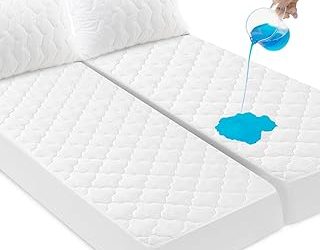
A well-balanced deep-pocket option that pairs a Tencel top surface with a genuinely quiet waterproof backing, so mid-night repositioning does not announce itself. Corner construction is solid, and it recovers its shape cleanly after tumble drying.
PlushDeluxe Bamboo Waterproof Protector
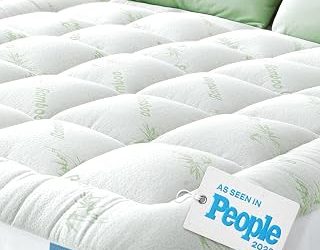
Bamboo-derived viscose delivers a noticeably silkier surface than cotton terry while keeping surface friction low, which reduces the drag that pulls a protector out of alignment. Sized at 76 by 80 inches with up to 18 inches of depth, it fits standard and taller king builds without over-tensioning.
Frequently Asked Questions
Will a waterproof protector make my king bed sleep hotter?
A modern laminated knit adds a small amount of thermal resistance, typically imperceptible. Older vinyl or thick PVC-style barriers are the real culprits. If you sleep hot, prioritize Tencel or bamboo faces over cotton terry, which holds moisture longer.
How often should I wash it?
Every four to eight weeks for general hygiene, and immediately after any spill. Use cold or warm water with low-heat drying to protect the membrane bond. Skip bleach and fabric softener, both of which degrade laminate adhesion.
Do I need a protector if I already use a topper?
Yes, and place the protector over the topper. Toppers absorb moisture readily and are harder to clean than the mattress itself, so protecting the uppermost comfort layer is what preserves your pressure relief.
How long should a king protector last?
Expect three to five years from a well-built model with regular laundering. Retire it when the skirt no longer grips the corners or the backing feels stiff and plasticky, both signs the membrane has begun to separate.
Final Thoughts
For most king setups, the SureGuard Cotton Terry protector offers the best combination of deep-pocket tolerance and long-term seam durability, while the Luxury Tencel protector is the better answer for hot sleepers who want moisture moved rather than absorbed. If you want breathable cushioning instead of a liquid barrier, the Organic Cotton Quilted pad is the one worth your money.