Key takeaways
- Match firmness to your sleep posture, not your preference: back and stomach sleepers benefit most from a true firm surface; dedicated side sleepers usually need a medium-firm build so the shoulder and hip can recess without the waist bridging.
- Prioritize zoned coil support: a 5- or 7-zone unit stiffens the coils under the lumbar and pelvic region while softening at the shoulders, which is what actually produces neutral alignment rather than a uniformly rigid slab.
- Read the comfort layer, not the height: a 14-inch bed built on thin, low-density foam will body-impress faster than a well-specified 12-inch one. Look for CertiPUR-US certified foams and fiberglass-free fire barriers.
- Check the perimeter: reinforced edge coils keep the mattress usable to the last two inches, prevent roll-off, and take strain off the sleep surface when you sit to dress — a common early failure point.
- Treat the trial and warranty as spec data: a 365-night trial plus a 10-year warranty signals the maker expects the support core to hold. Also confirm the bed suits your foundation; slat gaps over roughly three inches undermine any hybrid.
What's inside
Firmness is the most over-promised spec in the mattress aisle. Two beds can carry the same label and behave nothing alike once a 180-pound body loads them for six hours — one holds the pelvis level, the other lets the hips drift below the shoulders and puts a slow twist through the lumbar spine. Add the durability problem on top: plenty of “firm” beds arrive genuinely supportive, then lose a measurable amount of that support inside eighteen months as low-density comfort foam compresses and perimeter coils fatigue. What buyers actually need is a bed that resists deformation under repeated load, not one that simply feels hard on day one.
This guide looks at firm queen mattresses through two lenses: postural ergonomics (does it keep the spine neutral in side and back positions?) and structural longevity (will it still do that after thousands of load cycles?). I’ve weighted zoned coil layouts, foam density and certification, edge-support construction, motion transfer for shared beds, and the trial-and-warranty terms that tell you how much confidence a manufacturer has in its own build. Every pick below is a boxed hybrid, which is the format that currently delivers the best support-to-durability ratio at this price tier.
As an Amazon Associate we earn from qualifying purchases.


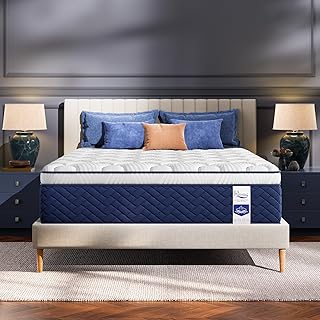
How to Choose a Firm Mattress (2026)
- Match firmness to your sleep posture, not your preference: back and stomach sleepers benefit most from a true firm surface; dedicated side sleepers usually need a medium-firm build so the shoulder and hip can recess without the waist bridging.
- Prioritize zoned coil support: a 5- or 7-zone unit stiffens the coils under the lumbar and pelvic region while softening at the shoulders, which is what actually produces neutral alignment rather than a uniformly rigid slab.
- Read the comfort layer, not the height: a 14-inch bed built on thin, low-density foam will body-impress faster than a well-specified 12-inch one. Look for CertiPUR-US certified foams and fiberglass-free fire barriers.
- Check the perimeter: reinforced edge coils keep the mattress usable to the last two inches, prevent roll-off, and take strain off the sleep surface when you sit to dress — a common early failure point.
- Treat the trial and warranty as spec data: a 365-night trial plus a 10-year warranty signals the maker expects the support core to hold. Also confirm the bed suits your foundation; slat gaps over roughly three inches undermine any hybrid.
The Best Firm Mattresses of 2026, Reviewed
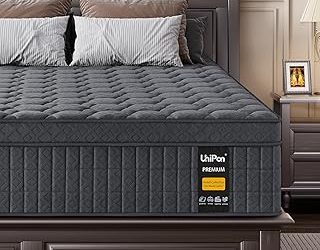
Firm Queen Mattress 12 Inch Hybrid with Extra Back and Lumbar Hip Support
The most efficient design here: at 12 inches it puts less foam between you and the coil unit, so support feels immediate and pressure relief comes from targeted lumbar and hip zoning rather than thick padding. The 365-night trial gives you a full seasonal cycle to confirm the surface holds its shape.
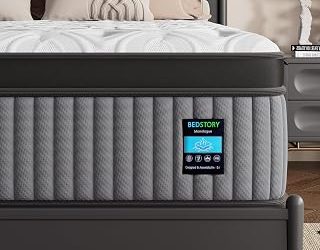
BedStory Firm Queen 14 Inch 7-Zone Hybrid
A well-balanced choice for couples and heavier sleepers, with seven distinct support zones that keep the pelvis from sinking while easing shoulder load. Fiberglass-free construction and CertiPUR-US foams address the two material concerns that matter most in a boxed bed.
BedStory 14 Inch Firm Queen, Made in USA
My pick when longevity is the priority. Domestic manufacturing typically means tighter quality control on coil tempering and foam density, and the zoned lumbar section is convincing for back sleepers who wake with a stiff lower spine. The 365-night trial and 10-year warranty back it credibly.
BedStory Firm Queen 12 Inch Orthopedic with Low Motion Transfer
Built around isolation as much as support, so a partner’s movement stays local instead of traveling across the sleep surface. The orthopedic lumbar profile suits back-dominant sleepers who want firm contact without a plush top layer masking it.
BedStory Firm 13 Inch Hotel Collection Hybrid
The most refined feel of the group: a slightly cushioned entry into a firm core, which makes it easier to adapt to if you’re stepping down from a soft bed. Zoned lumbar reinforcement keeps that comfort layer from turning into a hammock over time.
Frequently Asked Questions
Is a firm mattress better for back pain?
Often, but not automatically. Firm support helps when pain comes from the pelvis sinking and rotating the lumbar spine. If pain stems from pressure on the shoulder or hip in side sleeping, a medium-firm zoned build usually performs better.
How long should a firm hybrid last?
Expect seven to ten years of usable support from a well-built hybrid. Rotate it head-to-foot every three to six months to distribute load and slow body impressions.
Will a firm mattress soften over time?
Slightly, and that’s normal — the comfort layer breaks in over the first 30 to 60 nights. What shouldn’t change is the coil unit’s response. Persistent sagging deeper than about an inch is a warranty issue, not break-in.
Do I need a new foundation?
Only if your current one flexes or has wide slat gaps. Hybrids need a rigid, evenly supported base; a sagging foundation transfers straight through to your spine.
Final Thoughts
For most buyers, the BedStory 14 Inch Firm Queen made in the USA offers the best combination of zoned lumbar support and long-term structural confidence, while the 12 Inch Hybrid with Extra Back and Lumbar Hip Support is the leaner, more directly supportive option. If you share a bed and value quiet nights, the 12 Inch Orthopedic with low motion transfer is the practical pick.