Key takeaways
- Zoned support over uniform firmness: Look for mattresses divided into 5 or 7 support zones. Firmer coils or higher-density foam under the lumbar region with softer response at the shoulders keeps your spine neutral instead of forcing it straight.
- Edge reinforcement and perimeter coils: On a king, sagging usually starts at the edges and the two “sleep wells” where each person settles. Reinforced perimeter springs slow that process considerably and make sitting on the bed to dress far less punishing.
- Match feel to sleep position, not to reputation: Side sleepers with back pain generally do better on medium, which lets the shoulder and hip drop. Back and stomach sleepers usually need medium-firm to firm to prevent lumbar hyperextension.
- Verify the build, not the buzzwords: Pocketed coils with individual fabric encasement isolate motion between two sleepers and reduce roll-together, which is a common overnight trigger for back discomfort. CertiPUR-US certification and fiberglass-free construction are baseline expectations now.
- Trial length is your only real data: Spinal tissue takes several weeks to adjust to a new support profile. A 365-night trial with a 10-year warranty gives you room to judge the mattress on morning stiffness rather than first-night impressions.
What's inside
Lower-back pain rarely announces itself at midnight. It shows up at 6 a.m., when you swing your legs off the bed and feel your lumbar spine renegotiate the last eight hours. A king mattress makes this trickier than most buyers expect: 76 inches of width means the surface has to support two different body weights, two different sleep positions, and two different pressure maps without dishing out in the middle. Most mattresses that feel supportive in a showroom are simply firm, and firmness alone does nothing for spinal alignment. What matters is whether the sleep surface lets your hips and shoulders sink to their natural depth while keeping the lumbar curve filled in.
This guide looks at king mattresses through two lenses: ergonomics, meaning zoned support geometry and pressure distribution, and durability, meaning whether that geometry survives three to five years of nightly loading. I’ve focused on models with documented zoned lumbar construction, honest coil counts or foam densities, and trial windows long enough for your body to actually adapt. Below are the picks worth your attention in 2026, followed by the selection criteria I’d apply to any mattress claiming back-pain relief.
As an Amazon Associate we earn from qualifying purchases.


How to Choose a King Mattress For Bad Back (2026)
- Zoned support over uniform firmness: Look for mattresses divided into 5 or 7 support zones. Firmer coils or higher-density foam under the lumbar region with softer response at the shoulders keeps your spine neutral instead of forcing it straight.
- Edge reinforcement and perimeter coils: On a king, sagging usually starts at the edges and the two “sleep wells” where each person settles. Reinforced perimeter springs slow that process considerably and make sitting on the bed to dress far less punishing.
- Match feel to sleep position, not to reputation: Side sleepers with back pain generally do better on medium, which lets the shoulder and hip drop. Back and stomach sleepers usually need medium-firm to firm to prevent lumbar hyperextension.
- Verify the build, not the buzzwords: Pocketed coils with individual fabric encasement isolate motion between two sleepers and reduce roll-together, which is a common overnight trigger for back discomfort. CertiPUR-US certification and fiberglass-free construction are baseline expectations now.
- Trial length is your only real data: Spinal tissue takes several weeks to adjust to a new support profile. A 365-night trial with a 10-year warranty gives you room to judge the mattress on morning stiffness rather than first-night impressions.
The Best King Mattress For Bad Back (2026)s Reviewed
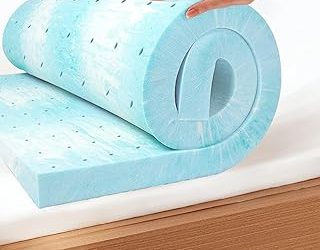
Sweetnight CoolNest 14 Inch King
The 5-zone ergonomic layout does the important work here, easing off under the shoulders while firming through the mid-third to hold the lumbar curve. It’s an all-foam build with a medium feel, so it suits side and combination sleepers who overheat on conventional memory foam and don’t need the extra pushback of a coil unit.
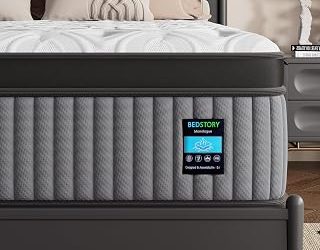
BedStory 14 Inch Hybrid for Back Pain & Heavier Sleepers
This is the pick I’d point heavier couples toward, since pocket springs handle high loads with far less permanent compression than foam cores. The zoned lumbar band resists the mid-mattress dip that develops on a king when two sleepers occupy fixed positions night after night.
BedStory 14 Inch Medium Firm King
A genuinely well-balanced medium-firm hybrid, and probably the safest default for mixed-position couples who can’t agree on feel. Made in the USA with a 365-night trial and a 10-year warranty, which is exactly the runway you want when you’re testing whether a new support profile actually reduces morning stiffness.
BedStory Firm 14 Inch King
Choose this version if you sleep on your back or stomach and have historically woken with a sore lower back on softer beds. The firmer coil calibration limits pelvic rotation and hyperextension, though side sleepers will likely find shoulder pressure builds too quickly.
16 Inch Luxury Hybrid King, 7-Zone
The extra profile buys a taller comfort layer over the coil unit, giving finer-grained pressure relief across seven zones without giving up support underneath. Strong motion isolation makes it a sensible pick when one partner’s movement reliably wakes the other, and the medium-firm tuning suits most back-pain sleepers.
Frequently Asked Questions
Is a firm mattress always better for back pain?
No. Research on this has trended away from firm surfaces for years. Medium to medium-firm mattresses that allow the hips and shoulders to sink while supporting the lumbar region tend to perform better than very firm ones, which can leave a gap under the lower back.
Hybrid or all-foam for a bad back?
Hybrids generally hold their support geometry longer, especially at king size and at higher body weights, because pocketed coils resist compression set better than foam. All-foam suits lighter sleepers and those who prioritize contouring and silence.
How long before I know if it’s helping?
Give it three to four weeks. A short adjustment period of mild stiffness is common as your posture adapts. Pain that worsens past a month is a sign the support profile is wrong for you, not something to wait out.
Do I need a specific base?
Yes, and it matters more than most people realize. Slats spaced wider than about three inches allow localized sagging and can void warranty coverage. A solid platform or closely spaced slats preserves the zoning you paid for.
Final Thoughts
For most people shopping a king with back pain in mind, the BedStory 14 Inch Medium Firm is the most broadly appropriate starting point, with a year-long trial to confirm it. Heavier sleepers and couples concerned about mid-bed sagging should look at the BedStory Hybrid for Back Pain & Heavier Sleepers, while hot side sleepers who prefer foam contouring will be better served by the Sweetnight CoolNest 14 Inch. If back pain is persistent or radiating, pair whichever you choose with a proper assessment from a clinician rather than treating the mattress as the whole fix.