Key takeaways
- Zoned support over uniform firmness: A mattress with firmer lumbar reinforcement and softer shoulder zones keeps your spine closer to its standing alignment. Uniform surfaces force a compromise — either your shoulders jam or your hips sink.
- Density, not just thickness: A 14-inch mattress built from low-density comfort foam will soften faster than a well-specified 12-inch. Look for high-density transition and base layers; they resist the compression set that creates sagging.
- Coil count and gauge on hybrids: Individually pocketed coils in the 800–1,000+ range for a king, with thicker-gauge springs at the perimeter, deliver both contouring and torsional stability. That edge reinforcement matters when you sit to dress or sleep near the border.
- Match firmness to load: Combined couple weight above roughly 350 lb generally needs a firm hybrid to prevent hammocking. Side sleepers under 150 lb usually do better on medium, which allows enough shoulder immersion to unload the lower back.
- Read the warranty threshold: Coverage that begins at 0.75 inches of body impression is meaningfully stronger than one requiring 1.5 inches. Pair that with a genuine year-long or 365-night trial, since spinal adaptation can take six to eight weeks.
What's inside
Back pain that shows up at 6 a.m. and fades by mid-morning is rarely a coincidence. It usually points to a sleep surface that lets your lumbar curve drift out of neutral for seven or eight hours at a stretch — a slow postural load your spine has no way to escape. King mattresses make this trickier than most buyers expect: at 76 inches wide, the span between support points is larger, foam layers carry more distributed mass, and any weakness in the core or perimeter shows up as a hip-level valley within a couple of years. Shoppers are then left comparing marketing language rather than the two things that actually matter for a sore back: how well the surface holds your pelvis in line, and how long it will keep doing so.
This guide approaches the category the way I’d assess any load-bearing product — by looking at zoning geometry, foam density, coil architecture, edge integrity, and the impression-depth thresholds buried in warranty fine print. Below are the king mattresses I’d shortlist for back pain in 2026, along with a practical framework for matching firmness to your body weight and sleep position instead of guessing.
As an Amazon Associate we earn from qualifying purchases.


How to Choose a King Mattress For Back Pain (2026)
- Zoned support over uniform firmness: A mattress with firmer lumbar reinforcement and softer shoulder zones keeps your spine closer to its standing alignment. Uniform surfaces force a compromise — either your shoulders jam or your hips sink.
- Density, not just thickness: A 14-inch mattress built from low-density comfort foam will soften faster than a well-specified 12-inch. Look for high-density transition and base layers; they resist the compression set that creates sagging.
- Coil count and gauge on hybrids: Individually pocketed coils in the 800–1,000+ range for a king, with thicker-gauge springs at the perimeter, deliver both contouring and torsional stability. That edge reinforcement matters when you sit to dress or sleep near the border.
- Match firmness to load: Combined couple weight above roughly 350 lb generally needs a firm hybrid to prevent hammocking. Side sleepers under 150 lb usually do better on medium, which allows enough shoulder immersion to unload the lower back.
- Read the warranty threshold: Coverage that begins at 0.75 inches of body impression is meaningfully stronger than one requiring 1.5 inches. Pair that with a genuine year-long or 365-night trial, since spinal adaptation can take six to eight weeks.
The Best King Mattress For Back Pain (2026)s Reviewed
Sweetnight CoolNest 14 Inch Cooling Memory Foam
The five-zone ergonomic core is the standout here — the lumbar band is noticeably firmer than the shoulder and calf sections, which helps keep the pelvis from rotating during the night. Its medium feel and breathable construction suit combination sleepers who run warm and don’t want the trapped-heat stiffness that aggravates morning soreness.
Nectar 12″ Memory Foam, Medium Firm
A conservative, well-executed all-foam build with a medium-firm surface that suits back sleepers and heavier side sleepers who need pressure relief without excessive sink. The year-long trial is the real ergonomic asset: it gives your soft tissue enough time to adapt before you commit.
BedStory Firm 14 Inch Hybrid
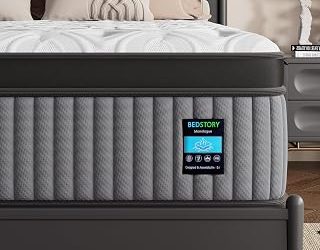
Built for people whose backs respond better to support than to cushioning, this one pairs a genuinely firm feel with zoned lumbar reinforcement and pocketed springs. The 365-night trial and 10-year warranty back a construction that resists mid-panel deflection — worth noting that BedStory’s heavy-duty 14-inch variant targets higher body weights specifically.
Novilla 12 Inch Hybrid with Smart Coils
Sensible engineering at an accessible price, with responsive coils that limit the sensation of being stuck and a hypoallergenic, fiberglass-free build. It’s the pragmatic choice for guest rooms or budget-conscious upgrades where lumbar support still needs to be honest.
LETMOON Luxury 12 Inch Hotel-Level Hybrid
Seven-zone pocketed springs under gel memory foam produce a well-differentiated support map, which is why it lands well for combined back and hip discomfort. The hotel-style surface reads plush at first touch but recovers quickly, so your hips stay supported through position changes.
Frequently Asked Questions
Is a firm or medium mattress better for back pain?
Research generally favors medium-firm over extra-firm. Firmness needs to scale with body weight and position: side sleepers want enough give for shoulder immersion, while back and stomach sleepers need a flatter, more resistant surface.
Do hybrids outlast all-foam mattresses?
Typically yes. Pocketed coils recover from cyclic loading more consistently than foam, and reinforced perimeters resist the edge collapse that eventually shifts your sleep posture toward the middle.
How long before my back feels different?
Allow four to eight weeks. Your musculoskeletal system adapts to a new load distribution gradually, and short-term stiffness during that window isn’t necessarily a bad sign.
Do I need a box spring for a king?
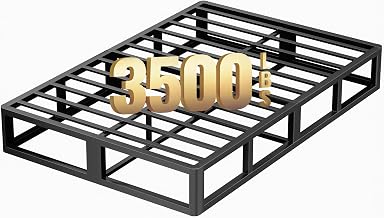
No, but you do need close slat spacing — under about three inches — plus a center support leg. Insufficient underlying support is a leading cause of premature sag and voided warranties.
Final Thoughts
For most back-pain sufferers, the Sweetnight CoolNest 14 Inch offers the best balance of zoned lumbar support and temperature control, while the BedStory Firm 14 Inch Hybrid is the more durable pick for heavier sleepers or anyone who needs an unambiguously firm surface. If you’d rather test slowly with minimal risk, the Nectar 12″ and its full-year trial remains the safest entry point.