Key takeaways
- Foam density over foam depth: A 4 lb/ft³ memory foam layer resists permanent compression far better than a thicker 3 lb layer. Ask for density specs; if a brand only advertises inches, treat that as a signal.
- Pocketed coils in the 13–14 gauge range: Lower gauge numbers mean thicker wire and more pushback. Hybrids with individually encased springs give you deep support plus motion isolation, which matters when two heavier sleepers share the bed.
- Reinforced perimeter: Edge collapse is the most common early failure point. Look for high-density foam rails or a denser coil border so sitting on the side doesn’t roll you off.
- Zoned support, not uniform firmness: A rock-hard slab throws the shoulders out of alignment for side sleepers. Zoned lumbar reinforcement holds the hips level while letting the upper body settle in.
- Warranty language on sagging: A 10-year warranty is only useful if it covers indentations at 0.75″–1″ without a topper requirement. Check the fine print before the trial window closes.
What's inside
Mattress shopping gets harder as body weight climbs, and not because manufacturers say so — because physics does. A sleep surface has to distribute load without bottoming out, keep the spine neutral at the hip and shoulder, and hold that geometry for years of repeated compression cycles. Most beds sold online are engineered around a 150–200 lb sleeper. Push past 230 lb, and the same construction sinks deeper, hammocks at the midsection, and softens at the perimeter where people sit to put on shoes. The result is the familiar complaint: fine for two months, aching lower back by month eight.
This guide looks at mattresses through two lenses I use professionally — postural support under load, and material fatigue over time. That means paying attention to coil gauge and count, foam density rather than thickness alone, reinforced edge construction, and warranty sag thresholds that actually mean something. Below are six beds worth considering in 2026, followed by a buying framework and answers to the questions that come up most.
As an Amazon Associate we earn from qualifying purchases.


How to Choose a Mattress For Heavy Person (2026)
- Foam density over foam depth: A 4 lb/ft³ memory foam layer resists permanent compression far better than a thicker 3 lb layer. Ask for density specs; if a brand only advertises inches, treat that as a signal.
- Pocketed coils in the 13–14 gauge range: Lower gauge numbers mean thicker wire and more pushback. Hybrids with individually encased springs give you deep support plus motion isolation, which matters when two heavier sleepers share the bed.
- Reinforced perimeter: Edge collapse is the most common early failure point. Look for high-density foam rails or a denser coil border so sitting on the side doesn’t roll you off.
- Zoned support, not uniform firmness: A rock-hard slab throws the shoulders out of alignment for side sleepers. Zoned lumbar reinforcement holds the hips level while letting the upper body settle in.
- Warranty language on sagging: A 10-year warranty is only useful if it covers indentations at 0.75″–1″ without a topper requirement. Check the fine print before the trial window closes.
The Best Mattress For Heavy Person (2026)s Reviewed
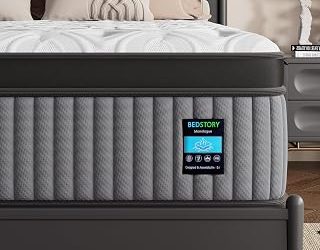
BedStory 14 Inch Hybrid Mattress (King)
The zoned lumbar section is the standout here — firmer coils under the pelvis keep heavier midsections from dipping, which is exactly where alignment usually fails. At 14 inches with a pocket spring core and a 10-year warranty behind it, this is a sensible default for couples over 230 lb who want hybrid resilience rather than foam sink.
Extra Firm 14 Inch Mattress (Queen)
Purpose-built for load: thick foam edge reinforcement plus a layered core that resists the midsection hammocking that plagues softer beds. The firm response suits back and stomach sleepers best, and the fiberglass-free build removes a genuine concern for anyone worried about cover damage down the line.
Sweetnight CoolNest 14 Inch (King)
Heavier sleepers generate and trap more heat simply because of greater surface contact, and this one addresses it directly with a breathable cooling build and 5-zone ergonomic shaping. The medium feel is the sweet spot for side sleepers who need shoulder give without losing hip support.
Kin by Tuft & Needle Firm 8″ Adaptive Foam (Full)
At 8 inches this is a lighter-duty pick, best for guest rooms, bunks, or sleepers on the lower end of the heavier range. The adaptive foam is firmer and more responsive than budget memory foam, and the 100-night trial plus CertiPUR-US certification make it a low-risk secondary bed.
Sealy Dreamlife 14″ Hybrid (Queen)
Sealy’s encased coil system paired with gel memory foam delivers the predictable, broken-in-but-supportive feel that people migrating from a traditional innerspring tend to want. Brand-level quality control is the real argument here — consistency across units matters when durability is the priority.
Frequently Asked Questions
How firm should a mattress be for a heavier person?
Medium-firm to firm, generally. Firmness needs rise with weight because the same surface compresses further, so a bed that feels firm at 160 lb often reads medium at 260 lb. Side sleepers should stay closer to medium-firm to protect the shoulder.
Is a hybrid better than all-foam?
For sustained load, usually yes. Coils recover their shape mechanically, while foam relies on cell structure that fatigues over time. All-foam works well if the density specs are high, but hybrids are the safer long-term bet.
Does mattress thickness matter?
Only as a proxy. Twelve to fourteen inches gives designers room for a real support core plus comfort layers, but a well-built 12″ bed outperforms a poorly specced 16″ one. Thickness also affects bed height, which matters for easy sit-to-stand transfers.
How long should one last?
Plan on six to eight years with heavier use, versus eight to ten at average weight. Rotating head-to-foot every three months distributes wear and meaningfully delays visible body impressions.
Final Thoughts
For most heavier sleepers, the BedStory 14″ hybrid offers the best balance of zoned lumbar support and coil durability, while the Extra Firm 14″ is the pick if you sleep on your back and want maximum pushback with a genuinely reinforced edge. Sleep hot? The Sweetnight CoolNest handles thermal load better than either, without giving up the support a heavier frame needs.