Key takeaways
- Penetration over film build: Dining tops flex and get abraded at the edges. A stain that soaks into the fiber keeps its color when the surface wears, while a heavy pigmented film shows every scratch as a pale line.
- Repairability: Ask how a single ring or gouge gets fixed. Oil and blending finishes let you feather a repair in place; hard catalyzed coatings usually mean refinishing the entire top for an even match.
- Tactile finish quality: Forearms rest on the front edge through long meals. Sand to 180–220 grit before staining and choose a product that cures smooth rather than slightly tacky, or the surface will feel grabby in humid weather.
- Cure time versus dry time: Touch-dry in an hour doesn’t mean ready for plates. Budget several days of cure before heavy use, and longer for oil-based products in cool rooms.
- Odor and ventilation: Dining rooms are rarely well ventilated. Water-based and linseed-oil formulas are far easier to live with than solvent-heavy stains if the project happens inside.
What's inside
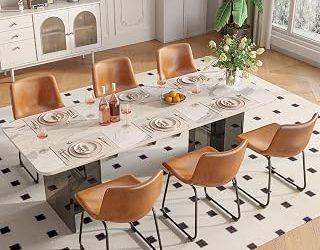
A dining table absorbs more punishment than any other surface in a home. Elbows drag across the edge grain for hours, hot serving dishes land without a trivet, wine gets wiped up late at night, and someone eventually does homework on it with a ballpoint pen. Most buyers shopping for stain are solving a visible problem — a bleached ring, a scuffed leaf, a table that no longer matches the chairs — but the harder question is whether the finish they choose will survive contact with human beings for another decade. Color is the easy part. Wear resistance, repairability, and how the surface feels under a forearm are what separate a table you enjoy from one you keep apologizing for.
This guide looks at stains through that durability-first lens. I’ve grouped picks by how they behave in service: which ones penetrate deeply enough to tolerate a light sanding years from now, which cure hard enough to shrug off condensation, which are food-safe enough for a surface people eat from, and which let you spot-repair a single damaged area instead of stripping the whole top. Coverage rates, dry times, odor, and applicator format all factor in, because a dining table is usually refinished indoors, in a room the household needs back quickly.
As an Amazon Associate we earn from qualifying purchases.


How to Choose a Stains For Dining Table (2026)
- Penetration over film build: Dining tops flex and get abraded at the edges. A stain that soaks into the fiber keeps its color when the surface wears, while a heavy pigmented film shows every scratch as a pale line.
- Repairability: Ask how a single ring or gouge gets fixed. Oil and blending finishes let you feather a repair in place; hard catalyzed coatings usually mean refinishing the entire top for an even match.
- Tactile finish quality: Forearms rest on the front edge through long meals. Sand to 180–220 grit before staining and choose a product that cures smooth rather than slightly tacky, or the surface will feel grabby in humid weather.
- Cure time versus dry time: Touch-dry in an hour doesn’t mean ready for plates. Budget several days of cure before heavy use, and longer for oil-based products in cool rooms.
- Odor and ventilation: Dining rooms are rarely well ventilated. Water-based and linseed-oil formulas are far easier to live with than solvent-heavy stains if the project happens inside.
The Best Stains For Dining Table (2026)s Reviewed
Furniture Clinic Wood Stain, Dark Oak
A water-based, low-odor stain that gives you genuine control over depth of color — build it in thin passes rather than chasing coverage in one wet coat. Grain raise is the tradeoff, so a light denib with worn 220 grit between coats pays off in how the finished top feels under bare arms.
Varathane Premium Fast Dry, Dark Walnut
The one-coat color claim genuinely holds on open-grained species, and the hour-long dry window means you can stain and topcoat a table in a weekend without tying up the room. Oil-based penetration also means future scratches reveal stained fiber rather than raw wood, which matters more than the initial look.
Varathane Less Mess Stain and Applicator, Golden Oak
The integrated applicator is a real advantage on the awkward geometry of a dining table — apron undersides, pedestal curves, table leaf edges — where a rag drips and a brush loads unevenly. Best treated as a touch-up and small-project tool; the 4 oz size won’t carry a full tabletop.
Tried & True Golden Oak Stain & Finish
My default recommendation for surfaces people eat from: a pigmented Danish oil with no metallic driers or solvents, so the cured finish is genuinely food-contact appropriate. It builds slowly over several thin, well-buffed coats and rewards patience with a low-sheen surface that spot-repairs almost invisibly years later.
Howard Restor-A-Finish, Mahogany
Not a stain in the strict sense but the right first move on a table that still has an intact finish — it blends out scuffs, water rings, and sun fade without stripping. If it solves the problem in twenty minutes, you’ve avoided a full refinish and preserved the original patina.
Frequently Asked Questions
Does stain alone protect a dining table?
No. Penetrating stains add color, not abrasion or moisture resistance. Unless you use a stain-and-finish product like the Tried & True oil, plan on a topcoat rated for tabletop use.
Water-based or oil-based for a dining surface?
Oil-based penetrates deeper and hides future wear better; water-based is lower odor and faster to recoat indoors. For a table that sees daily use, deeper penetration usually wins.
How long before we can eat at it?
Wait for full cure, not dry-to-touch — typically five to seven days for oils, two to three for water-based systems with a compatible topcoat. Rushing this is the most common cause of imprinted placemats.
Can I fix one damaged spot?
With oil finishes and blending products, yes: clean, scuff lightly, and reapply locally. Film-forming coatings rarely blend, so evaluate repairability before you commit to a finish system.
Final Thoughts
For a table that will be used hard and refinished eventually, Tried & True Golden Oak is the most sensible long-term choice thanks to its food-safe formulation and forgiving spot repairs. If you need color and speed, Varathane Premium Fast Dry in Dark Walnut delivers full depth in a single coat, and Howard Restor-A-Finish is worth trying first on any table whose existing finish is tired rather than truly failed.