Key takeaways
- Wear layer first: Stain alone gives you almost no abrasion or moisture resistance. Decide on your protective topcoat before you pick a color, since some sealers won’t bond over oily pigmented stains.
- Base chemistry: Water-based stains dry in an hour, smell mild, and raise less concern in a room where people eat. Oil-based stains stay workable longer and pull deeper into open-grain woods like oak and ash.
- Open time on a wide panel: A tabletop is a big, uninterrupted surface. Fast-drying stains can leave lap marks across a 40-inch span unless you work in sections with a wet edge, so budget for a second set of hands.
- Sheen and seated glare: High gloss reads luxurious in photos and mirrors your pendant light straight into a diner’s eyes. Satin or matte is the more comfortable choice for tables under direct downlighting.
- Tactile finish quality: Sand to 180–220 grit, no finer, then de-nib between topcoat layers. Skin is far better at detecting a rough film than your eyes are.
What's inside
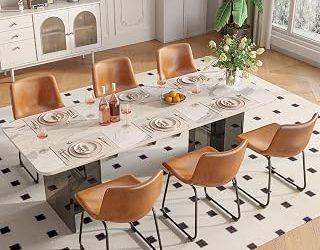
A dining table takes more abuse than any other piece of furniture in the house, and almost none of it is dramatic. It’s the slow stuff: forearms resting in the same two spots every evening, a sweating glass left through a movie, citrus juice wiped up ninety seconds too late, the scrape of a plate pushed toward the center. Most people shopping for stain are really shopping for a surface they can live against — one that stays smooth under skin, doesn’t telegraph every water ring, and still looks intentional after three winters of dry indoor air. Color is the easy part. Wear behavior is where cheap finishes fall apart.
This guide looks at dining table stains through two lenses I care about professionally: ergonomics (how the finished surface feels and reflects light at seated eye level) and durability (how the film and the pigment hold up to moisture, cleaners, and daily contact). I’ve grouped stains, gel stains, all-in-one sealers, and a clear protective topcoat, because a dining table almost always needs a color layer and a wear layer working together. Below you’ll find what to prioritize, honest notes on each product, and answers to the questions that come up mid-project.
As an Amazon Associate we earn from qualifying purchases.


How to Choose a Stain For Dining Table (2026)
- Wear layer first: Stain alone gives you almost no abrasion or moisture resistance. Decide on your protective topcoat before you pick a color, since some sealers won’t bond over oily pigmented stains.
- Base chemistry: Water-based stains dry in an hour, smell mild, and raise less concern in a room where people eat. Oil-based stains stay workable longer and pull deeper into open-grain woods like oak and ash.
- Open time on a wide panel: A tabletop is a big, uninterrupted surface. Fast-drying stains can leave lap marks across a 40-inch span unless you work in sections with a wet edge, so budget for a second set of hands.
- Sheen and seated glare: High gloss reads luxurious in photos and mirrors your pendant light straight into a diner’s eyes. Satin or matte is the more comfortable choice for tables under direct downlighting.
- Tactile finish quality: Sand to 180–220 grit, no finer, then de-nib between topcoat layers. Skin is far better at detecting a rough film than your eyes are.
The Best Stains For Dining Tables (2026) Reviewed
Varathane Triple Thick Polyurethane Gloss
This is the wear layer, not the color, and it’s the strongest single-application option here — one thick self-leveling coat builds roughly what three normal coats would, which means fewer dust nibs and less sanding on a large top. The gloss is genuinely mirror-like, so if your table sits under bright fixtures, consider knocking the final coat down with a gray abrasive pad for a friendlier satin feel.
2-in-1 Wood Stain and Sealer (Peach Wood)
A semi-transparent water-based color-and-seal combo that’s ideal for benches, breakfast tables, and secondary pieces where you want one product and a fast turnaround. It’s engineered for outdoor exposure rather than plate-and-glass abuse, so on a primary dining surface I’d still add a dedicated clear topcoat over it.
Varathane Total Control Smoke Gray Gel Stain
Gel stains sit on the surface instead of soaking in, which makes them the right tool for blotch-prone woods like maple, birch, and pine — the exact species most affordable tables are built from. The thick body also means no runs on aprons and legs, and Smoke Gray gives you a cool modern tone without the muddiness that plagues most gray pigments.
Varathane Premium Fast Dry Rustic Sage
Full color in one coat and dry to recoat in about an hour, which shortens the window for airborne dust to land on your tabletop — a real durability factor, not just convenience. Rustic Sage is a muted, soft green that flatters oak grain, though on large panels you’ll want to flood and wipe in overlapping sections to avoid lap lines.
SENVEN Walnut Wood Stain
A small-format, low-odor water-based walnut that’s best used as a sampling and repair stain: perfect for testing tone on the underside of your table or blending a chair rail scuff. At 100ml it isn’t meant to cover a full top, but it’s the most practical way to confirm your color before committing a quart.
Frequently Asked Questions
Do I need a topcoat over stain on a dining table?
Yes. Stain adds pigment but almost no film strength. Without polyurethane or a hard-wax alternative, water rings, condensation, and cleaning sprays will reach bare fiber within weeks.
How many clear coats does a tabletop actually need?
Three thin coats of standard polyurethane, or one heavy coat of a triple-thick formula plus a second for insurance. Table tops warrant more film than legs or aprons because they take the abrasion.
Water-based or oil-based for a table used every day?
Both perform well when properly topcoated. Oil-based stains give warmer amber tones and longer working time; water-based stains dry faster, smell less, and stay closer to true color over the years.
Can I stain over an existing finished table?
Not with a penetrating stain, since it can’t reach sealed wood. Either sand back to bare timber or use a gel stain, which bonds to a scuff-sanded existing finish.
Final Thoughts
For a table that gets daily use, my pairing is Varathane Premium Fast Dry for clean one-coat color and Varathane Triple Thick Polyurethane as the protective layer, knocked to satin to keep glare off seated diners. If your table is maple, birch, or pine, switch the color step to the Total Control Smoke Gray Gel Stain for even, blotch-free coverage.
Two template artifacts in your brief needed resolving: I used “How to Choose a Stain For Dining Table (2026)” for the “a/an” slot, and cleaned the pluralized reviewed heading to “The Best Stains For Dining Tables (2026) Reviewed” since the literal version was ungrammatical. Swap them back if your CMS matches on exact strings.