Key takeaways
- Unplug the unit and let hot water cool for at least two hours. Never descale a live heating element.
- Drain completely through both taps into a bucket, then remove the bottle or reservoir lid.
- Mix roughly two tablespoons of citric acid per litre of warm water, fill the reservoir, and let it sit 20 to 30 minutes. Heavy scale may need a second round rather than a stronger mix.
- Drain the acid solution through the taps so the internal lines get treated, not just the tank.
- Scrub the reservoir walls, the intake probe on bottom-load models, and the tap interiors. Narrow-diameter brushes like the Holikme Bottle Brush Tube Cleaning Set reach the spigot channel and the standpipe, which are the two spots a cloth cannot touch.
- Sanitize, dwell for the time on the label, then rinse with at least two full reservoir volumes of clean water. Rinse until you cannot smell or taste anything.
What's inside
A water dispenser is one of the few appliances in a home that you touch several times a day, every day, with wet hands. That combination of frequency, moisture, and warmth is exactly what biofilm likes, and it is also what quietly wears out gaskets, spigot springs, and reservoir seams. From a durability standpoint, cleaning is not housekeeping — it is maintenance. Units that get descaled and sanitized on schedule routinely outlast neglected ones by years, because scale is what cooks heating elements and mineral grit is what scores the sealing surfaces inside a tap.
There is also an ergonomics dimension that most cleaning advice skips. If a dispenser is awkward to disassemble, you will not clean it often enough, no matter how good your intentions are. Below you will find a method that works for pitcher-style filters, top-load coolers, and bottom-load units, plus guidance on the descalers, brushes, and sanitizing kits that make the job take fifteen minutes instead of an hour. You will also learn how to tell scale from mold, how often each component actually needs attention, and which design features to look for if you are shopping for a replacement.
Our recommended picks for this job:
As an Amazon Associate we earn from qualifying purchases.




Start by Understanding What You Are Removing
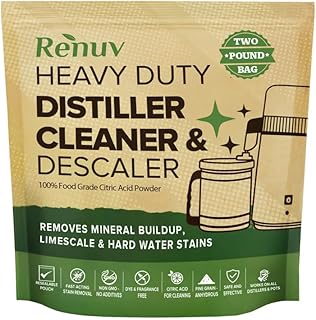
Two different problems live inside a dispenser, and they need different chemistry. Mineral scale — chalky white or tan crust around the hot tap, in the reservoir, and on the heating element — is alkaline, so it dissolves with acid. Food-grade citric acid powder such as Renuv Citric Acid is the workhorse here; it is odorless, rinses clean, and does not attack stainless or ABS plastic the way harsher acids can. Biofilm, by contrast, is a slick, sometimes pink or grey film that forms in the cold reservoir and drip tray. That needs a sanitizer, not an acid. A purpose-built product like the Water Cooler Cleaning Kit handles it and is formulated for both bottom-load and top-load geometry. Using only one of the two is the most common mistake, and it leaves half the problem in place.
The Full-Service Clean, Step by Step
- Unplug the unit and let hot water cool for at least two hours. Never descale a live heating element.
- Drain completely through both taps into a bucket, then remove the bottle or reservoir lid.
- Mix roughly two tablespoons of citric acid per litre of warm water, fill the reservoir, and let it sit 20 to 30 minutes. Heavy scale may need a second round rather than a stronger mix.
- Drain the acid solution through the taps so the internal lines get treated, not just the tank.
- Scrub the reservoir walls, the intake probe on bottom-load models, and the tap interiors. Narrow-diameter brushes like the Holikme Bottle Brush Tube Cleaning Set reach the spigot channel and the standpipe, which are the two spots a cloth cannot touch.
- Sanitize, dwell for the time on the label, then rinse with at least two full reservoir volumes of clean water. Rinse until you cannot smell or taste anything.
Pitchers and Countertop Dispensers Need a Different Rhythm
Gravity filters have no heating element, so scale is minor, but they have far more hand-contact surfaces. Wash the lid, upper hopper, and body weekly in warm soapy water and dry them fully before reassembly. A large-format unit like the Waterdrop WFD-22L is easier to service than a small pitcher for one reason worth noting: at 40 cups you refill it less often, and its wide mouth lets a hand and cloth inside. Compact models such as the Brita Metro trade that access for fridge-door fit, so lean on a slim brush for the corners. Whatever the size, never put the filter cartridge in soapy water, and never wash any component in a dishwasher unless the manual explicitly clears it.
Ergonomics and Long-Term Durability
Cleaning frequency correlates almost perfectly with ease of access. Bottom-load coolers like the Brio 520 earn their keep here: the bottle sits in a cabinet at floor level, so you slide it in rather than hoisting 19 kilograms above shoulder height. That single design choice eliminates the most injury-prone moment in dispenser ownership and, incidentally, means fewer spills into the electronics. When you reassemble, hand-tighten only. Overtorquing a plastic tap or lid deforms the gasket seat, and a deformed seat is a slow drip six months later.
Build a Realistic Schedule
Weekly, wash the drip tray and wipe the taps and any touch panel. Monthly, sanitize the reservoir and drain lines. Every three to six months, or sooner in hard-water areas, do a full descale. Replace filters on the manufacturer’s interval rather than by taste — a SmartLight indicator or a calendar reminder both beat guesswork, since taste changes long after protection has lapsed.
Tips
- Keep a dedicated bucket and a labelled scoop for descaling so you never mix cleaning tools with kitchen ones.
- Rinse brushes and hang them bristles-down to dry; a damp brush stored in a drawer becomes a contamination source.
- Photograph the tap assembly before your first disassembly. Reassembly errors cause most post-cleaning leaks.
- Skip bleach in units with stainless reservoirs or metal fittings — chloride pitting is permanent.
Frequently Asked Questions
How often should I sanitize a water dispenser?
Monthly for coolers with a cold reservoir, and after every bottle change if the unit sits in a warm room or gets heavy traffic. Pitchers need a soapy wash weekly.
Is vinegar as good as citric acid?
It works, but it is weaker per volume, needs longer dwell time, and leaves an odor that takes several extra rinses to clear. Citric acid powder is more concentrated, cheaper per treatment, and rinses out fast.
What causes pink slime in the drip tray?
Usually Serratia marcescens, an airborne bacterium that thrives on moist surfaces. It is a hygiene signal rather than a plumbing fault. Dry the tray after washing and it rarely returns.
Can I clean the internal filter on a cooler?
No. Two-stage carbon filters, like the one in the Brio 520, are sealed consumables. Cleaning damages the media; replace them on schedule instead.
Conclusion
Treat your dispenser like any other piece of hardworking home equipment: acid for scale, sanitizer for biofilm, slim brushes for the passages you cannot see, and a schedule you can actually keep. Choose a unit that is comfortable to service — bottom-loading, wide-mouthed, few fiddly parts — and the maintenance stops feeling like a chore. Water that tastes clean and a machine that lasts a decade come from the same habit.