Key takeaways
- Wattage matched to volume: A 600W utility heater is engineered to hold a small, insulated enclosure above 35°F, not to warm a room. Oversizing wastes energy and short-cycles the thermostat; undersizing leaves cold pockets at the perimeter where pipes usually run.
- Sealed, low-maintenance construction: Look for enclosed heating elements and a housing that resists moisture ingress. Open coils collect dust and insulation fibers, which shortens element life and creates a scorch risk in a tight space.
- Thermostat you can read and set blind: A built-in thermostat is the whole point, but a dial you cannot see at arm’s length in a headlamp beam is a design failure. Digital or dual-screen displays let you confirm the setpoint and actual temperature in one glance.
- Mounting flexibility and cord routing: Wall-mount brackets or feet that let the unit sit level on uneven soil matter more than they sound. Check cord length so the plug reaches a GFCI outlet without an extension, which is both a code and a fire concern.
- Layered safety cutoffs: Tip-over protection, thermal overload, and overheat shutdown should all be present. In an unattended, unoccupied space, redundancy is the only thing standing between a fault and a structure fire.
What's inside
A crawl space that drops below freezing puts every supply line, shutoff valve, and pressure tank in the house on a countdown. Most homeowners find out the hard way: a burst copper elbow at 4 a.m., water pouring through the subfloor into the room above. The frustrating part is that the fix is cheap compared to the damage, but the environment is genuinely hostile to hardware. Crawl spaces are damp, dusty, occasionally rodent-visited, and awkward to reach. A heater that lives down there has to survive months of humidity swings while sitting untouched, and it has to be serviceable by someone lying on their side in a respirator.
This guide looks at freeze-protection heaters through two lenses that spec sheets tend to skip: durability under sustained low-duty cycling in a humid enclosure, and ergonomics — how easy the unit is to position, wire, adjust, and inspect once it is installed somewhere you would rather not crawl. Below you will find purpose-built 600W utility heaters designed to hold a space just above freezing, plus a couple of larger 1500W ceramic units worth considering for conditioned basements or partially finished crawl spaces where you need real heat output rather than a thermal floor.
As an Amazon Associate we earn from qualifying purchases.


How to Choose a Crawl Space Heater To Keep Pipes From Freezing (2026)
- Wattage matched to volume: A 600W utility heater is engineered to hold a small, insulated enclosure above 35°F, not to warm a room. Oversizing wastes energy and short-cycles the thermostat; undersizing leaves cold pockets at the perimeter where pipes usually run.
- Sealed, low-maintenance construction: Look for enclosed heating elements and a housing that resists moisture ingress. Open coils collect dust and insulation fibers, which shortens element life and creates a scorch risk in a tight space.
- Thermostat you can read and set blind: A built-in thermostat is the whole point, but a dial you cannot see at arm’s length in a headlamp beam is a design failure. Digital or dual-screen displays let you confirm the setpoint and actual temperature in one glance.
- Mounting flexibility and cord routing: Wall-mount brackets or feet that let the unit sit level on uneven soil matter more than they sound. Check cord length so the plug reaches a GFCI outlet without an extension, which is both a code and a fire concern.
- Layered safety cutoffs: Tip-over protection, thermal overload, and overheat shutdown should all be present. In an unattended, unoccupied space, redundancy is the only thing standing between a fault and a structure fire.
The Best Crawl Space Heater To Keep Pipes From Freezing (2026)s Reviewed
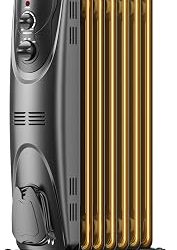
Utility Heater with Built-In Thermostat, 120V 600W
This is the archetype of the category: a compact, single-purpose freeze guard that plugs into a standard 120V circuit and cycles on its own thermostat with no user input. The low wattage keeps element temperatures modest, which is exactly what you want for a unit expected to run intermittently for five straight months in damp air.
600W Pump House Heater with Thermostat
Built around the same freeze-protection logic but tuned for stability rather than fast recovery, this one holds a narrow temperature band well in pump houses, well houses, and utility rooms. Its simplicity is its durability argument — fewer electronics in a humid enclosure means fewer failure points.
600W Utility Heater with Dual-Screen Display
The dual-screen readout is a genuine ergonomic upgrade when your only working position is prone: you can verify the setpoint and current ambient temperature without unmounting the unit or guessing at a dial. For anyone who wants to spot-check freeze protection during a cold snap, this is the easiest of the 600W group to live with.
BREEZOME 1500W Portable Electric Heater
Considerably more capable than a freeze guard, this oscillating 1500W unit suits semi-conditioned basements and encapsulated crawl spaces where you want usable warmth. The 24-hour timer and ECO thermostat help you avoid running it at full draw around the clock, and 37 dB operation keeps it unobtrusive if the space adjoins living areas.
DREO Space Heater with Thermostat
A well-built PTC ceramic heater with 70° oscillation, five modes, and remote control, best deployed in a finished basement or utility room rather than a bare dirt crawl space. PTC elements self-limit their surface temperature, which is a meaningful safety and longevity advantage over exposed wire coils.
Frequently Asked Questions
What temperature should I set for freeze protection?
Aim for 40°F to 45°F at the thermostat. That gives you a buffer above freezing for cold pockets and drafty perimeters without paying to heat the space to comfort levels.
Is 600W enough for my crawl space?
In an insulated, sealed crawl space with a vapor barrier, generally yes. In a vented crawl space with open foundation vents, no heater will keep up — air-seal and insulate first, then add heat.
Can I leave one running unattended all winter?
That is the intended use for thermostat-controlled utility heaters, provided you plug directly into a GFCI outlet, keep 12 inches of clearance from insulation and stored material, and inspect the unit before each season.
Should I still insulate my pipes?
Yes. Pipe insulation and a heater address different failure modes; insulation buys you time during a power outage, when the heater does nothing at all.
Final Thoughts
For most homeowners, the 600W Utility Heater with Dual-Screen Display is the best balance of durability and hands-off usability, with the 600W Pump House Heater with Thermostat as a simpler, equally reliable alternative. If your crawl space is encapsulated or doubles as a basement, the DREO PTC ceramic heater delivers real output with better long-term element safety.