Key takeaways
- Layered cutoffs, not one: Look for three independent systems working together: a tip-over switch on the base, a thermal fuse inside the element housing, and a PTC ceramic core that physically cannot exceed its designed temperature. A single overheat sensor is a single point of failure.
- Tip-over sensitivity and base geometry: A wide, weighted footprint prevents most accidents, but the switch should still trip at a modest tilt angle. Test it on carpet, where a narrow base can rock without ever activating the sensor.
- Housing and cord strain relief: Flame-retardant V-0 rated plastics resist deformation across repeated heat cycles. Check where the cord meets the body: a molded, reinforced collar outlasts a bare grommet, and cord failure is the most common reason these units get retired early.
- Control reach and feedback: Top-mounted panels beat rear-facing dials for anyone who does not want to crouch. Tactile or audible confirmation matters more than a slick touch surface, especially for users with reduced fine motor control or in a dark bedroom.
- Certification and intake maintenance: ETL or UL listing confirms the shut-off circuitry was tested by a third party rather than self-declared. Also check whether the rear intake grille can be vacuumed easily, since dust buildup is what pushes internal temperatures toward the cutoff threshold in the first place.
What's inside
Most heater shopping happens in a panic. The temperature drops, a room that never quite warms up becomes unbearable, and the first affordable box gets ordered. What buyers rarely evaluate in that moment is the part that matters most over three or four winters: how the unit behaves when nobody is watching it. A heater that runs unattended near bedding, curtains, or a desk cable nest needs layered protection, not a single sticker claiming safety. Automatic shut-off is the shorthand for that protection, but the term covers several distinct mechanisms, and cheaper models often include only one of them.
This guide looks at portable electric heaters through a durability and ergonomics lens. That means examining how tip-over switches are actually triggered, whether overheat cutoffs reset gracefully or need a full power cycle, how much force the control panel demands from stiff hands, and which housings resist the slow warping that comes from years of thermal cycling. Every model below uses PTC ceramic elements with self-limiting temperature behavior, carries a 12-hour timer, and includes a thermostat for cycling instead of running flat out. The differences are in build quality, noise floor, and how comfortable each is to live with day to day.
As an Amazon Associate we earn from qualifying purchases.


How to Choose a/an Space Heater With Automatic Shut-Off (2026)
- Layered cutoffs, not one: Look for three independent systems working together: a tip-over switch on the base, a thermal fuse inside the element housing, and a PTC ceramic core that physically cannot exceed its designed temperature. A single overheat sensor is a single point of failure.
- Tip-over sensitivity and base geometry: A wide, weighted footprint prevents most accidents, but the switch should still trip at a modest tilt angle. Test it on carpet, where a narrow base can rock without ever activating the sensor.
- Housing and cord strain relief: Flame-retardant V-0 rated plastics resist deformation across repeated heat cycles. Check where the cord meets the body: a molded, reinforced collar outlasts a bare grommet, and cord failure is the most common reason these units get retired early.
- Control reach and feedback: Top-mounted panels beat rear-facing dials for anyone who does not want to crouch. Tactile or audible confirmation matters more than a slick touch surface, especially for users with reduced fine motor control or in a dark bedroom.
- Certification and intake maintenance: ETL or UL listing confirms the shut-off circuitry was tested by a third party rather than self-declared. Also check whether the rear intake grille can be vacuumed easily, since dust buildup is what pushes internal temperatures toward the cutoff threshold in the first place.
The Best Space Heater With Automatic Shut-Off (2026)s Reviewed
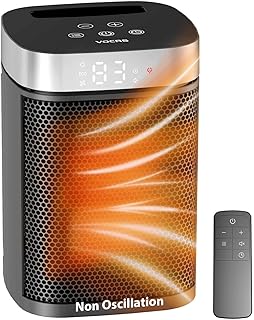
VOCRS 1500W PTC Electric Heater
The VOCRS pairs a compact chassis with genuinely useful Eco and fan modes, and its remote means you can adjust the thermostat without leaving a warm bed. The lightweight body makes it easy to relocate, though that same low mass means you should site it on a firm, level surface where the tip-over switch has a reliable reference plane.
DREO 2026 Upgraded 34dB Quiet Heater
At a claimed 34 decibels, this is the model to choose for a nursery, a home office on calls, or a light sleeper’s bedside. The gold-accented housing feels a step above typical white plastic, and the five modes give you enough granularity to hold a stable temperature rather than swinging between too cold and too stuffy.
DREO 70° Oscillating Space Heater
Oscillation is where mechanical wear tends to show up first, and DREO’s implementation here uses a smooth, low-load sweep that spreads warmth across a seating area instead of roasting one shin. It is the most sensible pick for a living room where two people share the heat from a single unit.
DREO Large Room Space Heater (ETL-Certified)
Built for larger spaces, this version combines the 70-degree sweep with explicit ETL certification and a fast ramp-up that takes the edge off a cold room in a couple of minutes. The broader base gives it the most confident stance of the group, which matters if pets or kids move through the area regularly.
WINHL Small Portable Space Heater
The WINHL delivers oscillation, five modes, and remote control in a footprint small enough for a desk return or a bathroom counter. Controls are logically grouped and forgiving to press, making it a strong choice where the panel gets used daily rather than set once and forgotten.
Frequently Asked Questions
What actually triggers automatic shut-off?
Three separate conditions: tilting or knocking the unit over, internal temperature crossing a preset threshold, or the timer reaching zero. On PTC models, the ceramic element also self-regulates, reducing current draw as it heats so it never reaches ignition temperatures.
Is it safe to run one overnight?
With a certified unit on a hard, level surface and at least three feet of clearance on all sides, yes. Use the timer rather than leaving it indefinitely, and never route the cord under rugs or behind furniture where heat cannot dissipate.
Do these need an extension cord?
No. A 1500W heater draws roughly 12.5 amps and should plug directly into a wall outlet. Extension cords and power strips are a genuine fire risk at this load, regardless of how good the heater’s own safety features are.
How long should one of these last?
Four to six seasons is realistic with light maintenance. Vacuum the intake grille monthly during use, inspect the cord entry for stiffening or discoloration each autumn, and avoid storing the unit under weight that could stress the housing.
Final Thoughts
For most rooms, the DREO 70° Oscillating Space Heater hits the best balance of coverage, build integrity, and quiet operation. Light sleepers and anyone working from home should take the DREO 34dB Quiet model instead, while the VOCRS 1500W remains the practical pick for a small bedroom or office where footprint and simple controls matter more than reach.