Key takeaways
- Variable steam, not maximum steam: LVP wants the lowest setting that still lifts soil. A dial or trigger that lets you dial back output is the single most important feature; a one-speed blaster gives you no way to protect seams.
- Head weight and swivel resistance: A head that pivots with light wrist pressure lets you steer from the elbow instead of cranking your forearm. Test the balance point — mops with the tank low on the body feel dramatically lighter over a full floor than top-heavy designs.
- Pad system and pad supply: Microfiber that grips and releases grit protects the wear layer from scratch-and-scrub abrasion. Check that replacement pads are cheap and still sold; a discontinued pad ends a mop’s life faster than any motor failure.
- Cord length and strain relief: Every unplug-and-replug is a stoop and a stretch. Look for 20+ feet of cord and a molded, reinforced collar where it exits the body — that joint is where flexing eventually kills cheap units.
- Removable tank and upright parking: A tank you can carry to the sink saves your lower back. A mop that stands on its own without a wall keeps the hot head off your LVP during pauses, which is exactly when accidental over-steaming happens.
What's inside
Luxury vinyl plank looks tough, and mostly it is — but the vulnerability isn’t the wear layer, it’s the seams and the adhesive underneath. Push heat and moisture into a floor for too long in one spot and you invite edge swelling, curled corners, or a soft glue line that telegraphs every plank joint. That’s why shopping for a steam mop for LVP is less about who claims the hottest steam and more about who gives you fine control, keeps you moving, and doesn’t fight your wrist while you do it.
I evaluate cleaning tools the way I’d evaluate any hand-operated equipment: how the load sits in your arms over twenty minutes, how much torque a swivel joint asks of your wrist, whether the cord entry point is strain-relieved, and how a machine ages after 200 tank fills. Below are the models that hold up on both counts, plus a buying framework and answers to the questions LVP owners ask most. Always confirm your flooring manufacturer allows steam before you start — a few glue-down and click-lock lines explicitly don’t.
As an Amazon Associate we earn from qualifying purchases.




How to Choose a Steam Mop For Lvp (2026)
- Variable steam, not maximum steam: LVP wants the lowest setting that still lifts soil. A dial or trigger that lets you dial back output is the single most important feature; a one-speed blaster gives you no way to protect seams.
- Head weight and swivel resistance: A head that pivots with light wrist pressure lets you steer from the elbow instead of cranking your forearm. Test the balance point — mops with the tank low on the body feel dramatically lighter over a full floor than top-heavy designs.
- Pad system and pad supply: Microfiber that grips and releases grit protects the wear layer from scratch-and-scrub abrasion. Check that replacement pads are cheap and still sold; a discontinued pad ends a mop’s life faster than any motor failure.
- Cord length and strain relief: Every unplug-and-replug is a stoop and a stretch. Look for 20+ feet of cord and a molded, reinforced collar where it exits the body — that joint is where flexing eventually kills cheap units.
- Removable tank and upright parking: A tank you can carry to the sink saves your lower back. A mop that stands on its own without a wall keeps the hot head off your LVP during pauses, which is exactly when accidental over-steaming happens.
The Best Steam Mop For Lvp (2026)s Reviewed
Bissell PowerFresh Vac & Steam 2747A
Vacuuming and steaming in a single pass removes the grit that causes most micro-scratching on vinyl, and the low steam setting is gentle enough for plank seams. It’s the heaviest option here, so expect a real workout on stairs and multi-room runs — but the build feels substantial rather than hollow.
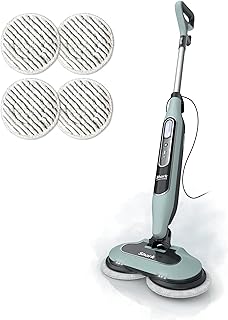
Shark Steam & Scrub S8001
The self-cleaning pads roll as you move, which means the fabric touching your floor is constantly refreshed rather than smearing the same slurry around. Ergonomically it’s the standout: the XL tank sits low, the swivel is nearly frictionless, and the LED headlights actually help you spot streaking before it dries.
Bissell PowerFresh 1940A
Three steam levels and a 12-inch path make this the value pick for larger LVP areas — use level one and keep the head moving. The flip-down scrubber is handy for grout transitions, though I’d keep it off the vinyl itself.
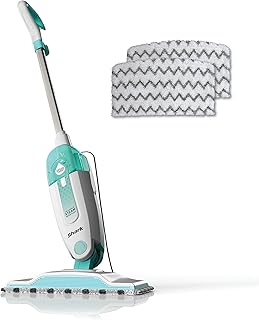
Shark Steam Mop S1000
Light, simple, and forgiving, this is the one I’d hand to someone worried about overdoing it, since its modest output makes over-saturating a seam genuinely hard. The removable tank refills at the sink without bending, and the whole unit stores in a closet corner.
10-in-1 Detachable Steam Mop
The handheld detaches for baseboards, appliance edges, and upholstery, which makes it the most versatile pick for small homes. The 350ml tank means frequent refills, so treat it as a spot-and-detail tool with floor capability rather than a whole-house workhorse.
Frequently Asked Questions
Is steam actually safe on LVP?
On sealed, well-installed LVP with tight seams, brief low-steam passes are generally fine. The risk is dwell time — parking a hot head in one place is what pushes moisture into joints and softens adhesive.
Will steam void my flooring warranty?
Sometimes. Several LVP brands prohibit steam cleaning outright, so check your installation documents first; if it’s disallowed, a damp microfiber flat mop is the safe substitute.
How often should I replace the pads?
Retire a pad once it feels stiff or slick, usually after 40 to 60 washes. Worn microfiber stops holding grit and starts dragging it, which is how fine scratch patterns develop.
Do I still need to vacuum first?
Yes, unless you’re using a combination unit like the 2747A. Loose sand under a moving pad is abrasive, and steam alone won’t lift it.
Final Thoughts
For most LVP homes the Shark Steam & Scrub S8001 is the best balance of gentle cleaning and genuinely comfortable handling, while the Bissell PowerFresh 1940A delivers similar control for less across bigger floor plans. If you want minimum risk and minimum weight, the Shark S1000 is the easiest mop here to use correctly every single time.