Key takeaways
- Weave tightness over thickness: A dense, tightly interlaced weave outlasts a thick but loosely constructed one. Loose weaves migrate around staple lines and open up into visible gaps at the seat’s leading edge, which is where 80% of wear concentrates.
- Controlled stretch, not zero stretch: You want a fabric that gives slightly on the bias so it can wrap a domed foam pad without puckering at the corners, but returns to shape. Fabrics marketed as “not stretchy” pull crisp lines on flat pads and are easier for beginners to keep square.
- Breathability for seated comfort: Natural and faux-linen constructions move moisture far better than coated vinyl. If your household lingers at the table, prioritize air permeability; it’s the difference between a comfortable hour and shifting around after fifteen minutes.
- Cleanability matched to your reality: Households with young children or frequent wine benefit from a water-repellent finish. Everyone else is better served by a washable, solution-friendly woven that won’t stiffen or crack over years of wiping.
- Yardage with a margin for error: Budget roughly half a yard per standard drop-in seat, then add 20% for pattern matching and re-cuts. Running short mid-project usually means a dye-lot mismatch on the reorder.
What's inside
Dining chairs absorb more punishment than almost any other seat in the house. They get dragged, leaned back on, spilled on, and loaded with the full weight of an adult landing hard after a long day. When the seat pads start to sag or the old cover goes shiny at the front edge, most people assume the frame is done. Usually it isn’t. The frame is fine, the foam is tired, and the fabric simply lost the fight. The tricky part is that fabric shopping happens online, where a swatch photo tells you almost nothing about how a weave behaves under repeated compression and shear.
This guide approaches the problem from an ergonomics and durability standpoint rather than a purely decorative one. The seat cover is a structural layer: it holds foam in compression, resists the sideways scrubbing motion your thighs make every time you shift, and determines whether the chair breathes or turns clammy after twenty minutes. Below are five fabrics worth cutting into, plus a ready-made upholstered chair for anyone who decides the DIY route isn’t the right use of a weekend. Each pick is assessed on weave density, dimensional stability around staples, cleanability, and how it feels against skin during a long meal.
As an Amazon Associate we earn from qualifying purchases.



How to Choose a Fabric To Reupholster Dining Chairs (2026)
- Weave tightness over thickness: A dense, tightly interlaced weave outlasts a thick but loosely constructed one. Loose weaves migrate around staple lines and open up into visible gaps at the seat’s leading edge, which is where 80% of wear concentrates.
- Controlled stretch, not zero stretch: You want a fabric that gives slightly on the bias so it can wrap a domed foam pad without puckering at the corners, but returns to shape. Fabrics marketed as “not stretchy” pull crisp lines on flat pads and are easier for beginners to keep square.
- Breathability for seated comfort: Natural and faux-linen constructions move moisture far better than coated vinyl. If your household lingers at the table, prioritize air permeability; it’s the difference between a comfortable hour and shifting around after fifteen minutes.
- Cleanability matched to your reality: Households with young children or frequent wine benefit from a water-repellent finish. Everyone else is better served by a washable, solution-friendly woven that won’t stiffen or crack over years of wiping.
- Yardage with a margin for error: Budget roughly half a yard per standard drop-in seat, then add 20% for pattern matching and re-cuts. Running short mid-project usually means a dye-lot mismatch on the reorder.
The Best Fabric To Reupholster Dining Chairs (2026)s Reviewed
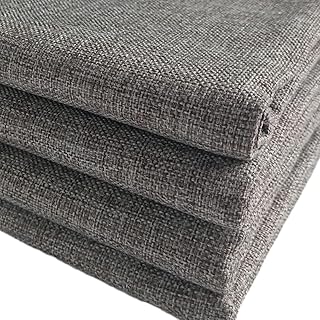
TinaKim Thick Chair Upholstery Fabric (Faux Linen)
This is the safest first-timer choice in the group: the hand is substantial enough to hide minor foam irregularities, and the faux-linen weave grips staples without fraying back along the cut edge. The two-yard cut covers roughly four standard drop-in seats with sensible waste allowance, and the flaxen tone reads as neutral under both warm and cool lighting.
Faux Linen Needlework Fabric, 3.3 Yards
The extra yardage makes this the practical pick for a full set of six, since you can lay out every panel in the same direction and keep the weave running consistently across the table. It’s slightly more pliable than the TinaKim, which helps when you’re wrapping a rounded or waterfall-front seat pad.
Erosebridal Florals Flannel Fabric
A softer, warmer surface aimed at comfort rather than heavy traffic, with a botanical print that camouflages the light soiling every dining chair eventually collects. The low-stretch construction pulls clean, taut lines on flat pads, though I’d reserve it for adult households or accent chairs rather than the everyday seats where kids eat.
Erosebridal Cowboy Fabric, 10 Yards
The workhorse of the lineup: a water-repellent, indoor-outdoor construction in a denim-weight western print, sold in enough yardage to redo a large set and keep offcuts for future repairs. The finish sheds spills long enough to blot them, which is exactly what you want on a chair that sees actual dinners.
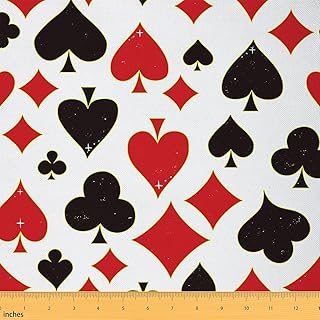
Poker Plaid Upholstery Fabric, 5 Yards
Built on the same durable, waterproof indoor-outdoor base as the cowboy print but with a graphic lattice that suits game rooms and bar seating. Line the plaid up with the seat’s front edge during layout, since any drift off-square shows immediately on a geometric repeat.
Frequently Asked Questions
How much fabric do I need per dining chair?
For a standard removable drop-in seat, plan on about half a yard each, assuming a 54 to 57 inch width. Chairs with upholstered backs or fully wrapped frames can need a full yard or more, and large prints require extra for repeat matching.
Should I replace the foam at the same time?
Almost always yes. Compressed foam is the real source of that sinking feeling, and fresh high-density foam plus a thin batting wrap does more for comfort and posture than any fabric upgrade. It’s also far cheaper to do once than to re-staple later.
Is waterproof fabric worth the tradeoff?
If you have children, pets, or a table that hosts frequent gatherings, the protection outweighs the slightly reduced breathability. For quieter households, a breathable woven with a spray-on protectant gives you a more comfortable seat and most of the stain resistance.
What if I don’t want to reupholster at all?
Buying a finished upholstered chair is a legitimate answer, especially if your existing frames are wobbly or joined with staples rather than proper joinery. The HomePop Parsons Dining Chair in dark blue is a straightforward drop-in replacement with a supportive seat and a durable factory-applied cover.
Final Thoughts
For most dining rooms, the Erosebridal Cowboy fabric is the durability leader thanks to its water-repellent finish and generous ten-yard cut, while the TinaKim faux linen remains the easiest fabric to work with and the most forgiving of a first attempt. If you’re covering a full set and want consistent grain across every chair, the 3.3-yard Faux Linen Needlework cut is the smarter buy, and anyone who’d rather skip the staple gun entirely will be well served by the HomePop Parsons chair.