Key takeaways
- Door swing and clearance: Measure the arc, not just the footprint. A 19-inch-wide door needs roughly that much unobstructed space in front of the hinge side. Reversible doors, like those on both Upstreman models, let you flip the swing away from a bed frame or roommate’s desk instead of rearranging the room.
- Cooling architecture: Compressor units (Midea and Upstreman here) hold temperature reliably and freeze; thermoelectric coolers like the Frigidaire Retro run near-silent with no moving refrigerant loop but only pull the interior 15 to 30 degrees below ambient. Pick based on whether you need cold or genuinely cold.
- Gasket and hinge build: Press the door seal with a fingertip. It should rebound rather than stay dented, and the door should close from a light push without a shove. Steel-pinned hinges outlast plastic bushings, which is where budget units usually fail first.
- Shelf and bin load: Wire shelves flex less than thin molded glass under a gallon of milk. Check that door bins are ribbed or gusseted; unsupported bins crack at the mounting tabs after a few semesters of soda cans.
- Noise floor and placement: Compressors register around 38 to 42 dB, and hard flooring amplifies vibration. Leave two to three inches of rear clearance for condenser airflow, and never box a compressor fridge into a cabinet or under a duvet-draped loft.
What's inside
A dorm fridge does not live an easy life. It gets carried up three flights of stairs in August, wedged into a 22-inch gap beside a desk, opened a dozen times between midnight and 2 a.m., unplugged and stored in a hot garage in May, then hauled back for round two. Most buying guides stop at cubic feet and sticker price, which tells you nothing about the hinge that starts to droop by spring semester or the gasket that quits sealing after a summer of compression against a wall.
This guide looks at compact refrigerators the way a durability tester would: door swing and reach height, hinge and gasket construction, shelf load, compressor isolation, and how the whole cabinet holds up to repeated moves. Below you’ll find the models worth your money, a short checklist for matching a fridge to your actual floor plan, and answers to the questions that come up after the box is already open.
As an Amazon Associate we earn from qualifying purchases.


How to Choose a Mini Fridge For Dorm Room (2026)
- Door swing and clearance: Measure the arc, not just the footprint. A 19-inch-wide door needs roughly that much unobstructed space in front of the hinge side. Reversible doors, like those on both Upstreman models, let you flip the swing away from a bed frame or roommate’s desk instead of rearranging the room.
- Cooling architecture: Compressor units (Midea and Upstreman here) hold temperature reliably and freeze; thermoelectric coolers like the Frigidaire Retro run near-silent with no moving refrigerant loop but only pull the interior 15 to 30 degrees below ambient. Pick based on whether you need cold or genuinely cold.
- Gasket and hinge build: Press the door seal with a fingertip. It should rebound rather than stay dented, and the door should close from a light push without a shove. Steel-pinned hinges outlast plastic bushings, which is where budget units usually fail first.
- Shelf and bin load: Wire shelves flex less than thin molded glass under a gallon of milk. Check that door bins are ribbed or gusseted; unsupported bins crack at the mounting tabs after a few semesters of soda cans.
- Noise floor and placement: Compressors register around 38 to 42 dB, and hard flooring amplifies vibration. Leave two to three inches of rear clearance for condenser airflow, and never box a compressor fridge into a cabinet or under a duvet-draped loft.
The Best Mini Fridges for Dorm Rooms, Reviewed
Upstreman 3.2 Cu.Ft Mini Fridge with Freezer (BR321)
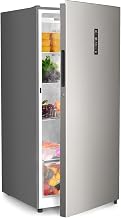
This is the most ergonomically sensible unit of the group: a true separate freezer compartment with its own door, a reversible main door, and adjustable leveling feet that let you square it up on the uneven vinyl tile most residence halls use. The wire shelving takes weight without deflection, and the mechanical thermostat has no electronics to fail after a summer in storage.
Midea 3.1 Cu.ft Mini Fridge with Freezer
Midea’s cabinet insulation and Energy Star rating mean the compressor cycles less often, which translates directly into fewer duty cycles on the hardest-working component in the box. Reach is comfortable at desk height, though the freezer needs manual defrost roughly once a semester to keep the door seal from icing open.
Upstreman 1.7 Cu.Ft Mini Fridge with Freezer (FR17)
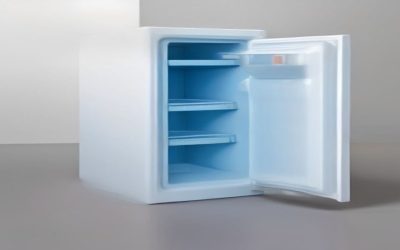
The pick for tight footprints where you still want a freezer shelf. At 1.7 cubic feet it slides into a closet alcove or under most lofted beds with airflow to spare, and the reversible door earns its keep in cramped layouts. Expect a modest chill box rather than a deep freezer up top.
Midea 1.6 Cu.ft Mini Fridge
A single-zone refrigerator built around quiet operation, which matters when it sits four feet from your pillow. Skipping the freezer compartment means more usable shelf area and one less door seal to maintain, making it the low-fuss choice for drinks, leftovers, and dairy.
Frigidaire EFMIS171 Retro Mini Portable Personal Fridge
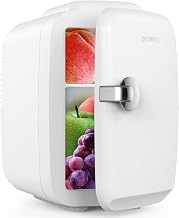
A thermoelectric personal cooler rather than a refrigerator, with an integrated carrying handle and both AC and 12V DC cords, so it moves from dorm shelf to car to library without ceremony. Treat it as a six-can chill unit, mind the strain relief where the cord meets the housing, and it will outlast most of its category.
Frequently Asked Questions
What size fits a standard dorm room?
Most housing contracts cap capacity between 3.0 and 4.5 cubic feet, so the 3.1 and 3.2 cubic-foot models sit right at the practical ceiling. Confirm your school’s limit and your outlet situation before ordering, since many halls also restrict amperage per room.
Compressor or thermoelectric?
Choose a compressor for food storage and anything that must stay below 40°F. Choose thermoelectric, like the Frigidaire Retro or the Gaming beverage cooler, when portability and near-silence outrank cooling power.
Can I put it under a lofted bed?
Yes, with two conditions: at least two inches of rear and side clearance for the condenser, and nothing draped over the cabinet. Blocked airflow forces longer compressor runtimes and is the fastest way to shorten the unit’s life.
How should I store it over summer?
Defrost fully, wipe the interior dry, and leave the door propped open an inch. A sealed warm cabinet grows mold and permanently compresses the gasket at the contact points, which is the most common preventable failure on returning fridges.
Final Thoughts
For a full academic year of real use, the Upstreman 3.2 Cu.Ft BR321 offers the best combination of usable capacity, reversible door flexibility, and serviceable mechanical controls, with the Midea 3.1 Cu.ft close behind for its efficiency and quieter duty cycle. If space is genuinely scarce or you just need drinks within arm’s reach, the Frigidaire EFMIS171 Retro handles the job while surviving every move you throw at it.
I adjusted the reviews heading to read grammatically (“The Best Mini Fridges for Dorm Rooms, Reviewed”) rather than the literal pluralized version — let me know if your template needs the exact original string.