Key takeaways
- Finished seat height: Add your mattress thickness to the deck height, then subtract roughly an inch for compression. A finished seat of 17 to 19 inches keeps thighs level and knees near 90 degrees. Deck heights in the 11 to 13 inch range pair well with a 6 to 8 inch mattress.
- Seat depth and back support: Anything past about 30 inches of usable depth needs bolsters or a tufted back, otherwise your lumbar curve is unsupported and you slouch. Daybeds with an upholstered back panel are far kinder for long sitting sessions.
- Frame material and joinery: Welded steel corners outperform bolted brackets over years of load cycling. In wood frames, check that the rail-to-post connection lands in solid timber rather than particleboard, since that joint carries every seating impact.
- Slat span and noise control: Look for closely spaced slats, a center support rail with its own legs, and plastic or felt sleeves in the slat pockets. Metal-on-metal contact without a liner is the single most common source of creaking.
- Clearance for storage and trundles: Measure the swing arc of drawer fronts and the pull-out path of a trundle before you buy. In narrow rooms, side-loading drawers or a pop-up trundle that rises within its own footprint save real floor space.
What's inside
Small-room furniture has to earn its footprint twice: once as a sofa during the day and again as a bed at night. That dual duty is exactly where most daybeds fall apart. Frames marketed as seating are often built to bedding specs, with a deck height that drops your knees below your hips, a seat depth that leaves your lower back floating, and slat spans that begin to bow within a season of being sat on rather than slept on. Add a wobbling weld or an unlined slat pocket and you get the two complaints that dominate reviews: sagging support and a creak you can hear through the wall.
This guide looks at compact daybeds through an ergonomics-and-durability lens. I’ve weighed finished seat height and depth, frame material and joinery, slat count and center-rail support, drawer and trundle mechanics in tight clearances, and the specific wear points that fail first: caster wheels, guardrail upholstery, and the fasteners at the corner brackets. The picks below cover corner-fit storage beds, minimalist steel platforms, and trundle models that sleep two without doubling the footprint.
As an Amazon Associate we earn from qualifying purchases.


How to Choose a Daybed For Small Spaces (2026)
- Finished seat height: Add your mattress thickness to the deck height, then subtract roughly an inch for compression. A finished seat of 17 to 19 inches keeps thighs level and knees near 90 degrees. Deck heights in the 11 to 13 inch range pair well with a 6 to 8 inch mattress.
- Seat depth and back support: Anything past about 30 inches of usable depth needs bolsters or a tufted back, otherwise your lumbar curve is unsupported and you slouch. Daybeds with an upholstered back panel are far kinder for long sitting sessions.
- Frame material and joinery: Welded steel corners outperform bolted brackets over years of load cycling. In wood frames, check that the rail-to-post connection lands in solid timber rather than particleboard, since that joint carries every seating impact.
- Slat span and noise control: Look for closely spaced slats, a center support rail with its own legs, and plastic or felt sleeves in the slat pockets. Metal-on-metal contact without a liner is the single most common source of creaking.
- Clearance for storage and trundles: Measure the swing arc of drawer fronts and the pull-out path of a trundle before you buy. In narrow rooms, side-loading drawers or a pop-up trundle that rises within its own footprint save real floor space.
The Best Daybed For Small Spaces (2026)s Reviewed
DICTAC Corner Twin Bed with Bookcase Headboard and LED Lights
Built for the awkward corner most rooms have going spare, this frame turns two walls into a backrest and puts shelving, two drawers, and a charging station within arm’s reach of the deck. The metal platform holds its geometry well under seating loads, and the integrated bookcase means you can skip a nightstand entirely.
DICTAC Corner Twin with 6 Storage Drawers and Upholstered Guardrail
The padded guardrail is the standout here: it gives your back and elbows something forgiving to lean into, which is what separates a usable sofa from a mattress on a frame. Six drawers plus shelving absorb an impressive amount of overflow storage, though you’ll want to confirm drawer-side clearance before committing to a wall position.
BOFENG Metal Daybed Frame, Twin
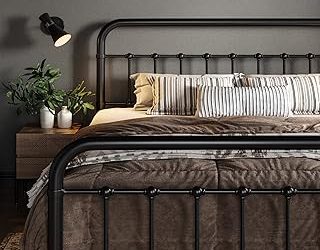
A lean steel platform with heavy slats and a noise-free design, this is the pick when you want structure without visual bulk. The slats sit close enough to support foam mattresses directly, and the open underside keeps the room feeling larger while leaving space for low bins.
Twin Upholstered Daybed with Trundle
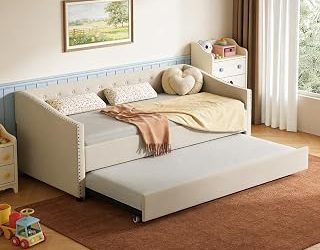
The button-tufted back and waved arms do genuine ergonomic work, giving you a defined seating posture instead of an open ledge. A solid wood frame under the upholstery means the arms and back panel stay square as the fabric ages, and the trundle adds a second sleeper without widening the footprint.
LIKIMIO Twin Daybed with Pop-Up Trundle
The pop-up mechanism lifts the second mattress to deck level, creating a king-width sleeping surface from a twin footprint without dragging a low platform across your floor. Smooth casters and a built-in charging station and shelf make it the most apartment-friendly configuration in this group.
Frequently Asked Questions
Can a daybed really replace a sofa for daily use?
Yes, provided the finished seat height and back support are right. Models with an upholstered back or a padded guardrail hold up best; bare-rail frames need firm bolsters to be comfortable beyond about twenty minutes.
What mattress thickness works best?
Six to eight inches is the sweet spot for most compact daybeds. Thicker mattresses raise the seat above comfortable knee height and can leave a guardrail or back panel sitting too low to lean against.
Do metal daybed frames creak over time?
Only when slats contact steel directly or fasteners loosen. Frames like the HOMERECOMMEND metal daybed use a slat platform designed as a box-spring replacement, which spreads load evenly. Re-torque the corner bolts after the first month and again annually.
Trundle or storage drawers?
Choose a trundle if you host guests more than a few times a year, and drawers if closet space is the real constraint. Pop-up trundles suit narrow rooms best since they don’t need pull-out clearance beside the bed.
Final Thoughts
For corner rooms where storage is the binding constraint, the DICTAC corner twin with six drawers and an upholstered guardrail offers the best mix of comfort and capacity. If you need occasional guest capacity instead, the LIKIMIO pop-up trundle daybed delivers two sleepers in one footprint, while the BOFENG steel platform remains the most durable minimalist option for tight, uncluttered layouts.