Key takeaways
- Match BTUs to square footage first: Roughly 20 BTU per square foot is a sane starting point, so 5,000 BTU suits a 150 sq. ft. bedroom and 12,000 BTU covers open spaces near 550 sq. ft. Oversizing costs more upfront and leaves rooms clammy because the compressor short-cycles before it can pull moisture out.
- Weigh the unit, then weigh your window: Compact 5,000 BTU models land in the 35 to 45 pound range and can be handled solo; 10,000 to 12,000 BTU units frequently exceed 60 pounds and deserve a second pair of hands. Check that your sash and sill can carry the load without flexing.
- Look for a remote if the unit sits low: Top-mounted mechanical dials mean bending or kneeling every time you adjust the temperature. A remote with raised, tactile buttons is the single biggest ergonomic upgrade on a budget AC, especially for anyone with limited mobility or a unit installed above eye level.
- Inspect filter access before you buy: A washable filter that slides out from the front takes seconds to rinse. One that requires removing a grille panel gets skipped, and a clogged filter is the leading cause of weak airflow, iced coils, and premature compressor strain.
- Prioritize a rigid chassis and quality gaskets: Powder-coated steel bases, thick accordion side panels, and dense foam seals hold their shape through freeze-thaw cycles. Thin plastic housings rattle within two seasons and let conditioned air escape around the frame.
What's inside
Window air conditioners are one of the few appliances you install with your body, not a wrench. You lift 50-plus pounds to chest height, balance it on a sill, and hold it steady while you find the mounting screws — and then you live with whatever noise, drafts, and control layout you chose for the next five to eight summers. That combination of a physically demanding install and a long service life is exactly why shopping on sticker price alone tends to disappoint. The cheapest unit on the shelf is often the one with the flimsiest chassis flange, the stiffest filter door, and the buttons hidden on the top panel where you have to crouch to read them.
This guide looks at value the way a fitness or durability tester would: how much cooling capacity you get per dollar, how manageable the unit is during mounting, how easily you can reach filters and controls once it is in the window, and which materials tend to survive repeated seasonal cycling. Below you will find current picks across the 5,000 to 12,000 BTU range, a checklist for matching capacity to your room, and answers to the questions that come up most often after the box is open.
As an Amazon Associate we earn from qualifying purchases.



How to Choose a/an Price For Window Air Conditioner (2026)
- Match BTUs to square footage first: Roughly 20 BTU per square foot is a sane starting point, so 5,000 BTU suits a 150 sq. ft. bedroom and 12,000 BTU covers open spaces near 550 sq. ft. Oversizing costs more upfront and leaves rooms clammy because the compressor short-cycles before it can pull moisture out.
- Weigh the unit, then weigh your window: Compact 5,000 BTU models land in the 35 to 45 pound range and can be handled solo; 10,000 to 12,000 BTU units frequently exceed 60 pounds and deserve a second pair of hands. Check that your sash and sill can carry the load without flexing.
- Look for a remote if the unit sits low: Top-mounted mechanical dials mean bending or kneeling every time you adjust the temperature. A remote with raised, tactile buttons is the single biggest ergonomic upgrade on a budget AC, especially for anyone with limited mobility or a unit installed above eye level.
- Inspect filter access before you buy: A washable filter that slides out from the front takes seconds to rinse. One that requires removing a grille panel gets skipped, and a clogged filter is the leading cause of weak airflow, iced coils, and premature compressor strain.
- Prioritize a rigid chassis and quality gaskets: Powder-coated steel bases, thick accordion side panels, and dense foam seals hold their shape through freeze-thaw cycles. Thin plastic housings rattle within two seasons and let conditioned air escape around the frame.
The Best Price For Window Air Conditioner (2026)s Reviewed
Frigidaire 5,000 BTU Window-Mounted Air Conditioner
A dependable small-room workhorse with a genuinely quiet fan and an auto-restart feature that saves you from resetting everything after a power blip. The build quality on the mounting brackets is a step above most entry-level units, which matters when the same screws get retightened every spring.
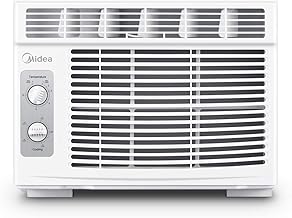
Midea 5,000 BTU EasyCool
The simplest unit here in the best sense: mechanical rotary controls with no menus to navigate and a reusable filter that pops out for a rinse under the tap. It is light enough for one-person installation and a smart pick for a home office or guest room where you want fewer parts to fail.
Electactic 8,000 BTU Window AC
The 6-in-1 mode set and 24-hour timer give you real scheduling control at a mid-range price, and the remote spares you from reaching over the unit. Cooling coverage up to 350 sq. ft. makes it the sweet spot for a primary bedroom or a small apartment living area.
BLACK+DECKER 12,000 BTU (BWAC12WTB)
The heavy hitter of the group, capable of holding a 550 sq. ft. open-plan space at a comfortable setpoint with three cooling speeds and a fan-only mode for shoulder season. Plan for a two-person lift and confirm your window frame is structurally sound before committing.
Tehanld 10,000 BTU U-Shaped Window AC
The U-shaped design puts the compressor outside the closed sash, which cuts perceived noise dramatically and lets you keep using the window view. It is the most ergonomically thoughtful layout on this list, though installation takes more patience than a standard box unit.
Frequently Asked Questions
How much should I expect to spend in 2026?
Entry-level 5,000 BTU units typically sit at the low end, mid-capacity 8,000 BTU models with remotes fall in the middle, and 10,000 to 12,000 BTU or U-shaped designs command the most. Check the listings above for current pricing, since window AC prices swing seasonally.
Can I install one of these by myself?
Units under about 45 pounds, like the Frigidaire and Midea 5,000 BTU models, are manageable solo if you have a stable sill. Anything at 8,000 BTU or above is safer with a helper supporting the weight while you secure the brackets.
Do U-shaped units really run quieter?
Yes, meaningfully. Closing the sash between the indoor and outdoor halves puts a physical barrier between you and the compressor, which is where most of the noise originates. Expect a noticeable drop compared to a conventional unit of the same capacity.
How often should I clean the filter?
Every two to four weeks during heavy use. Reusable filters on the Midea and Antarctic Star models rinse clean in under a minute, and staying on schedule protects airflow and extends compressor life.
Final Thoughts
For most buyers, the Electactic 8,000 BTU hits the best balance of coverage, remote convenience, and price, while the Midea EasyCool 5,000 BTU remains the most sensible choice for small rooms and solo installation. If quiet operation and long-term comfort outrank upfront cost, the Tehanld 10,000 BTU U-shaped unit is worth the extra installation effort.