Key takeaways
- Daily production tells you how fast the unit recovers after you empty it. Built-in refrigerator makers typically manage two to four pounds per day; nugget modules are often slower.
- Bin storage tells you how much is ready right now. A large bin with slow production feels great on Monday and empty on Saturday.
- Duty cycle matters for longevity. A maker running near capacity every day ages its auger and water valve far faster than one topping off a bin.
What's inside
An ice maker is the only part of a refrigerator you interact with by feel, several times a day, usually while holding something in your other hand. That makes it a mechanical wear item and an ergonomic decision at the same time. The bin you have to squat for, the dispenser paddle that needs two hands, the auger that grinds louder every winter: these are the details that decide whether you like your fridge in year four, long after the showroom finish stops mattering.
This guide looks at ice makers the way a durability specialist would: which mechanisms actually last, how ice placement affects your wrists, back, and shoulders, and how to read production and storage numbers without getting misled. You will also see where each style makes sense, from compact French door units to dedicated undercounter ice drawers built for volume.
Our Recommended Picks
As an Amazon Associate we earn from qualifying purchases.


Ice Type Determines the Machinery Inside
Three mechanisms dominate. Mold-and-heater cube makers fill a tray, freeze, then warm the tray to release; simple, proven, and the easiest to replace as a cartridge. Auger-driven nugget makers compress soft flakes into chewable pellets, which means a motor, a gearbox, and a compression chamber that all see continuous load. Craft or slow-freeze cubes use a separate cavity and take hours per batch. If you want nugget ice, accept that you are buying a more complex assembly and buy from a maker that sells the module as a serviceable part. Units like the 20 cu. ft. French door model with side freezer produce both nugget and cube from one appliance, which is convenient, though it also means two systems sharing one water path.
Where the Ice Lives Decides How Your Body Works
Placement is the ergonomic variable most shoppers skip. Through-the-door dispensers keep ice between roughly hip and chest height, the range where your shoulder does the least work, and they spare you opening a heavy door on a hot day. Freezer-bin ice on a bottom drawer means bending and a two-handed lift of a bin that can weigh eight pounds when full, which is a poor pattern for anyone with a bad back or knees. Dedicated ice drawers split the difference: they open at counter level with a straight pull. The Samsung 26 cu. ft. counter-depth three-door model handles this well by putting four ice types in an upper compartment rather than the bottom freezer.
Read Production Rate and Storage as Two Separate Numbers
- Daily production tells you how fast the unit recovers after you empty it. Built-in refrigerator makers typically manage two to four pounds per day; nugget modules are often slower.
- Bin storage tells you how much is ready right now. A large bin with slow production feels great on Monday and empty on Saturday.
- Duty cycle matters for longevity. A maker running near capacity every day ages its auger and water valve far faster than one topping off a bin.
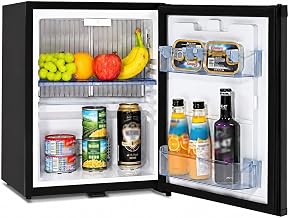
If you entertain or run a home bar, stop asking a refrigerator to do the job. A 2-in-1 undercounter ice maker and beverage fridge producing 120 pounds per day with 30 pounds of storage removes the strain from your main appliance entirely, and keeps the drinks drawer at an easy reach height.
Durability Signals to Check Before You Commit
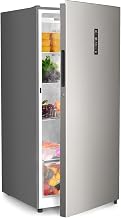
Look for a water filter you can reach without emptying a shelf, since a filter that is annoying to change is a filter that never gets changed, and scale is the leading cause of ice maker failure. Check whether the ice bin removes on rails or has to be wrestled past a door hinge. Ask whether the ice module is a replaceable assembly. Inspect the door gasket profile: a thin, single-fin gasket on a heavy French door will compress and leak air sooner than a dual-fin one, and warm air is what turns cubes into a fused block. Simpler builds have an advantage here. A frost-free 16 cu. ft. French door with a bottom freezer drawer, whether the standard version or the LRAIN model, has fewer moving parts to fail than a four-door system.
Fit the Footprint, Then the Feature List
Counter-depth models sit flush with cabinetry, which reduces the forward reach into deep shelves and keeps walkways clear, a real benefit in a galley kitchen. The tradeoff is narrower interior depth and, in some designs, a smaller ice bin. The KoolMore counter-depth four-door at 22.5 cu. ft. is a reasonable compromise, though measure your door swing clearance before ordering: a dispenser you have to reach around a swung door to use defeats the ergonomic point.
Tips
- Discard the first two or three batches after installation and after every filter change; they carry manufacturing residue and trapped air.
- Wipe the bin dry monthly. Residual moisture is what welds cubes into a clump that requires force to break.
- Keep a shutoff valve on the supply line within arm’s reach, not buried behind the unit, so a leak takes seconds to stop.
- If ice tastes stale, the problem is usually absorbed freezer odor, not the water. Empty the bin and replace the batch.
Frequently Asked Questions
Is nugget ice worth the added complexity?
If you drink iced beverages daily, yes; the texture is genuinely better and softer on teeth. If ice is occasional, a mold-based cube maker will outlast it with less maintenance.
How long should a built-in ice maker last?
Expect five to ten years from the module, with the water inlet valve and filter housing being the usual first failures. Both are inexpensive parts on well-supported models.
Do I need a plumbed water line?
Most refrigerator makers require one. Some undercounter units offer a reservoir option, which trades convenience for a manual refill you will get tired of quickly.
Why does my ice maker slow down in summer?
Higher ambient temperature and more door openings extend freeze cycles. Verify clearance around the condenser and clean the coils before assuming a fault.
Conclusion
The best ice maker is the one whose mechanism matches how hard you will work it, whose bin sits where your body can reach it comfortably, and whose parts you can still buy in five years. Decide on ice type and placement first, confirm production and storage separately, then pick the finish.