Key takeaways
- Ice maker auger motors typically outlast the fill valve. A sticking valve causes slow overfill, refreezing, and jams long before the motor itself gives out.
- Door gaskets compress and stiffen around the seven-year mark, especially on wide French doors carrying door bins loaded with bottles.
- Drawer glides are the honest durability tell. Full-extension steel glides with a stated load rating handle a packed freezer; plastic rails on the same drawer sag and bind.
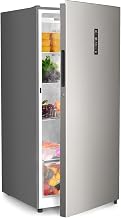
- Inverter compressors, like the one in the Antarctic Star, modulate rather than cycling hard on and off, which reduces both mechanical stress and the temperature swings that cause frost buildup.
What's inside
A refrigerator is the only appliance in a kitchen that gets opened a dozen times a day for fifteen years. That repetition is exactly why ice makers deserve more scrutiny than they usually get: the mechanism that seems like a small luxury on the showroom floor becomes the part you reach for most, and the part most likely to fail first. Handle height, drawer glide resistance, bin depth, and door swing arc all quietly shape whether the machine feels effortless in year eight or like a chore you’ve learned to tolerate.
This guide looks at ice-making refrigerators through two lenses I use professionally: how the body interacts with the appliance, and which components wear out under real household duty cycles. You’ll learn how to measure your reach envelope before you shop, where ice systems physically belong depending on who uses the kitchen, which failure points to inspect on a spec sheet, and how to size capacity to your household’s actual rhythm rather than a marketing number.
Our Recommended Picks
As an Amazon Associate we earn from qualifying purchases.


Decide Where the Ice Should Physically Live
Ice systems occupy one of three positions, and each carries a distinct ergonomic cost. Through-the-door dispensers keep ice at roughly chest height with no bending and no door opening, which is the gentlest option for anyone with shoulder or back limitations, but they surrender freezer volume and add a dispenser chute that can freeze up. In-freezer bins, common on models like the Antarctic Star 17.5 Cu Ft French Door with its built-in automatic maker, require a full bend to a low drawer, though they preserve door insulation and eliminate the most leak-prone plumbing run. Standalone units such as the Commercial Ice Maker Machine rated at 100 lbs per 24 hours sit at counter height under a cabinet, delivering ice at an ideal working plane while keeping the load off your refrigerator’s compressor entirely.
Map Your Reach Envelope Before You Measure the Alcove
Most buyers measure the cabinet opening and stop. Measure yourself too. Stand where you’d normally stand and note the height of your relaxed elbow, then the height at which reaching becomes a stretch. Anything you touch daily should fall between hip and shoulder. On a French door layout, that means the upper compartment holds everything frequent, and the bottom freezer drawer becomes a squat-and-retrieve zone. The KoolMore Counter Depth 4-Door splits that lower volume into two shallower drawers, which shortens the reach depth considerably and means less twisting to extract a bag from the back corner.
Know Which Parts Fail, and When
- Ice maker auger motors typically outlast the fill valve. A sticking valve causes slow overfill, refreezing, and jams long before the motor itself gives out.
- Door gaskets compress and stiffen around the seven-year mark, especially on wide French doors carrying door bins loaded with bottles.
- Drawer glides are the honest durability tell. Full-extension steel glides with a stated load rating handle a packed freezer; plastic rails on the same drawer sag and bind.
- Inverter compressors, like the one in the Antarctic Star, modulate rather than cycling hard on and off, which reduces both mechanical stress and the temperature swings that cause frost buildup.
Size Capacity to Your Household Rhythm, Not Its Peak
An oversized refrigerator runs half empty, which wastes energy and offers no benefit. A small household or secondary kitchen is often better served by something like the Upstreman 7.1 Cu Ft with bottom freezer, paired with a separate ice unit if entertaining demands volume. Mid-size households land comfortably in the 16 to 18 cubic foot range, where the 16 Cu Ft French Door with ice maker and frost-free auto defrost covers weekly shopping without dead space. Larger families that genuinely fill their storage weekly are the right audience for the Samsung 26 cu. ft. Mega Capacity Counter Depth, which offers four ice types while keeping the cabinet flush with standard countertops so nothing protrudes into a walkway.
Plan the Plumbing and the Clearances
Ice makers need a water line, and that line determines both reliability and serviceability. Braided stainless supply lines resist the pinhole failures that plague plastic tubing. Confirm the shutoff valve is reachable without moving the appliance. Check the door swing arc against adjacent cabinetry, and leave the manufacturer’s specified rear and side clearance so the condenser can shed heat, since a heat-starved compressor is a short-lived compressor.
Tips
- Discard the first two or three ice harvests after installation or after any extended vacuum in the water line.
- Vacuum the condenser coils twice a year; restricted airflow is the single most common cause of premature compressor wear.
- Load heavy items in the lower third of the fresh food compartment to keep lifting close to your center of gravity.
- Wipe gaskets with mild soapy water quarterly and check the seal with a dollar bill test, pulling gently at several points around the door.
Frequently Asked Questions
Is a built-in ice maker less reliable than a separate unit?
Built-in makers add a water valve and an auger to the refrigerator, so there are more parts to fail. A dedicated unit isolates that risk, and repairs don’t touch your food storage.
How much ice does a household actually need?
Everyday use rarely exceeds five pounds a day. If you entertain regularly, a machine producing 100 pounds per 24 hours is the practical threshold.
Does counter-depth mean less usable space?
It trades depth for accessibility. Shallower shelves mean nothing gets lost at the back, and the flush profile keeps traffic paths clear in narrow kitchens.
Should I choose a plumbed or manual-fill ice maker?
Plumbed models are hands-off but need a reachable shutoff. Manual-fill units suit rentals and spaces without existing water access.
Conclusion
The best refrigerator with an ice maker is the one whose daily contact points match your body and whose wear components are built to survive fifteen years of that contact, so measure your reach, inspect the glides and gaskets, size the box to what you truly store, and let the ice system follow from where you actually want ice to appear.