Key takeaways
- Mineral content: Steam-purified distilled water carries essentially no dissolved solids, which is the single biggest factor in preventing scale on transducers, wicks, and heating elements. Spring, mineral, and softened water all leave residue behind.
- Machine compatibility: Ultrasonic and warm-mist units are the least forgiving and effectively require distilled. Evaporative wick designs tolerate tap water but pay for it in faster filter loading and stiffer, mineral-caked wicks.
- Handling and refill posture: A 20 oz bottle poured into a top-fill opening keeps your wrists neutral and your spine upright. Inverted-tank designs force an overhead flip with several pounds of water, which is where drops and cracked threads happen.
- Container material and seals: Look for BPA-free bottles with leakproof caps that will not weep in a nightstand drawer or a carry-on. Repeatedly reused flimsy jugs deform at the neck and start seeping at the cap thread.
- Supply cadence: Match pack size to your nightly runtime. A 12-day or 15-day supply avoids both the clutter of gallon jugs and the panic of running dry mid-week.
What's inside
Ask any physical therapist who has spent time in patients’ homes and they will tell you the same thing: humidifiers usually fail for two boring reasons. Someone poured hard tap water into the reservoir until mineral crust welded the transducer shut, or someone strained a shoulder wrestling a full four-liter tank out of an awkward base and cracked the housing on the sink edge. Water choice sits at the center of both problems. Dissolved minerals dictate how fast the internals scale over, and scale dictates how often you scrub, soak, and manhandle the machine — which is exactly when tanks, gaskets, and threaded collars start to wear out.
This guide looks at humidifier water from a longevity and handling standpoint rather than a marketing one. We cover why distilled beats filtered and boiled water for mineral-sensitive units, how bottled travel formats solve the storage and lifting problem, and which humidifier designs tolerate imperfect water better than others. Below you will find the options worth buying in 2026, a short checklist for matching water to machine, and answers to the questions that come up once you start reading the fine print in your owner’s manual.
As an Amazon Associate we earn from qualifying purchases.




How to Choose a/an Water To Use In Humidifier (2026)
- Mineral content: Steam-purified distilled water carries essentially no dissolved solids, which is the single biggest factor in preventing scale on transducers, wicks, and heating elements. Spring, mineral, and softened water all leave residue behind.
- Machine compatibility: Ultrasonic and warm-mist units are the least forgiving and effectively require distilled. Evaporative wick designs tolerate tap water but pay for it in faster filter loading and stiffer, mineral-caked wicks.
- Handling and refill posture: A 20 oz bottle poured into a top-fill opening keeps your wrists neutral and your spine upright. Inverted-tank designs force an overhead flip with several pounds of water, which is where drops and cracked threads happen.
- Container material and seals: Look for BPA-free bottles with leakproof caps that will not weep in a nightstand drawer or a carry-on. Repeatedly reused flimsy jugs deform at the neck and start seeping at the cap thread.
- Supply cadence: Match pack size to your nightly runtime. A 12-day or 15-day supply avoids both the clutter of gallon jugs and the panic of running dry mid-week.
The Best Water To Use In Humidifier (2026)s Reviewed
Distilled Water for CPAP & Humidifiers, 6-Pack 20 oz
Steam-purified and filtered in the USA, these 20 oz bottles are the sweet spot for one-handed pouring without a funnel, and the roughly 12-day supply lines up neatly with a typical cleaning cycle. BPA-free construction means you can rinse and repurpose a bottle for topping off midweek.
Dura Cleanse Distilled Water, 6-Pack 20 oz
The leakproof caps are the differentiator here — these survive a packed suitcase without soaking your clothes, and the TSA-compliant sizing removes the guesswork at security. Purity is on par with the category leaders, so it comes down to whether you value travel-readiness.
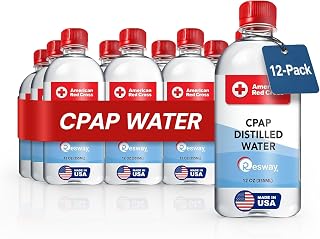
American Red Cross CPAP Distilled Water, 12-Pack 12 oz
Twelve-ounce bottles are noticeably easier to control if you have grip weakness or arthritis, since a full bottle stays under a pound. The larger count also means fewer trips to reorder, though you will empty them faster in a high-output humidifier.
Snugell Distilled Water, 12-Pack 12 oz
A 15-day supply in lightweight, easy-to-tip bottles makes this the most practical pick for bedside use where you refill in low light. Snugell’s bottles hold their shape well through repeated handling rather than collapsing as you pour.
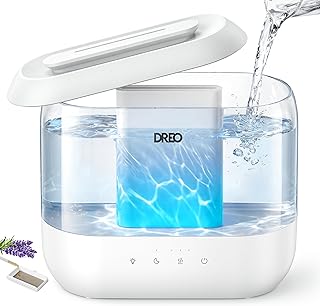
LAVIEAIR Evaporative Humidifier, 5L Top Fill
If distilled water logistics feel like too much, this evaporative unit sidesteps white dust entirely and covers up to 300 square feet on a 48-hour tank. The top-fill opening is the real ergonomic win: you pour at counter height instead of hauling and inverting a reservoir.
Frequently Asked Questions
Can I just use tap water?
In an evaporative unit, yes, with the tradeoff of faster wick replacement. In ultrasonic or warm-mist units, tap water produces white mineral dust and shortens the machine’s service life considerably.
Is boiled or filtered water the same as distilled?
No. Boiling kills organisms but concentrates minerals, and pitcher filters improve taste while leaving most dissolved solids intact. Only distillation or reverse osmosis actually removes them.
Do evaporative humidifiers still benefit from distilled water?
They do. Distilled water keeps wicks pliable and extends their usable life, even though the design will not spray minerals into the room the way an ultrasonic does.
How long can water sit in the tank?
Empty, rinse, and dry the reservoir every day it runs. Standing water grows biofilm regardless of purity, and biofilm is what degrades gaskets and seals over time.
Final Thoughts
For most households, the 6-Pack 20 oz Distilled Water bottles hit the best balance of purity, pour control, and refill cadence, while the Snugell 12-Pack is the smarter choice if lighter bottles and a longer supply window matter more. Pair either with a top-fill unit like the LAVIEAIR 5L and you will have a setup that stays clean with minimal lifting and lasts several seasons longer than the average humidifier.