Key takeaways
- Downrod reach: Choose a mounting system that positions the blades at a practical height, generally around 8 to 9 feet above the floor when possible. Confirm included rod lengths and check whether longer compatible rods are available.
- Air-volume match: Larger rooms benefit from wider blades and high-volume, low-speed airflow. A 65- to 72-inch fan suits many living areas, while 96- to 120-inch HVLS models are better suited to open garages, barns, gyms, and commercial spaces.
- Motor durability: DC and PMSM motors typically offer efficient speed control and smooth operation. Look for reversible operation, multiple speed settings, and a motor housing appropriate to the installation environment.
- Control ergonomics: A remote is especially valuable when the fan is mounted high. Favor controls with clearly separated speed, direction, light, and timer functions rather than a crowded layout that is difficult to use from across the room.
- Location rating: Damp-rated fans can handle covered patios and humid areas, but they are not automatically suitable for direct rain. For garages and workshops, also consider blade clearance, dust exposure, and the strength of the mounting surface.
What's inside
High ceilings create a deceptively difficult airflow problem. A fan can look impressively large yet deliver disappointing circulation if it is mounted too high, uses an unsuitable downrod, or lacks the torque needed to move air across a broad room. Accessibility matters too: controls, light maintenance, and blade cleaning become more demanding several feet above reach.
This guide evaluates high-ceiling fans through an ergonomics-and-durability lens. The focus is not just maximum blade span, but usable airflow, motor behavior, mounting flexibility, lighting practicality, covered-outdoor suitability, and how well each design fits rooms such as great rooms, garages, gyms, barns, porches, and workshops.
As an Amazon Associate we earn from qualifying purchases.


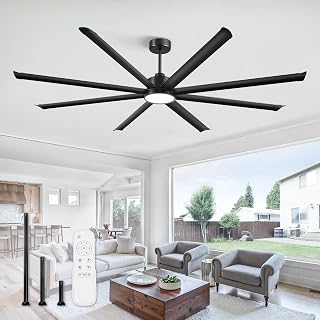
How to Choose a Ceiling Fan For High Ceilings (2026)
- Downrod reach: Choose a mounting system that positions the blades at a practical height, generally around 8 to 9 feet above the floor when possible. Confirm included rod lengths and check whether longer compatible rods are available.
- Air-volume match: Larger rooms benefit from wider blades and high-volume, low-speed airflow. A 65- to 72-inch fan suits many living areas, while 96- to 120-inch HVLS models are better suited to open garages, barns, gyms, and commercial spaces.
- Motor durability: DC and PMSM motors typically offer efficient speed control and smooth operation. Look for reversible operation, multiple speed settings, and a motor housing appropriate to the installation environment.
- Control ergonomics: A remote is especially valuable when the fan is mounted high. Favor controls with clearly separated speed, direction, light, and timer functions rather than a crowded layout that is difficult to use from across the room.
- Location rating: Damp-rated fans can handle covered patios and humid areas, but they are not automatically suitable for direct rain. For garages and workshops, also consider blade clearance, dust exposure, and the strength of the mounting surface.
The Best Ceiling Fan For High Ceilings (2026)s Reviewed
Best All-Purpose Pick: 65-Inch Farmhouse Ceiling Fan
This 65-inch farmhouse model is a sensible choice for living rooms where a very large industrial fan would overwhelm the space. Its quiet DC motor, six speeds, reversible direction, dual-finish blades, and included 6- and 12-inch downrods provide useful installation flexibility. The E26 light base is convenient for bulb replacement, while the textured glass shade gives the fixture a more furniture-like presence.
Best for Very Large Spaces: AA-Orion 120-Inch HVLS Fan
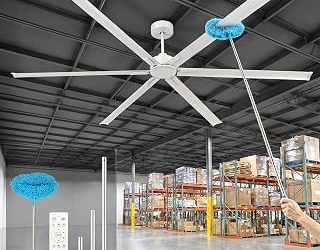
The AA-Orion 120-inch fan is designed for volume rather than decorative subtlety, with a stated 28,000 CFM and a PMSM motor intended for broad-area circulation. Its six speeds and reverse function make it adaptable across warehouses, barns, gyms, and large shops. Because its scale and load are substantial, installation should be treated as a structural project: verify ceiling support, clearance, and professional mounting requirements before purchase.
Best Industrial Fan Without a Light: 96-Inch Aluminum-Blade Fan
This 96-inch model keeps the design focused on airflow, making it a practical fit for garages, porches, workshops, and gyms where a light kit is unnecessary or vulnerable to dust and impact. Eight reversible aluminum blades and six remote-controlled speeds offer broad, adjustable circulation. The lighter visual profile of an unlit fan can also reduce distraction in work areas while simplifying maintenance.
Best Modern Living-Room Option: TCL 72-Inch Fan
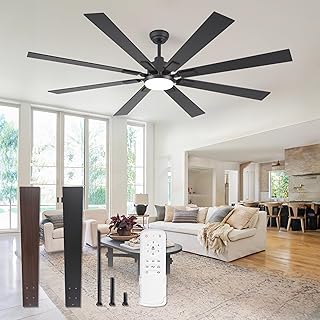
The TCL 72-inch fan balances substantial airflow with a cleaner residential appearance. Its dimmable LED offers three color-temperature settings, which is useful when one fixture must serve relaxed evening lighting and brighter task-oriented use. The quiet operation, reversible eight-blade design, and remote control make it particularly well suited to tall living rooms, covered patios, and multipurpose garages.
Best Damp-Rated Versatility: ZMISHIBO 72-Inch Fan
The ZMISHIBO 72-inch fan is a strong middle-ground choice for rooms that need noticeable air movement without stepping up to industrial proportions. Its quiet DC motor, high-CFM airflow, six speeds, 24W three-CCT LED, and damp rating support both indoor use and covered outdoor installations. The dual-finish blades add visual flexibility, although exposure should remain limited to locations protected from direct weather.
Frequently Asked Questions
How high should a ceiling fan hang?
For effective circulation and safe clearance, aim to place the blades roughly 8 to 9 feet above the floor. High ceilings usually require a longer downrod; mounting the fan too close to the ceiling can reduce its ability to mix air in the occupied zone.
Are large ceiling fans quieter?
Not automatically. A large fan running slowly can feel quieter because it moves air efficiently with less blade speed, but noise also depends on motor quality, balance, blade alignment, and mounting stability. A loose junction box can make even a quiet motor vibrate.
Is an HVLS fan suitable for a living room?
It can be, but only when the room is genuinely large and open. A 96- or 120-inch model may provide excessive visual scale and airflow in an ordinary living room, whereas a 65- or 72-inch fan is usually easier to integrate and control.
Can these fans be installed outdoors?
Use only a model specifically rated for the location. Damp-rated fans are generally intended for covered patios and sheltered areas, not direct rain. Always follow the manufacturer’s mounting instructions and protect electrical connections from moisture.
Final Thoughts
For most tall residential rooms, the TCL 72-inch fan offers the best blend of airflow, lighting flexibility, and approachable design, while the 65-inch farmhouse model is a strong choice for smaller high-ceiling spaces. For demanding open areas, the AA-Orion 120-inch HVLS fan provides the greatest circulation potential, provided the structure and installation are handled appropriately.