Key takeaways
- Seat height: Measure from the floor to the underside of your counter or island. A counter stool with a seat around 24 to 27 inches usually suits standard 35- to 37-inch counters, but allow roughly 9 to 12 inches of knee clearance.
- Back support: Look for a backrest that reaches the lower-to-mid back and does not force your shoulders forward. A modest contour can improve posture, while a very low back is better for occasional rather than extended sitting.
- Stability: Wide-set legs, secure joints, and a properly positioned footrest matter more than visual bulk. The footrest should support the feet without making the frame feel tippy when you climb onto or leave the stool.
- Upholstery: Fabric is generally comfortable and breathable, while PU or synthetic leather wipes clean more easily. In either case, inspect seams, edge stitching, and cushioning because these areas receive the most repeated wear.
- Clearance and maintenance: Allow enough space for stools to slide in without striking cabinets. Also consider whether the seat can be cleaned easily and whether the set includes enough chairs for your island without crowding diners.
What's inside
Counter stools with backs look straightforward until daily use exposes the weak points: a seat that is too high for the island, a backrest that stops short of supporting the lumbar area, legs that flex on hard flooring, or upholstery that quickly shows every spill. The best choice is not simply the most attractive set; it is the stool that matches your counter height, sitting posture, household traffic, and cleaning habits.
This guide evaluates six popular counter-height designs through an ergonomics-and-durability lens, focusing on seat height, back support, stability, materials, foot positioning, and practical maintenance. The shortlist includes upholstered, faux-leather, swivel, farmhouse, and mid-century options, so you can prioritize comfort and longevity without guessing from appearance alone.
As an Amazon Associate we earn from qualifying purchases.




How to Choose a/an Counter Stools With Backs (2026)
- Seat height: Measure from the floor to the underside of your counter or island. A counter stool with a seat around 24 to 27 inches usually suits standard 35- to 37-inch counters, but allow roughly 9 to 12 inches of knee clearance.
- Back support: Look for a backrest that reaches the lower-to-mid back and does not force your shoulders forward. A modest contour can improve posture, while a very low back is better for occasional rather than extended sitting.
- Stability: Wide-set legs, secure joints, and a properly positioned footrest matter more than visual bulk. The footrest should support the feet without making the frame feel tippy when you climb onto or leave the stool.
- Upholstery: Fabric is generally comfortable and breathable, while PU or synthetic leather wipes clean more easily. In either case, inspect seams, edge stitching, and cushioning because these areas receive the most repeated wear.
- Clearance and maintenance: Allow enough space for stools to slide in without striking cabinets. Also consider whether the seat can be cleaned easily and whether the set includes enough chairs for your island without crowding diners.
The Best Counter Stools With Backs (2026)s Reviewed
COLAMY Counter Height Bar Stools
The COLAMY set of four is a practical choice for households that need coordinated seating around a larger island. Its upholstered back and seat should feel more forgiving than a bare wood or metal design, while the armless profile makes it easier to tuck the stools beneath the counter. The metal legs favor a clean, contemporary look, though buyers should check the fasteners periodically because repeated side-to-side movement can loosen hardware over time.
Barrel Counter Stools With Arms
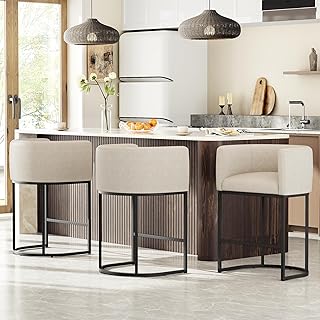
These 26-inch barrel stools are the most enveloping option in the group, pairing a backrest and arms with linen-style upholstery. That shape can reduce shoulder fatigue during longer meals, provided the armrests fit beneath your counter and do not interfere with adjacent stools. Their stated 450-pound support rating is useful for confidence, but a firm, level floor and careful assembly remain essential to perceived stability.
HNY Farmhouse Counter Stools
HNY’s set of four combines beige linen upholstery with solid wood legs and an integrated footrest, making it a natural fit for farmhouse or transitional kitchens. Wood can provide a warmer tactile experience than metal, and the footrest gives feet a consistent resting point. The lighter fabric will reward prompt spot-cleaning, especially in kitchens where cooking splatter and food crumbs are routine.
FIRAVOE PU Leather Counter Stools
FIRAVOE’s low-back stools are aimed at buyers who want a sharper, easier-care finish. Black PU leather is well suited to quick wipe-downs, and the thickened metal legs create a visually crisp base for a modern island. The low back offers less upper-body support than a taller chair, so these are strongest for short meals, breakfast seating, or spaces where a lighter visual footprint matters.
VASAGLE EKHO Counter Stools
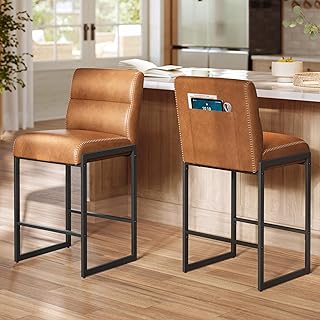
The VASAGLE EKHO pair brings a mid-century character through caramel-brown synthetic leather, stitched detailing, and a compact two-stool format. The synthetic surface is practical for everyday dining, while the back provides more structure than a backless perch. Because this is a pair rather than a larger set, it suits a small island or an arrangement that mixes stools with existing seating; confirm the 26.4-inch seat height against your counter before ordering.
Frequently Asked Questions
What height counter stools should I buy?
Measure the finished floor-to-counter height, then aim for approximately 9 to 12 inches between the seat and the underside of the surface. For many standard kitchen islands, a seat height near 24 to 27 inches works well, but the counter’s apron, drawers, and trim can reduce usable legroom.
Are stools with backs better for posture?
Usually, yes, especially when the backrest supports the lower or mid-back without pushing the sitter too far forward. A back does not replace good positioning: feet should rest on the foot bar or floor, and the user should be able to sit close enough to the counter without leaning.
Are upholstered counter stools durable enough for families?
They can be, provided the frame is rigid, the seams are well finished, and spills are treated quickly. For high-mess kitchens, PU or synthetic leather is typically simpler to maintain; woven fabric may offer better breathability and comfort but requires more attentive cleaning.
How much space should I leave between stools?
Plan for roughly 24 to 30 inches of counter width per stool, depending on seat width and whether the design has arms. Wider barrel stools need more breathing room, while armless models can be placed closer together without making elbows collide.
Final Thoughts
For flexible family seating, the COLAMY set is a balanced starting point; the HNY stools suit warmer farmhouse interiors, while FIRAVOE is the practical pick for wipe-clean modern styling. Choose the VASAGLE EKHO pair when compact proportions and mid-century detail matter most, and verify measurements before treating appearance as the deciding factor.