Key takeaways
- Power access: Electric models need dependable shore power or an inverter, while rechargeable and passive options are better suited to unattended storage without mains electricity.
- Capacity: Match the unit to the enclosed cabin volume rather than the boat’s overall length. A small berth needs far less extraction than a large saloon.
- Drainage: A drain hose reduces emptying chores, but only when it can run continuously downhill into a suitable drain or collection point.
- Ventilation: Air movement matters in lockers and under cushions. A blower-based dryer can be more useful than a high-capacity compressor in a confined compartment.
- Handling: Look for compact footprints, stable bases, quiet operation, and controls that are easy to reach without repeatedly moving other onboard equipment.
What's inside
Boat interiors collect moisture in places that are easy to overlook: beneath cushions, inside lockers, around berth mattresses, and in poorly ventilated cabins. That damp air can leave fabrics musty, encourage mildew, corrode fittings, and make a closed boat feel clammy even after a sunny day. The right dehumidifier is not simply the one with the largest room-size claim; it must suit limited space, variable power access, noise limits, and the practical realities of storage.
This guide compares compact electric units, rechargeable systems, air dryers, and passive moisture absorbers for different boating routines. The focus is on ergonomics and durability: straightforward controls, safe drainage, stable placement, maintenance demands, and whether a product makes sense for a weekend cabin, a stored sailboat, or a continuously powered vessel.
As an Amazon Associate we earn from qualifying purchases.


How to Choose a Dehumidifier For Boats (2026)
- Power access: Electric models need dependable shore power or an inverter, while rechargeable and passive options are better suited to unattended storage without mains electricity.
- Capacity: Match the unit to the enclosed cabin volume rather than the boat’s overall length. A small berth needs far less extraction than a large saloon.
- Drainage: A drain hose reduces emptying chores, but only when it can run continuously downhill into a suitable drain or collection point.
- Ventilation: Air movement matters in lockers and under cushions. A blower-based dryer can be more useful than a high-capacity compressor in a confined compartment.
- Handling: Look for compact footprints, stable bases, quiet operation, and controls that are easy to reach without repeatedly moving other onboard equipment.
The Best Dehumidifier For Boats (2026)s Reviewed
Eva-Dry EDV-365 Rechargeable Dehumidifier System
The EDV-365 is a smart choice for smaller lockers, cabins, and enclosed boat spaces where running power is inconvenient. Its two-cylinder design lets one unit work while the other renews on the blower base, and the roughly two-hour renewal cycle keeps the routine manageable. It is compact, reusable, and less vulnerable to spills than liquid-collection products, although it is intended for modest moisture loads rather than a persistently wet cabin.
Caframo Stor-Dry Air Dryer with Blower
The Caframo Stor-Dry approaches dampness through gentle heat and air circulation, making it particularly useful for storage compartments, wardrobes, and areas where stagnant air is the main concern. Its strength is not bulk water extraction but helping prevent condensation around stored gear. The blower format is practical on a boat because it can keep air moving in tight spaces without demanding the footprint of a conventional room dehumidifier.
Eva-Dry EDV-2400 Electric Dehumidifier
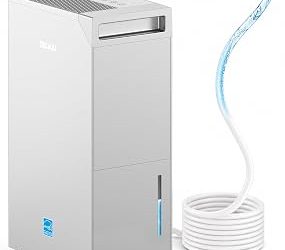
For a powered cabin or berth, the EDV-2400 offers a more controlled approach with an adjustable humidistat: set a target and let the unit cycle automatically. A supplied drain hose can reduce daily emptying, which is valuable when the boat is occupied for extended periods. Its stated coverage is better suited to a compact interior than an entire large vessel, and hose routing should be planned before installation.
Hanging Moisture Absorber Bags with Charcoal
These hanging bags are a low-maintenance supplement for closets, lockers, and enclosed storage where electricity is unavailable. The charcoal element is useful when musty odors are as troublesome as dampness, while the hanging format keeps the absorber off valuable surfaces. They require regular inspection and replacement, and they should be secured against swinging or tipping in a moving boat.
68oz Small Dehumidifier with Drain Hose
This compact electric model is aimed at buyers who want a portable unit with a larger collection reservoir and hose option. It may work well in a powered cabin, bathroom compartment, or RV-style boat interior, particularly where quiet operation matters. Treat broad square-footage claims cautiously in humid marine conditions, and place it on a level, vibration-resistant surface with unobstructed airflow.
Frequently Asked Questions
What type of dehumidifier is best for a boat?
There is no single best type for every boat. Rechargeable systems and passive bags suit unpowered storage, blower dryers help with stagnant air in lockers, and electric units are preferable when shore power is available and moisture levels are consistently high.
Should I use a dehumidifier while the boat is unattended?
Only use an electric model unattended when the manufacturer permits it and the installation is protected from tipping, blocked airflow, water leaks, and electrical faults. Passive absorbers or rechargeable systems may be more appropriate for unattended periods without reliable monitoring.
Where should a boat dehumidifier be placed?
Place it on a level, stable surface near the dampest enclosed area, leaving clearance around air inlets and outlets. Do not bury it beneath cushions or inside a locker unless the model is specifically intended for that location and heat and airflow can escape safely.
How can I prevent mildew beyond using a dehumidifier?
Dry wet gear promptly, lift cushions to ventilate both sides, clean condensation from hard surfaces, and avoid sealing damp fabrics inside lockers. Periodic inspection is essential because a dehumidifier cannot correct leaks, trapped water, or poorly ventilated compartments by itself.
Final Thoughts
For compact, unpowered spaces, the Eva-Dry EDV-365 is the most convenient reusable option, while the Caframo Stor-Dry is a strong choice for circulating air through lockers and stored gear. Boats with dependable shore power should consider the Eva-Dry EDV-2400 for humidistat control and simpler continuous drainage; add hanging absorbers where small compartments need inexpensive backup protection.