Key takeaways
- Seat height: Look for a low enough minimum height that both feet can sit flat without forcing the knees below the hips. If the chair remains too tall, a properly sized footrest is a useful fallback.
- Seat depth: A shorter seat pan usually works better because it leaves a small gap behind the knees while still supporting most of the thighs. Excess depth can press into the legs and encourage slouching.
- Backrest and lumbar position: Lumbar padding should contact the lower back rather than the mid-back. Adjustable support is preferable, but a compact backrest can also work well when its contour suits your proportions.
- Armrest fit: Armrests should allow relaxed shoulders and elbows near the torso. Flip-up or adjustable arms are particularly practical when a short user needs to pull close to a desk.
- Build and daily use: Check the base, casters, upholstery, and padding as carefully as the ergonomic features. A chair that feels supportive for ten minutes must also tolerate repeated sitting, swiveling, and movement.
What's inside
Short users often end up compensating for an office chair that is simply too deep, too tall, or too generous in the wrong places. When your feet cannot rest firmly on the floor, your pelvis may tilt backward, your shoulders can lose contact with the backrest, and lumbar support may land above the curve it is meant to support. Those problems become more noticeable during long work sessions.
This guide evaluates ergonomic office chairs for shorter users through an ergonomics-and-durability lens. The focus is not on flashy features alone, but on seat height, usable depth, support placement, adjustability, materials, and everyday practicality for home offices, study spaces, and compact desks.
As an Amazon Associate we earn from qualifying purchases at no extra cost to you. Product prices and availability are accurate as of the date shown and are subject to change.



🛒 Best Price Today on Amazon
Prime members get fast, free shipping on everything above, plus member-only deals. New members get a 30-day free trial — cancel anytime.
How to Choose an Ergonomic Office Chair For Short People (2026)
- Seat height: Look for a low enough minimum height that both feet can sit flat without forcing the knees below the hips. If the chair remains too tall, a properly sized footrest is a useful fallback.
- Seat depth: A shorter seat pan usually works better because it leaves a small gap behind the knees while still supporting most of the thighs. Excess depth can press into the legs and encourage slouching.
- Backrest and lumbar position: Lumbar padding should contact the lower back rather than the mid-back. Adjustable support is preferable, but a compact backrest can also work well when its contour suits your proportions.
- Armrest fit: Armrests should allow relaxed shoulders and elbows near the torso. Flip-up or adjustable arms are particularly practical when a short user needs to pull close to a desk.
- Build and daily use: Check the base, casters, upholstery, and padding as carefully as the ergonomic features. A chair that feels supportive for ten minutes must also tolerate repeated sitting, swiveling, and movement.
The Best Ergonomic Office Chair For Short People (2026)s Reviewed
BestOffice Mid-Back Ergonomic Chair
This BestOffice model takes a relatively compact, straightforward approach, with a mid-back profile, adjustable height, lumbar support, and a breathable backrest. Its sponge seat and rolling base suit general home-office use, although users needing pronounced upper-back or neck support may prefer a high-back design.
Upgraded PU Chair with Double-Layer Cushion
The upgraded PU computer chair stands out for its double-layer seat cushion, neckrest, adjustable armrests, and small gaming-chair format. Those features can make it appealing to shorter users who want softer contact points, but PU upholstery may feel warmer than mesh during extended sessions and deserves routine cleaning to limit wear.
Small PU Ergonomic Gaming Chair
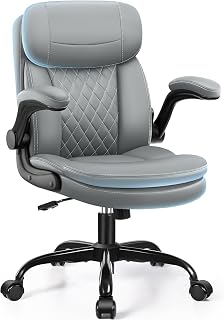
This small home-computer chair combines a compact silhouette with ergonomic back support, adjustable arms, wheels, and 360-degree swivel movement. It is a sensible option where a close-fitting seat and padded feel matter more than maximum airflow; confirm that the lowest seat setting works with your desk before buying.
Brown PU Executive Chair for Short People
With a padded arm design, lumbar support, rolling casters, and a brown PU finish, this chair brings a more traditional executive look to a shorter-user setup. The cushioned construction may feel welcoming in a study or private office, while the smooth upholstery requires attention to heat buildup and seam durability over time.
330-Lb High-Back Mesh Chair with Flip-Up Arms
This high-back mesh chair offers a sturdier specification, adjustable lumbar support, flip-up armrests, and a 330-pound capacity. Its breathable back and movable arms are valuable for changing posture and desk clearance, though shorter users should pay close attention to seat depth and the chair’s lowest height.
Frequently Asked Questions
What makes an office chair suitable for a short person?
The most important traits are a low minimum seat height, manageable seat depth, and lumbar support that meets the lower back. Adjustable arms and a seat slide can improve fit, but they cannot fully compensate for a seat pan that is too long.
How high should a short person sit at a desk?
Set the chair so your feet rest flat, your knees are roughly level with or slightly lower than your hips, and your elbows can reach the desk without shrugging. If the desk is fixed and too high, a footrest can help, but lowering the chair excessively may strain the arms and shoulders.
Is mesh or PU leather better for shorter users?
Neither material is automatically more ergonomic; fit and support matter more. Mesh generally improves ventilation and may feel less bulky, while PU offers cushioning and a polished appearance but can retain heat and eventually show cracking if exposed to heavy use or poor maintenance.
Do short people need a headrest?
Not necessarily. A headrest is useful for reclining, reading, or taking breaks, but it should support the head without pushing it forward. For focused computer work, correct seat height, lumbar placement, and arm support usually have a greater effect on comfort.
Final Thoughts
For a compact, uncomplicated setup, the BestOffice Mid-Back Chair is a practical starting point. The upgraded PU chair is worth considering for users who prioritize cushioning and adjustable arms, while the 330-Lb High-Back Mesh Chair is the stronger choice for those who want breathable support and a more substantial frame. Whichever model you choose, measure the seat height and depth against your own leg length before treating the feature list as a guarantee of fit.