Key takeaways
- Seat depth: Look for enough front-to-back support to carry the thighs without pressing behind the knees. A seat slider or adjustable depth is especially useful for users with longer legs.
- Backrest and headrest: The backrest should support the shoulders and upper back, while a headrest should reach the base of the skull rather than the neck. Height-adjustable components offer a better chance of proper alignment.
- Lumbar adjustment: Adjustable height and firmness let you position support in the lumbar curve instead of accepting a fixed pad that may sit too low.
- Capacity and construction: Treat the stated weight limit as a durability indicator, not a guarantee of comfort. A reinforced base, substantial casters, stable recline mechanism, and a wide seat matter for daily use.
- Armrests and desk fit: Adjustable or flip-up arms can reduce shoulder strain and tuck beneath a desk. Check both their height range and the clearance under your desktop before buying.
What's inside
For taller users, an office chair can feel wrong within minutes: the seat ends too early, the backrest misses the shoulders, or the lumbar support lands below the natural curve of the lower back. A chair may advertise a generous weight capacity yet still provide a cramped cushion, short seat depth, or armrests that encourage raised shoulders.
This guide evaluates tall-user essentials rather than relying on marketing language alone. We focus on usable seat dimensions, support adjustability, frame and base durability, recline comfort, and features that make long home-office sessions less tiring. Product fit still depends on your height, proportions, desk, and preferred posture.
As an Amazon Associate we earn from qualifying purchases at no extra cost to you. Product prices and availability are accurate as of the date shown and are subject to change.



🛒 Best Price Today on Amazon
Prime members get fast, free shipping on everything above, plus member-only deals. New members get a 30-day free trial — cancel anytime.
How to Choose a/an Ergonomic Office Chair For Tall People (2026)
- Seat depth: Look for enough front-to-back support to carry the thighs without pressing behind the knees. A seat slider or adjustable depth is especially useful for users with longer legs.
- Backrest and headrest: The backrest should support the shoulders and upper back, while a headrest should reach the base of the skull rather than the neck. Height-adjustable components offer a better chance of proper alignment.
- Lumbar adjustment: Adjustable height and firmness let you position support in the lumbar curve instead of accepting a fixed pad that may sit too low.
- Capacity and construction: Treat the stated weight limit as a durability indicator, not a guarantee of comfort. A reinforced base, substantial casters, stable recline mechanism, and a wide seat matter for daily use.
- Armrests and desk fit: Adjustable or flip-up arms can reduce shoulder strain and tuck beneath a desk. Check both their height range and the clearance under your desktop before buying.
The Best Ergonomic Office Chair For Tall People (2026)s Reviewed
High-Back Mesh Chair with Wide Cushion
This Ergonomic Office Chair, High Back Home Desk Chair with Headrest, Flip-Up Arms, 90-120° Tilt Lock and Wide Cushion, Big and Tall Mesh Chair offers a practical tall-user setup without an overly complicated control system. Its wide cushion, headrest, and flip-up arms are useful for larger frames and occasional posture changes, while the modest tilt range suits upright desk work more than deep reclining.
X100 Mesh Chair with Footrest
The X100 Ergonomic Mesh Office Chair with Footrest combines a big-and-tall format with 5D flip-up arms and adjustable 3D lumbar support. That level of arm and lumbar adjustment is valuable when torso length and shoulder height do not match standard proportions; the footrest is best viewed as a relaxation feature for breaks, not a substitute for correct desk height.
500-Pound Heavy-Duty Executive Chair
For buyers prioritizing structural capacity and a roomier sitting platform, the 500lbs Big and Tall Office Chair is the most durability-oriented option in this group. Its extra-wide seat, thick armrest padding, heavy-duty base, and upgraded wheels suggest a chair built around stability, though users should still verify dimensions to ensure the substantial frame fits comfortably beneath their desk.
Mesh Chair with Footrest and Seat-Depth Adjustment
This Ergonomic Office Chair with Footrest stands out for features that directly address long-leg fit: adjustable lumbar support, seat depth, and 3D armrests. The combination should make it easier to keep the knees comfortably positioned and the shoulders relaxed, while the mesh back and footrest add ventilation and occasional reclined comfort.
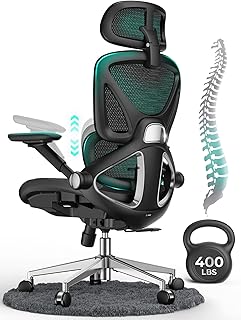
400-Pound Mesh Chair with 4D Arms
The Ergonomic Mesh Office Chair with Adjustable Lumbar High Back Desk Chair 400lbs is a strong all-rounder for users who want broad adjustability without moving to a large executive-style cushion. Its 4D flip-up arms, three-level tilt backrest, 3D headrest, and PU wheels cover the main contact points, but the seat dimensions remain the deciding factor for especially tall users.
Frequently Asked Questions
What seat height is suitable for a tall person?
There is no universal number because leg length and desk height vary. Set the chair so your feet rest flat, your knees are roughly level with or slightly below your hips, and your elbows can reach the desk without shrugging; a footrest can help if the desk cannot be lowered.
Is a high-back chair always better for tall users?
Not automatically. A tall backrest is helpful only when its lumbar area, shoulder support, and headrest align with your body. Measure the backrest and check adjustment ranges rather than choosing solely by the “high-back” label.
Should tall users choose mesh or padded upholstery?
Mesh usually offers better airflow and a firmer, more upright feel. Thick padding can feel more forgiving, especially on a wide seat, but may retain heat and compress over time. The best choice depends on climate, sitting duration, and how well the seat supports your thighs.
How much weight capacity should an office chair have?
Choose a chair whose published capacity comfortably exceeds the user’s weight, particularly when the chair will be used daily. Also inspect the seat width, base design, casters, and warranty terms; capacity alone does not reveal long-term comfort or stability.
Final Thoughts
The X100 is the most versatile choice for buyers who value fine adjustment and a footrest, while the 500lbs Big and Tall Office Chair is the logical durability-first pick. For a balanced work setup, the seat-depth-adjustable mesh model offers particularly useful fit control for long-legged users.