Key takeaways
- Seat height: Most counter-height surfaces pair well with seats roughly 24 to 27 inches high, but measure from the floor to the underside of the counter. Leave about 9 to 12 inches of knee clearance.
- Ergonomic support: A gently contoured seat, supportive backrest, and usable footrest help reduce pressure on the hips and lower back. Arms add comfort but require extra clearance between stools.
- Frame stability: Look for broad leg placement, reinforced joints, and a footrest that is integrated into the structure rather than a thin decorative bar. Check that the stool does not rock before regular use.
- Materials: Faux and bonded leather wipe clean quickly, while linen-like fabric may feel cooler but can absorb spills. Metal legs resist everyday wear; solid wood components can add warmth but need careful inspection for joint movement.
- Spacing and upkeep: Allow approximately 24 inches of counter width per stool for comfortable elbow room. Choose a finish that matches your cleaning habits, especially in homes with children, pets, or frequent cooking.
What's inside
Choosing counter-height seating is less straightforward than it looks. A stool can fit the room beautifully yet feel unstable, pinch at the thighs, encourage poor posture, or develop looseness where the seat meets the frame. The right choice depends on more than upholstery and appearance: seat height, foot support, frame geometry, load capacity, and how easily the surface can be maintained all affect daily comfort and service life.
This guide evaluates six popular styles with an ergonomics-and-durability focus. We consider how each design supports the body, how practical its materials are around a kitchen island, and which buyers are most likely to appreciate its construction. Confirm your island height and the seller’s current specifications before ordering, since dimensions and product details can change.
As an Amazon Associate we earn from qualifying purchases.


How to Choose a/an Counter Height Stools (2026)
- Seat height: Most counter-height surfaces pair well with seats roughly 24 to 27 inches high, but measure from the floor to the underside of the counter. Leave about 9 to 12 inches of knee clearance.
- Ergonomic support: A gently contoured seat, supportive backrest, and usable footrest help reduce pressure on the hips and lower back. Arms add comfort but require extra clearance between stools.
- Frame stability: Look for broad leg placement, reinforced joints, and a footrest that is integrated into the structure rather than a thin decorative bar. Check that the stool does not rock before regular use.
- Materials: Faux and bonded leather wipe clean quickly, while linen-like fabric may feel cooler but can absorb spills. Metal legs resist everyday wear; solid wood components can add warmth but need careful inspection for joint movement.
- Spacing and upkeep: Allow approximately 24 inches of counter width per stool for comfortable elbow room. Choose a finish that matches your cleaning habits, especially in homes with children, pets, or frequent cooking.
The Best Counter Height Stools (2026)s Reviewed
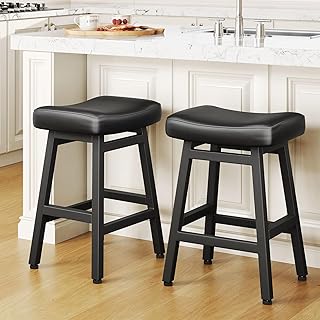
Raynesys 24-Inch Bonded Leather Stools
These curved bonded-leather stools are a practical choice for compact kitchens and buyers who prioritize straightforward cleaning. The 24-inch seat height suits many standard islands, while the back’s curved profile can provide useful lumbar and mid-back contact without making the stool visually bulky. Heavy-duty metal legs support a more contemporary look, although careful assembly and periodic fastener checks are important for keeping the frame quiet and stable.
26-Inch Barrel Stools with Arms
The barrel silhouette gives this pair a more supportive, chair-like feel than an open-back stool. Linen upholstery, a backrest, and arms can make longer meals more comfortable, but the enclosed design takes up more visual and physical space. Measure carefully between adjacent stools, and treat the fabric promptly after spills to preserve its appearance.
TAVR 24-Inch Faux-Leather Stools
TAVR’s armless design is well suited to islands where occupants need to slide in and out easily. The soft backrest adds support without consuming as much lateral space as arms, and the faux-leather surface is convenient for everyday wipe-downs. The metal-leg construction and stated high load rating make this an appealing utility-focused option, though stability still depends on accurate assembly and a level floor.
FIRAVOE 26-Inch Upholstered Stools
Sold as a four-piece set, FIRAVOE is designed for furnishing a larger island or entertaining area consistently. The padded back and thickened metal legs emphasize comfort and structural support, while coffee-brown PU leather brings a warmer appearance than plain black upholstery. Because four stools create substantial visual and cleaning demands, this set makes the most sense when you need coordinated seating rather than occasional extras.
Sand-Colored Swivel Stools with Solid Wood Legs
This pair combines a contoured backrest with 360-degree swivel movement, making it easier to turn toward conversation or leave the counter without twisting the knees. The fabric seat offers a softer, less slick contact surface, and solid wood legs add a furniture-like character. Swivel hardware deserves particular attention: avoid dragging these stools, and retighten the base if rotation develops play or noise.
Frequently Asked Questions
What height should counter stools be?
Counter stools commonly have seats around 24 to 27 inches high, but the counter itself is the deciding factor. Measure to the underside of the surface and allow enough room for your legs, especially if the counter has a thick apron or built-in cabinetry.
How many stools fit at a kitchen island?
Plan for about 24 inches of counter width per stool as a comfortable starting point. You can use slightly less for occasional seating, but tighter spacing causes elbows, knees, and swivel mechanisms to interfere during meals.
Are swivel stools better for ergonomics?
A swivel can reduce twisting when users turn toward another person or stand up. It is not automatically more supportive, however; the seat height, backrest shape, footrest position, and smoothness of the mechanism matter more than rotation alone.
How can I make counter stools last longer?
Assemble every joint evenly, place the stools on a level surface, and check fasteners after the first few weeks of use. Wipe spills promptly, avoid standing on the seat, and lift rather than drag stools to protect both the frame and the floor.
Final Thoughts
For easy-care everyday seating, the Raynesys 24-Inch stools offer a compact, clean-lined solution, while the TAVR pair balances back support with space-efficient armless construction. If comfort and movement are priorities, the sand-colored swivel stools are a strong alternative; larger households should consider the coordinated FIRAVOE four-pack.