Key takeaways
- Use breathable sheets over the pad; tightly woven synthetic bedding can undermine its cooling effect.
- Measure the mattress with existing layers in place, and include the topper’s height when checking pocket depth.
- Rotate the pad periodically if the care label permits, helping distribute compression across the sleeping surface.
- For night sweats, prioritize moisture management and washability over maximum loft or decorative quilting.
What's inside
A cooling mattress pad can make a meaningful difference to sleep comfort, but “cooling” is not a single technology. Some pads improve airflow through breathable quilting, some use phase-change materials that absorb excess heat, and others mainly add a soft, pressure-relieving layer between you and a heat-trapping mattress. The best choice depends on your sleeping position, room temperature, mattress depth, and whether you need waterproof protection as well as temperature control.
This guide examines cooling mattress pads from an ergonomics-and-durability perspective. You’ll learn how to compare materials, fit, pressure relief, moisture management, washability, and long-term construction—so you can choose a pad that feels comfortable at bedtime and remains useful after repeated washing.
As an Amazon Associate we earn from qualifying purchases.



Our Recommended Picks
Start With Your Mattress and Sleeping Position
Measure your mattress before shopping, including any existing topper. A pad with an elastic skirt that is too shallow may pop loose at the corners, while an overly generous skirt can bunch beneath the sleeper. Several options in this category accommodate unusually deep mattresses: the Niagara Sleep Solution Ultra Soft & Cooling Mattress Topper has a 20-inch pocket, while the OLANLY Quilted Fitted Mattress Pad and the Queen Size Waterproof Mattress Pad Protector advertise compatibility up to 21 inches. Those ranges are useful for pillow-top or layered beds, but measure rather than relying on the advertised maximum.
Your sleeping position also affects the ideal loft. Side sleepers generally benefit from a plusher, more resilient surface that cushions the shoulders and hips. Back sleepers often prefer moderate loft, which allows pressure relief without letting the pelvis sink excessively. Stomach sleepers typically need a flatter pad to help maintain a neutral lower-back position. A cooling pad cannot correct a mattress that is fundamentally too soft or too firm, but it can fine-tune surface comfort.
Compare Cooling Materials Honestly
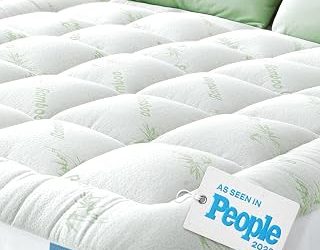
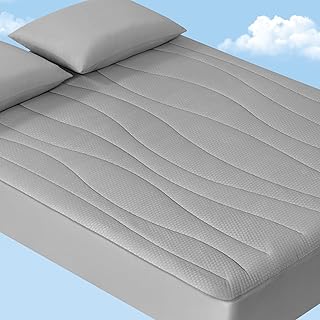
Look for construction details rather than relying on the word “cooling.” Breathable cotton, rayon derived from bamboo, and open quilt patterns can encourage air exchange and reduce the clammy feel associated with dense foam. The Niagara model uses a rayon-derived-from-bamboo cover and a pillow-top design, making it a reasonable option for shoppers prioritizing softness and surface airflow.
Phase-change material, or PCM, is designed to absorb and release heat as temperatures fluctuate. The Elegear Cooling Mattress Pad uses Arc-Chill 3.0 PCM technology and may appeal to hot sleepers who want more than conventional quilted fill. PCM is not active refrigeration: it cannot keep getting colder indefinitely, and its performance depends on room conditions, bedding, and how much heat the sleeper produces. Treat it as a heat-buffering feature, not a guarantee of an ice-cool bed.
Balance Softness With Support and Stability
A mattress pad should improve the contact surface without creating a hammock effect. Quilted channels or box stitching help distribute fill more evenly and reduce migration during the night. The OLANLY Queen Quilted Fitted Mattress Pad uses a down-alternative pillow-top style that can add cushioning while remaining easier to maintain than loose, unstructured fill. The SLEEP ZONE Cooling Mattress Pad, available in Twin, follows a similar soft, quilted approach for smaller beds.
Check the underside and skirt as carefully as the top. A fitted design with dependable elastic helps prevent wrinkles, which matter ergonomically: repeated ridges under the torso or hips can create localized pressure and encourage awkward sleeping positions. A pad that shifts every time you turn is also less durable in practice, because constant stretching and re-seating can weaken the skirt.
Decide Whether Waterproof Protection Is Worth It
Waterproof pads are practical for children’s rooms, guest beds, pets, frequent spills, or mattresses that need extra protection from perspiration. However, a waterproof membrane can slightly reduce airflow and may feel warmer than an uncoated textile. If you choose one, prioritize descriptions such as breathable, noiseless, or quilted, and look for evidence that the waterproof layer is bonded securely rather than loosely crinkling beneath the fabric.
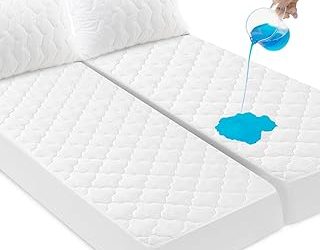
The Queen Size Waterproof Mattress Pad Protector covers mattresses up to 21 inches deep and combines a fitted-sheet format with a waterproof barrier. The ELVEN HOME Full Size Waterproof Mattress Pad is designed for double beds and offers an 8-to-21-inch pocket range. These are sensible choices where spill resistance is more important than the lightest possible construction. Wash and dry them exactly as directed; excessive heat can damage elastic and waterproof coatings.
Evaluate Care, Fit, and Long-Term Durability
Frequent washing is unavoidable because mattress pads collect skin oils, sweat, dust, and allergens. A machine-washable design is valuable, but “machine washable” does not mean every cycle is appropriate. Use a large-capacity machine when recommended, avoid overloading, and make sure the fill is completely dry before putting the pad back on the bed. Damp internal fill can develop odors and clumping.
Inspect stitching, edge binding, elastic recovery, and fabric weight. A neat quilt pattern with closely spaced seams generally holds fill more consistently than widely separated stitching, although excessive quilting can make a pad feel flatter. If you share a bed, check that the pad remains centered after both sleepers move. A slightly less lofty pad that stays smooth often outperforms a thicker one that slides or compresses unevenly.
Tips
- Use breathable sheets over the pad; tightly woven synthetic bedding can undermine its cooling effect.
- Measure the mattress with existing layers in place, and include the topper’s height when checking pocket depth.
- Rotate the pad periodically if the care label permits, helping distribute compression across the sleeping surface.
- For night sweats, prioritize moisture management and washability over maximum loft or decorative quilting.
Frequently Asked Questions
Do cooling mattress pads actually lower body temperature?
Most do not actively chill the bed. They can improve perceived coolness by moving moisture away from the skin, allowing more airflow, or temporarily absorbing heat. Your room temperature, pajamas, sheets, mattress material, and bedding layers still have a major effect.
Is a mattress pad the same as a mattress topper?
The terms overlap, but a pad is usually thinner and more focused on protection, surface softness, or temperature management. A topper is generally thicker and intended to change firmness or pressure relief more substantially. Product descriptions are more useful than the label, so check thickness, fill, and construction.
Are waterproof mattress pads too warm?
Not necessarily, but waterproof membranes can limit some air exchange. A quilted, breathable design may feel more comfortable than a thin plastic-like protector. If you sleep hot, use lightweight sheets and avoid stacking multiple waterproof layers.
How often should a cooling mattress pad be washed?
Follow the manufacturer’s care label, but laundering every few weeks is a reasonable starting point for regular use, with more frequent washing for allergy concerns, heavy sweating, pets, or children. Dry the interior thoroughly to protect loft, freshness, and durability.
Conclusion
The best cooling mattress pad is the one that fits securely, manages moisture, supports your preferred sleep position, and survives regular laundering. Choose breathable quilting for straightforward airflow, consider PCM designs such as the Elegear when heat buffering is a priority, and select waterproof models when protection outweighs maximum ventilation. Accurate measurements and realistic expectations will matter more than any single “cooling” claim.