Key takeaways
- Connector size: Most compatible models use a 3/4-inch FHT connection, but confirm your dehumidifier’s outlet and thread type before ordering.
- Length: Choose the shortest hose that reaches the drain comfortably; excess length creates more opportunities for sagging, kinks, and trapped water.
- Flexibility: A hose should bend around furniture and walls without collapsing. Avoid tight turns immediately beside the dehumidifier.
- Fitting material: Brass or rust-resistant metal connectors generally offer better thread durability than lightweight fittings, especially when removed for seasonal storage.
- Drain route: Maintain a continuous downhill path whenever possible. A hose that rises or dips can restrict gravity drainage and encourage residue buildup.
What's inside
A dehumidifier can remove gallons of moisture from the air, but its drainage setup is only as dependable as the hose attached to it. A poor fit, soft tubing that kinks, or a weak connector can lead to slow drainage, standing water, and avoidable damage near flooring, cabinets, and upholstered furniture.
This guide evaluates dehumidifier drain hoses from an ergonomics-and-durability perspective, focusing on connection fit, routing flexibility, resistance to kinking, and long-term reliability. The best choice depends less on appearance than on whether the hose reaches the drain without sharp bends or unnecessary strain on the appliance outlet.
As an Amazon Associate we earn from qualifying purchases.




How to Choose a Dehumidifier Drain Hose (2026)
- Connector size: Most compatible models use a 3/4-inch FHT connection, but confirm your dehumidifier’s outlet and thread type before ordering.
- Length: Choose the shortest hose that reaches the drain comfortably; excess length creates more opportunities for sagging, kinks, and trapped water.
- Flexibility: A hose should bend around furniture and walls without collapsing. Avoid tight turns immediately beside the dehumidifier.
- Fitting material: Brass or rust-resistant metal connectors generally offer better thread durability than lightweight fittings, especially when removed for seasonal storage.
- Drain route: Maintain a continuous downhill path whenever possible. A hose that rises or dips can restrict gravity drainage and encourage residue buildup.
The Best Dehumidifier Drain Hose (2026)s Reviewed
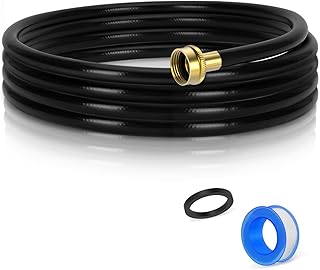
12FT Dehumidifier Drain Hose with Brass Fittings
This 12-foot option is well suited to basement layouts where the appliance sits some distance from a floor drain or utility sink. Its rust-resistant brass connector is a practical durability advantage, while the extra reach should be secured along the route to prevent the hose from sagging and pulling on the drain port.
5FT No-Kink Black Dehumidifier Hose
The 5-foot no-kink design is a sensible choice for compact rooms and straightforward drainage runs. Its shorter length is easier to manage behind furniture, reducing slack and making it simpler to maintain a clean, continuously descending path.
5FT Thickened Dehumidifier Drain Hose
This hose emphasizes a thicker construction and a rustproof connector, making it appealing for users who want a more substantial feel than thin, easily flattened tubing. At 5 feet, it offers useful reach without becoming difficult to position in a laundry area, office, or finished basement.
5FT Dehumidifier Hose with Premium Brass Connectors
A compact hose with premium brass connectors can be a good fit for frequent maintenance, since stronger threads are less likely to wear during installation and removal. Its 5-foot length is best for nearby drains where a tidy, low-tension route matters more than maximum reach.
8FT Thickened Dehumidifier Drain Hose
The 8-foot version provides a middle ground between compact 5-foot hoses and longer basement runs. Its thickened hose construction and rustproof connector should help it hold its shape during routing, though users should still support long horizontal sections to prevent low spots.
Frequently Asked Questions
Are dehumidifier drain hoses universal?
Not completely. Many units use a 3/4-inch FHT connection, but outlet designs and thread specifications can vary. Check the appliance manual or measure the existing fitting before purchasing.
How do I stop a dehumidifier hose from leaking?
Start with the correct connector size and inspect both mating threads for damage or cross-threading. Hand-tighten the fitting carefully, then snug it without excessive force; overtightening can damage plastic threads or distort a seal.
Can a dehumidifier hose run uphill?
Gravity drainage generally works best with a steady downhill route. A pump-equipped dehumidifier may handle an uphill section, but a standard gravity-drain setup can stall when the hose rises above the outlet.
How often should I clean the drain hose?
Inspect it several times a year and clean it whenever drainage slows, the hose develops an odor, or the unit has been stored for an extended period. Disconnect power before servicing, and check for algae, sediment, flattened sections, or cracks.
Final Thoughts
For long basement runs, the 12FT Dehumidifier Drain Hose with Brass Fittings is the most practical pick, while the 5FT No-Kink Dehumidifier Hose suits compact installations. If you want a balance of reach and sturdier construction, the 8FT Thickened Dehumidifier Drain Hose is a strong middle-ground option.