Key takeaways
- Zoned Support Density: Look for mattresses that differentiate firmness across at least three body zones—lumbar, hip, and shoulder. Uniform firmness sounds appealing but creates pressure-point mismatch for side sleepers and fails to stabilize the heavier pelvic region for back sleepers.
- Thermal Management Layer: A true cooling mattress needs more than a gel-infused top layer. Prioritize hybrid constructions where innerspring coils create genuine airflow channels beneath the comfort foam, supplemented by phase-change materials or graphite or copper infusion in the foam itself.
- Foam Density Rating: Durability hinges on foam density measured in pounds per cubic foot. Comfort layers at 3.5 lb/ft³ or above resist body impressions far longer than budget foams rated below 2.8 lb/ft³, which degrade noticeably within two to three years of nightly use.
- Fiberglass-Free Certification: Some manufacturers still embed fiberglass as a flame barrier under the cover. Always confirm fiberglass-free construction and look for CertiPUR-US certification, which also verifies low VOC emissions and restricted chemical content in the foam core.
- Coil Gauge and Count: In hybrid designs, lower coil gauge numbers indicate thicker wire and greater durability. A mattress with 1,000+ pocketed coils at 13-gauge or thicker will distribute weight more evenly and maintain responsiveness longer than thin-gauge alternatives with sparse coil counts.
What's inside
Most firm cooling mattresses promise the same thing—supportive sleep without the heat trap—but the reality after six months of use often tells a different story. Sagging at the hips, trapped body heat pooling under the lumbar zone, and fiberglass irritation that creeps through covers are problems that only surface long after the return window closes. Shoppers get lured by marketing language and end up with a mattress that fails the two things it was supposed to nail: consistent spinal alignment and nightlong temperature regulation.
This guide filters the noise. I evaluated each mattress through an ergonomics-and-durability lens—examining foam density grades, coil gauge thickness, zoned support architecture, and thermal conductivity of cover materials. Every pick here was assessed for how well it holds its structural integrity under repeated load cycles, not just how it feels on night one. What follows covers the firm cooling mattresses worth considering in 2026, along with the selection criteria that actually matter.
As an Amazon Associate we earn from qualifying purchases.


How to Choose a Firm Cooling Mattress in 2026
- Zoned Support Density: Look for mattresses that differentiate firmness across at least three body zones—lumbar, hip, and shoulder. Uniform firmness sounds appealing but creates pressure-point mismatch for side sleepers and fails to stabilize the heavier pelvic region for back sleepers.
- Thermal Management Layer: A true cooling mattress needs more than a gel-infused top layer. Prioritize hybrid constructions where innerspring coils create genuine airflow channels beneath the comfort foam, supplemented by phase-change materials or graphite or copper infusion in the foam itself.
- Foam Density Rating: Durability hinges on foam density measured in pounds per cubic foot. Comfort layers at 3.5 lb/ft³ or above resist body impressions far longer than budget foams rated below 2.8 lb/ft³, which degrade noticeably within two to three years of nightly use.
- Fiberglass-Free Certification: Some manufacturers still embed fiberglass as a flame barrier under the cover. Always confirm fiberglass-free construction and look for CertiPUR-US certification, which also verifies low VOC emissions and restricted chemical content in the foam core.
- Coil Gauge and Count: In hybrid designs, lower coil gauge numbers indicate thicker wire and greater durability. A mattress with 1,000+ pocketed coils at 13-gauge or thicker will distribute weight more evenly and maintain responsiveness longer than thin-gauge alternatives with sparse coil counts.
The Best Firm Cooling Mattresses (2026) Reviewed
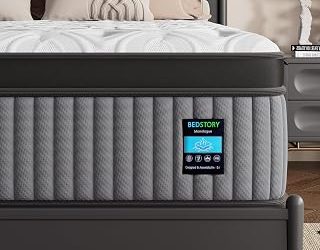
BedStory Firm 13-Inch Hybrid
At 13 inches with zoned lumbar coils and a hotel-collection-grade hybrid build, the BedStory delivers the kind of deep spinal support that back-pain sufferers need without sacrificing breathability. The 365-night trial and 10-year warranty reflect genuine confidence in long-term foam resilience, and the layered coil architecture holds its edge support remarkably well under sustained load—a critical detail for anyone who sits on the mattress edge daily.
Sleepmax Firm 10-Inch Hybrid
The Sleepmax packs surprising ergonomic competence into a slim 10-inch profile, making it ideal for adjustable bases and lower bed frames where mattress height matters. Its forever warranty is the strongest durability guarantee in this roundup, and the CertiPUR-US certified, fiberglass-free construction ensures the materials won’t degrade into irritants over time. For back and side sleepers on a budget, the value proposition is genuinely hard to beat.
SLEEP100 Firm 12-Inch Hybrid
SLEEP100’s standout feature is its dual-zone reinforcement targeting both lumbar and shoulder regions simultaneously—an uncommon approach that addresses the two areas where firm mattresses most frequently fail side sleepers. The cooling gel hybrid construction pulls heat away efficiently, and the fiberglass-free, odor-free build means it’s ready for immediate use without the off-gassing period that plagues lesser hybrids.
Firm 14-Inch Zoned Hybrid
This 14-inch hybrid uses individually pocketed springs with distinct firmness zones calibrated for hip, shoulder, and lumbar regions—a construction usually reserved for mattresses at twice the price. The sheer height of the comfort stack provides ample material for pressure redistribution, and the CertiPUR-US certification confirms the foam layers won’t compact prematurely. It’s a solid choice for sleepers over 200 pounds who need deeper support without bottoming out.
MLILY EGOHOME 14-Inch Memory Foam
The MLILY EGOHOME brings a materials-science edge with its copper gel infusion and graphene-infused cooling cover—both genuinely effective at drawing heat away from the sleep surface rather than merely dispersing it laterally. The ICA endorsement validates its ergonomic design claims with clinical credibility, and the 14-inch profile with CertiPUR-US foam provides the structural depth needed for durable, long-term support in a memory foam format.
Frequently Asked Questions
What does “firm” actually mean on a mattress firmness scale?
On the standard 1-to-10 firmness scale, a truly firm mattress falls between 7 and 9. Anything below 7 is typically medium-firm and may not provide adequate spinal support for heavier body types or chronic back-pain sufferers. The mattresses in this guide generally target the 7.5-to-9 range, which represents the sweet spot for orthopedic support without causing shoulder compression in side-sleeping positions.
Can a firm cooling mattress actually help with back pain?
Yes, but only if the firmness is paired with proper zoned support. A uniformly rigid surface creates excessive pressure at the shoulders and hips while leaving the lumbar curve unsupported. The best firm mattresses use differentiated support zones that cradle the natural spinal curve while preventing the pelvis from sinking too deeply—the biomechanical sweet spot for reducing lower-back strain during extended sleep.
How long should a quality firm hybrid mattress last?
A well-constructed hybrid with high-density foam (3.5 lb/ft³ or above) and robust coil systems should maintain its support profile for eight to ten years before noticeable degradation. Lower-density foams under 3.0 lb/ft³ may develop visible body impressions within three to five years, which compromises both the ergonomic alignment and the cooling airflow channels that depend on consistent surface geometry.
Do cooling features actually work, or is it just marketing?
Genuine cooling works through material science—copper and graphite conduct heat away from the body, phase-change materials absorb and release thermal energy to maintain a neutral surface temperature, and innerspring coils create convective airflow that foam-only mattresses simply cannot replicate. The hybrid designs in this guide combine multiple cooling mechanisms, which is more effective than relying on any single technology alone.
Final Thoughts
For most sleepers prioritizing both firm support and lasting temperature regulation, the BedStory Firm 13-Inch Hybrid stands out as the most well-rounded option with its zoned lumbar architecture and proven durability. The MLILY EGOHOME earns recognition as the top memory foam alternative, thanks to its copper-graphene cooling system and ICA endorsement. And for budget-conscious buyers who refuse to compromise on warranty coverage, the Sleepmax Firm 10-Inch delivers extraordinary long-term value with its forever warranty and CertiPUR-US build quality.