Key takeaways
- Capacity: Match the rated pint removal to the room’s size and moisture load. Flood recovery, bare concrete, poor ventilation, and very damp basements require more reserve capacity than a mildly humid bedroom.
- Drainage: A built-in pump and drain hose are valuable when the unit must run unattended. Gravity drainage is simpler and quieter, but it requires a suitable floor drain or elevated discharge point.
- Handling: Commercial machines are heavy. Look for large wheels, a sturdy handle, balanced weight distribution, and controls that remain accessible when the unit is positioned close to a wall or piece of furniture.
- Durability: Auto defrost, washable filters, corrosion-resistant coils, and a robust housing matter when a dehumidifier will operate for long periods in cold or dusty environments.
- Noise and controls: High-output units can be loud, while smart scheduling and humidity sensing reduce unnecessary runtime. For living spaces, check whether the control layout and sound level are compatible with everyday use.
What's inside
High humidity does more than make a room feel uncomfortable. It can swell wood furniture, loosen veneer, encourage musty odors, and create conditions in which mold and corrosion become persistent problems. The challenge is choosing a unit that can actually keep pace with a damp basement, restoration project, warehouse, or large living area without becoming a maintenance burden.
This guide evaluates commercial dehumidifiers from an ergonomics-and-durability perspective. The focus is practical: moisture-removal capacity, drainage, portability, controls, operating noise, tank handling, and whether the machine’s design suits continuous use or occasional household drying.
As an Amazon Associate we earn from qualifying purchases.


How to Choose a Commercial Dehumidifier (2026)
- Capacity: Match the rated pint removal to the room’s size and moisture load. Flood recovery, bare concrete, poor ventilation, and very damp basements require more reserve capacity than a mildly humid bedroom.
- Drainage: A built-in pump and drain hose are valuable when the unit must run unattended. Gravity drainage is simpler and quieter, but it requires a suitable floor drain or elevated discharge point.
- Handling: Commercial machines are heavy. Look for large wheels, a sturdy handle, balanced weight distribution, and controls that remain accessible when the unit is positioned close to a wall or piece of furniture.
- Durability: Auto defrost, washable filters, corrosion-resistant coils, and a robust housing matter when a dehumidifier will operate for long periods in cold or dusty environments.
- Noise and controls: High-output units can be loud, while smart scheduling and humidity sensing reduce unnecessary runtime. For living spaces, check whether the control layout and sound level are compatible with everyday use.
The Best Commercial Dehumidifiers (2026) Reviewed
200-Pint Commercial Dehumidifier with Pump
This heavy-duty 200-pint unit is designed for serious moisture loads in basements, warehouses, and water-damage work. Its pump, drain hose, and auto-defrost system reduce supervision demands, while the commercial-grade format makes it a sensible choice where continuous extraction matters more than compact storage.
260-Pint Commercial Dehumidifier with Pump
The 260-pint model is the high-capacity option for unusually wet spaces and restoration applications. It is best suited to users who need maximum drying output and can accommodate a larger, heavier appliance; the pump and auto-defrost features support prolonged operation without frequent tank handling.
DREO Energy Star 2025 Smart Dehumidifier
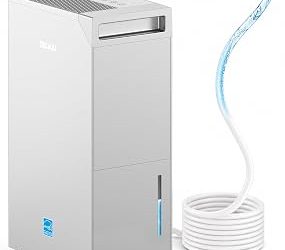
DREO’s 73-pint model offers a more refined balance between strong extraction and residential usability. A 41dB operating claim, 1.85-gallon tank, hose connection, humidity control, and three fan speeds make it appealing for large rooms where furniture protection matters but industrial bulk would be excessive.
DREO 110-Pint Smart Dehumidifier 711S
With coverage listed up to 4,500 square feet, the 711S is a powerful bridge between home and light commercial use. Its automatic, comfort, and constant modes help tailor runtime to changing conditions, while the drain hose and two-gallon tank give owners flexibility when installing it in a basement or large open area.
Midea Cube 20-Pint Dehumidifier
The Midea Cube prioritizes an ergonomic tank design and convenient household operation over raw commercial output. Its 1,500-square-foot coverage, hose drainage, Wi-Fi connectivity, Alexa compatibility, and quiet operation make it well suited to protecting finished basements, bedrooms, and furniture-filled spaces with moderate humidity.
Frequently Asked Questions
What size dehumidifier is best for a basement?
Base the choice on both square footage and dampness. A lightly humid basement may need a smaller residential unit, while a space with condensation, seepage, laundry activity, or musty odors benefits from a higher-capacity model with continuous drainage.
Is a commercial dehumidifier worth it for furniture protection?
It can be, particularly after a leak or in a chronically damp basement. Stable humidity helps limit wood movement and mold risk, but oversized equipment may use more energy and create unnecessary noise. Choose enough capacity to control humidity efficiently rather than simply selecting the largest rating.
Should I use the water tank or a drain hose?
Use the tank when portability and occasional operation are priorities. For overnight or continuous drying, a hose is more practical because it eliminates repeated lifting and prevents a full reservoir from stopping the machine. A pump is especially useful when the drain point is higher than the appliance.
What humidity level is safest for wood furniture?
A relative humidity range of roughly 40% to 55% is a practical target for most household furniture. Avoid abrupt changes, since rapid drying can be as stressful to wood components as excessive moisture. A built-in humidistat or a separate hygrometer helps verify actual room conditions.
Final Thoughts
For demanding drying work, the 260-Pint Commercial Dehumidifier provides the greatest moisture-removal reserve, while the 200-Pint model is a strong practical alternative with pump-assisted drainage. For a more furniture-friendly household installation, the DREO Energy Star 2025 Smart Dehumidifier offers the best blend of control, quieter operation, and substantial capacity.