Key takeaways
- Measure your room, stairways, doorways, and bed frame before ordering; a compressed box is easier to move than a full mattress, but it still needs a clear route.
- Give your body at least several nights to adjust unless the mattress causes immediate pain, severe pressure, or a visible sag.
- Use breathable sheets and avoid placing a foam mattress directly on the floor, where moisture and poor airflow can become problems.
- For couples, compare edge stability and motion isolation as carefully as comfort in the center of the bed.
What's inside
A mattress in a box can be an efficient way to replace an aging bed, but convenience should not outweigh body support, material quality, or long-term durability. The best choice is not simply the softest or thickest model. It is the one that keeps your spine reasonably aligned, distributes pressure without excessive sinking, and remains comfortable as the foams and springs settle over time.
This guide approaches boxed mattresses from an ergonomics-and-durability perspective. You will learn how to compare foam and hybrid construction, choose firmness for your sleeping position, check ventilation and safety details, and judge whether a mattress is likely to provide dependable support beyond its first few nights.
As an Amazon Associate we earn from qualifying purchases.


Our Recommended Picks
Start With Support, Not Plushness
When you lie on your side, your mattress must allow enough give at the shoulders and hips to prevent pressure buildup while still supporting the waist. Back sleepers generally need a more even, stable surface that keeps the pelvis from dropping too far below the ribcage. Stomach sleepers often benefit from firmer support because excessive sink can strain the lower back.
“Medium firm” is a useful starting point for many adults, but it is not a universal specification. Firmness depends on body weight, proportions, sleeping position, and personal preference. A heavier sleeper may experience the same mattress as softer than a lighter sleeper. If two people share a bed, prioritize stable support and motion control over an extremely plush comfort layer.
Foam or Hybrid: Match Construction to Your Needs
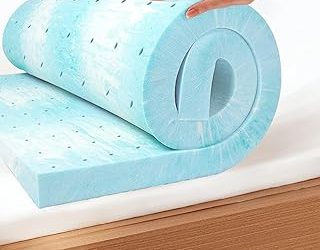
All-foam mattresses use comfort and support foams to absorb movement and contour closely to the body. They can be appealing for side sleepers and couples because they are typically quiet and effective at reducing motion transfer. Gel-infused foam, such as the material used in the EGOHOME and Novilla models, may help manage heat, although bedding, room temperature, and the sleeper’s body heat also have a major effect.
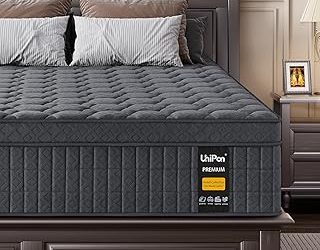
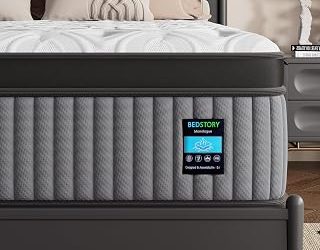
Hybrid mattresses combine foam with pocketed coils. The springs usually provide stronger edge support, easier repositioning, and a more responsive feel, while the foam layers cushion pressure points. Models such as the Sleepmax 14-inch hybrid and the two 12-inch pocket-spring options may suit sleepers who dislike the deep, slow-sinking sensation of traditional memory foam. Hybrids can, however, transmit slightly more movement than dense all-foam beds, depending on their spring and foam design.
Evaluate Materials and Safety Claims Carefully
Look for clearly stated certifications rather than vague claims about being “natural” or “clean.” CertiPUR-US certification applies to qualifying polyurethane foam and addresses specified emissions, content, and performance requirements. It does not guarantee that a mattress will feel comfortable or last a particular number of years, but it is a useful screening detail.
A fiberglass-free construction can be important if you want to avoid a mattress containing fiberglass as a fire-barrier component. Check the law label and the manufacturer’s care instructions, and do not remove a cover unless the maker specifically says it is removable and safe to launder. The FATHOM model, for example, identifies a removable fiberglass-free cover; follow its instructions rather than treating that feature as permission to dismantle the mattress.
Think About Durability and Daily Use
Thickness alone does not predict longevity. A 14-inch mattress is not automatically more durable than a 10- or 12-inch model. Pay attention to the quality and density of the support core when that information is available, the amount of material beneath the sleeper, and whether the design includes reinforced edges or pocketed coils.
Durability also depends on the foundation. Use a rigid, well-supported platform with slat spacing within the mattress maker’s stated limit. An unsuitable base can create soft spots, reduce ventilation, and complicate warranty claims. Rotate the mattress only if the manufacturer recommends it; most modern mattresses are not designed to be flipped.
Plan for Delivery, Expansion, and Returns
A boxed mattress is compressed for shipping and may have a temporary odor after opening. Unpack it in a ventilated room, remove the plastic carefully, and allow the mattress to expand for the time specified by the manufacturer. It may feel different during the first several hours than it does after fully recovering its shape.
Before ordering, confirm the trial period, return procedure, warranty exclusions, and whether the seller handles pickup or disposal. A long trial, such as the 365-night period advertised for the Sleepmax model, is useful only if you understand the required break-in period and return conditions. Keep the order confirmation and product documentation in case support is needed later.
Tips
- Measure your room, stairways, doorways, and bed frame before ordering; a compressed box is easier to move than a full mattress, but it still needs a clear route.
- Give your body at least several nights to adjust unless the mattress causes immediate pain, severe pressure, or a visible sag.
- Use breathable sheets and avoid placing a foam mattress directly on the floor, where moisture and poor airflow can become problems.
- For couples, compare edge stability and motion isolation as carefully as comfort in the center of the bed.
Frequently Asked Questions
Is a mattress in a box as durable as a traditional mattress?
It can be, provided the materials, construction, foundation, and usage are suitable. Compression and shipping do not automatically make a mattress fragile. Durability is more closely tied to the support core, foam quality, sleeper load, and whether the mattress is properly supported.
What mattress firmness is best for back pain?
There is no single firmness that treats every person’s back pain. Many sleepers do well with a supportive medium-firm surface that cushions pressure without allowing the hips to sink excessively. Persistent or worsening pain should be discussed with a qualified healthcare professional rather than solved by firmness alone.
Are hybrid mattresses cooler than memory foam mattresses?
Often, but not always. Pocketed coils can create more internal airflow, and hybrids usually use less deeply contouring foam. Room temperature, mattress cover, bedding, and individual heat production may matter just as much as construction.
How long should I keep a boxed mattress?
Replace it when it develops lasting impressions, uneven support, damaged edges, or discomfort that does not improve with a suitable foundation and bedding setup. A mattress’s actual service life varies with materials, body weight, sleeping habits, and maintenance, so inspect its condition rather than relying on a fixed calendar.
Conclusion
The best mattress in a box for 2026 is the one that balances spinal support, pressure relief, temperature control, movement management, and credible material information for your particular body and sleeping style. Compare construction before thickness, verify the foundation requirements, and read trial and warranty terms carefully. With those checks in place, models such as the EGOHOME, Sleepmax, Novilla, FATHOM, and pocket-spring hybrids can be evaluated on practical performance rather than marketing alone.