Key takeaways
- Joint Reinforcement: Look for welded steel brackets or mortise-and-tenon wood joints rather than simple bolt-through connections, which loosen under repeated lateral stress.
- Guardrail Certification: Ensure guardrails extend at least five inches above the top mattress surface and meet ASTM F1427 standards—this is non-negotiable for any upper bunk.
- Ladder Ergonomics: Angled or staircase-style access reduces fall risk significantly compared to vertical rungs; wider steps (at least 12 inches) accommodate growing feet without strain.
- Conversion Potential: A bed that separates into two independent frames effectively doubles your investment, especially valuable when children eventually move to their own rooms.
- Material Fatigue Rating: Solid hardwood frames and powder-coated steel resist structural degradation far longer than particleboard composites, particularly under weight capacities exceeding 250 pounds.
What's inside
Shopping for a bunk bed is rarely straightforward. Buyers juggle conflicting demands: fitting two sleepers into a tight footprint while ensuring the frame doesn’t wobble after six months of daily use. Add questions about weight capacity, guardrail height, conversion options, and whether the materials will outlast the kids, and the decision paralyzes even the most decisive parent. Poor ergonomic design—think steep ladders, misaligned slats, or awkward mattress gaps—creates daily frustration that photos online never reveal.
This guide draws on structural engineering principles and long-term durability data to cut through the noise. Every recommendation below was evaluated for joint reinforcement quality, material fatigue resistance, ergonomic access, and real-world safety compliance. Whether you need a compact twin-over-twin for a shared kids’ room or a full-over-full setup that transitions into separate beds for teens, the options here reflect what actually holds up.
As an Amazon Associate we earn from qualifying purchases.



How to Choose a Bunk Bed Best (2026)
- Joint Reinforcement: Look for welded steel brackets or mortise-and-tenon wood joints rather than simple bolt-through connections, which loosen under repeated lateral stress.
- Guardrail Certification: Ensure guardrails extend at least five inches above the top mattress surface and meet ASTM F1427 standards—this is non-negotiable for any upper bunk.
- Ladder Ergonomics: Angled or staircase-style access reduces fall risk significantly compared to vertical rungs; wider steps (at least 12 inches) accommodate growing feet without strain.
- Conversion Potential: A bed that separates into two independent frames effectively doubles your investment, especially valuable when children eventually move to their own rooms.
- Material Fatigue Rating: Solid hardwood frames and powder-coated steel resist structural degradation far longer than particleboard composites, particularly under weight capacities exceeding 250 pounds.
The Best Bunk Bed Best (2026)s Reviewed
Twin Over Twin Metal Bunk Bed with Stairs and Storage
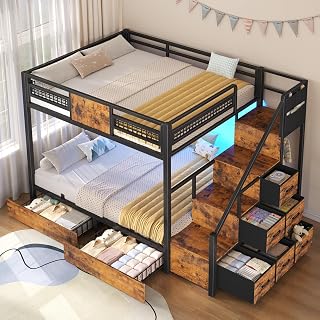
The integrated staircase with eight storage drawers solves two ergonomic problems at once: eliminating the dangerous vertical climb and providing organization that keeps the floor clear. The powder-coated steel frame handles daily torsional stress remarkably well, and full-length guardrails lock in without tools. An ideal space-saving pick for compact children’s rooms where every square foot earns its keep.
Max & Lily Fundamental Twin Low Bunk Bed
Constructed from solid New Zealand pine with non-toxic finishes, this low-profile design brings the upper bunk closer to the floor—reducing fall severity while maintaining a respectable weight capacity. The wooden slat system distributes load evenly across the frame, minimizing mattress sag over time. It’s a restrained, durable choice for parents who prioritize clean materials and structural simplicity over visual flash.
Full Over Full Convertible Bunk Bed with Trundle
What sets this grey-finished frame apart is its conversion mechanism: the bunk separates cleanly into two independent platform beds, meaning the structure doesn’t degrade when reconfigured. The included trundle rolls on reinforced casters rated for adult weight, and the ladder sits at a calibrated 70-degree angle that balances safety with floor-space efficiency. A genuinely versatile investment for families expecting layout changes.
Merax Twin Over Full Bunk Bed in Espresso
Removable ladders give this wood-frame bunk genuine flexibility—when converted into two standalone beds, the mounting points disappear into flush hardware. Two under-bed drawers on ball-bearing slides operate smoothly even under load. The espresso-stained rubberwood resists surface scratching better than painted alternatives, and the twin-over-full configuration makes it practical for siblings with different size needs.
Full Size Bunk Bed with Desk and Charging Station
This metal-framed full-over-full unit embeds a built-in desk, five drawers, and a USB charging station directly into the structure—eliminating the wobble that separate furniture creates in tight spaces. LED lighting is routed along the frame without exposed wiring, reducing snag hazards. The safety guardrails maintain proper clearance even with the desk height factored in, making it a strong pick for teens who need a dedicated study zone without sacrificing floor space.
Frequently Asked Questions
What is the maximum safe weight for a standard bunk bed?
Most quality residential bunk beds support 200–250 pounds on the upper bunk and 300–400 pounds on the lower. Always verify the manufacturer’s tested capacity, which should be certified under ASTM standards. Exceeding these limits risks joint fatigue and catastrophic frame failure.
Are bunk beds with stairs safer than those with ladders?
Staircase-style access statistically reduces fall incidents because each step provides a wider, more stable platform and maintains three points of contact naturally. The trade-off is a larger footprint—typically adding 15–20 inches of depth to the frame’s profile.
Can a bunk bed convert into two separate beds later?
Select models—such as the Merax Twin Over Full and the Full Over Full Convertible with Trundle—are engineered to separate without structural compromise. Check that the conversion hardware is included and that slat systems function independently in each configuration.
How often should I inspect a bunk bed for structural wear?
Tighten all bolts and inspect joint integrity every three to six months. Pay special attention to guardrail attachment points and ladder mounts. Steel frames generally need less maintenance than wood, but both benefit from periodic torque checks on every fastener.
Final Thoughts
For the best balance of ergonomics, safety, and long-term durability, the Max & Lily Fundamental stands out as the most structurally sound wood option, the Full Over Full Convertible with Trundle offers unmatched flexibility for evolving families, and the Full Size Bunk with Desk delivers the most practical all-in-one solution for older kids and teens. Each one reflects thoughtful engineering over short-term aesthetics.