Key takeaways
- Seat Height and Table Clearance: Standard dining surfaces sit 28–30 inches high, so your seat should land between 17 and 19 inches off the floor. Anything outside that range creates knee pressure or an awkward eating angle that you’ll notice within minutes.
- Backrest Shape and Lumbar Support: A gently curved backrest that follows the natural S-curve of your spine reduces fatigue during long meals. Flat, purely decorative backs look fine in photos but offer zero structural support for your mid and lower back.
- Leg Material and Joint Construction: Solid hardwood legs with reinforced corner blocks or metal-to-wood bolt connections dramatically outlast pressboard or glue-only joints. Check whether the manufacturer specifies leg species and joint method.
- Upholstery Durability and Cleanability: Tight-weave linen and performance fabrics resist pilling and staining far better than loose-knit blends. Removable cushion covers or treated surfaces make maintenance far less of a headache over time.
- Weight Capacity and Frame Integrity: Look for chairs rated at 250 pounds or higher, preferably with a kiln-dried hardwood or welded steel internal frame. This reflects how the manufacturer actually tested the product under repeated load cycling.
What's inside
Shopping for dining chairs online is one of those tasks that sounds simple until you realize you’re staring at a hundred options with no frame of reference for build quality, seat height, or whether that upholstered back will still look good after two years of daily use. Most listings tell you almost nothing about lumbar contour, frame material thickness, or leg stability under shifting weight — all things that actually determine whether a chair earns a permanent spot at your table or ends up wobbling in the corner.
As someone who evaluates furniture from an ergonomics-and-durability standpoint, I spent time examining construction methods, cushion density, backrest curvature, and material sourcing across today’s most popular dining chair sets. This guide breaks down five standout options that balance long-term comfort, solid engineering, and real-world value — so you can pick a set that holds up season after season.
As an Amazon Associate we earn from qualifying purchases.




How to Choose a Chairs For Dining Room (2026)
- Seat Height and Table Clearance: Standard dining surfaces sit 28–30 inches high, so your seat should land between 17 and 19 inches off the floor. Anything outside that range creates knee pressure or an awkward eating angle that you’ll notice within minutes.
- Backrest Shape and Lumbar Support: A gently curved backrest that follows the natural S-curve of your spine reduces fatigue during long meals. Flat, purely decorative backs look fine in photos but offer zero structural support for your mid and lower back.
- Leg Material and Joint Construction: Solid hardwood legs with reinforced corner blocks or metal-to-wood bolt connections dramatically outlast pressboard or glue-only joints. Check whether the manufacturer specifies leg species and joint method.
- Upholstery Durability and Cleanability: Tight-weave linen and performance fabrics resist pilling and staining far better than loose-knit blends. Removable cushion covers or treated surfaces make maintenance far less of a headache over time.
- Weight Capacity and Frame Integrity: Look for chairs rated at 250 pounds or higher, preferably with a kiln-dried hardwood or welded steel internal frame. This reflects how the manufacturer actually tested the product under repeated load cycling.
The Best Chairs For Dining Room (2026) Reviewed
COLAMY Upholstered Dining Chairs (Set of 4)
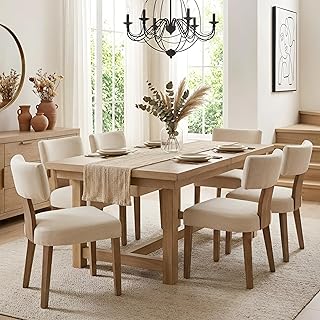
These chairs stand out for their generous high-back profile, which provides genuine upper-back and shoulder support rather than the abbreviated lumbar panels you see on competing sets. The linen-beige upholstery uses a reasonably tight weave, and the padding density holds shape through extended seating sessions without bottoming out — a detail that cheaper foam-filled alternatives typically fail on within months.
VKNOW Fabric Dining Chairs (Set of 4)
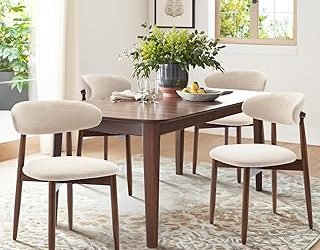
The VKNOW set brings a mid-century silhouette with surprisingly sturdy hardwood legs for its price tier. What impresses most is the assembly hardware: metal bracket plates at every leg junction rather than the single-screw method that causes loosening after a few months of chair-to-floor contact. A solid pick for farmhouse or transitional dining spaces.
HNY Mid Century Modern Dining Chairs (Set of 6)
HNY packs ergonomic design into a six-chair set, with a curved backrest that genuinely hugs the thoracic region rather than sitting as a flat decorative panel. The solid wood legs feature a tapered profile with rubber floor protectors, and the linen fabric resists the pilling that plagues many similarly priced upholstery options. Best value for larger families.
UVV Metal Kitchen Chairs with Fabric Upholstered Seat (Set of 4)
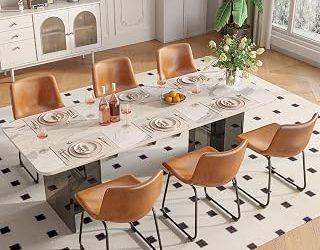
The UVV chairs pair a welded steel frame with fabric-upholstered seats, giving you industrial durability without sacrificing comfort at contact points. Metal frames eliminate the leg-wobble problem that plagues wood-leg sets on uneven floors, and the beige fabric seat cushion is thick enough to soften the hard-frame seating experience during 30-plus-minute meals.
VIRRMO Boucle Dining Chair Set of 4
VIRRMO’s corduroy-upholstered chairs offer a tactile surface that resists wear differently than smooth fabrics — the ridged texture actually hides minor stains and surface abrasions remarkably well. The metal legs with cross-bracing deliver a high stability-to-weight ratio, and the mid-century profile reads as intentionally designed rather than budget-derived.
Frequently Asked Questions
How many dining chairs do I actually need for my household?
A practical rule: buy the number matching your table’s seating capacity, then add one spare if your budget allows. A replacement-ready chair saves you from hunting down a matching set years later when one chair takes damage or a guest needs a seat.
Are upholstered dining chairs hard to keep clean?
Tight-weave linen and performance-blend fabrics clean up easily with a damp cloth and mild soap for everyday spills. For deeper stains, a handheld upholstery cleaner with a brush attachment works within minutes. The key factor is fabric tightness — loose-knit textiles trap liquid, while tight weaves bead it on the surface.
Do I need to worry about floor scratches from dining chair legs?
Legs made of unfinished hardwood can scratch hardwood and tile floors over time, especially when chairs slide repeatedly. Look for chairs with pre-installed felt pads or rubber-tipped legs, and replace floor protectors every six to twelve months for continued effectiveness.
What’s the ideal seat depth for a dining chair?
A seat depth of 16 to 18 inches accommodates most adults comfortably. Seats deeper than 18 inches push your back away from the backrest for average-height users, eliminating the ergonomic support that made you choose an upholstered chair in the first place.
Final Thoughts
For shoppers prioritizing long-term comfort and build integrity, the HNY Mid Century Modern set offers the best ergonomic contouring at a family-friendly six-pack quantity. The UVV Metal Kitchen Chairs are the durability-first choice for anyone dealing with uneven floors or heavy daily use. And if texture and stain resistance matter most, the VIRRMO Boucle set delivers genuine material intelligence in an attractive mid-century package.