Key takeaways
- Shoulder-zone compliance: Look for mattresses with zoned or variable-firmness construction that allows the shoulder to sink in while supporting the lumbar curve. A uniform firmness level rarely solves shoulder pain for lateral sleepers—it either over-pressurizes or over-supports at the wrong points.
- Material layering and density: Hybrid constructions that pair responsive coils with adaptive foam layers tend to outperform all-foam designs for side sleepers. The coil base maintains structural resilience under repeated point loading, while the foam layer handles micro-conforming around the shoulder and hip. Target memory foam densities above 4 lb/ft³ for longevity.
- Bed height and edge support: A 12–14 inch profile gives your shoulder adequate travel distance into the comfort layers without bottoming out against the base. Strong edge support also matters—side sleepers who shift position at night need a usable surface across the full mattress width, not just the center.
- Certification and off-gassing: CertiPUR-US certification confirms the foam is free of harmful chemicals and heavy metals. This isn’t a luxury—it’s baseline due diligence, especially for a surface you’re breathing against for seven to eight hours nightly.
- Trial period and warranty terms: Shoulder pain is highly individual. A mattress that works biomechanically for one person may fail another. Prioritize generous trial windows (365 nights is now standard among the best options) and warranty coverage that addresses structural degradation, not just manufacturing defects.
What's inside
Side sleepers live in a biomechanical tug-of-war. When you rest on your side, the shoulder closest to the mattress bears a disproportionate share of your torso weight, compressing the rotator cuff and AC joint against a surface that often pushes back too hard. The result is that familiar morning ache—a deep, grinding discomfort that lingers for hours. Most mattress marketing ignores the physics entirely, slapping “pressure relief” on a label without explaining what that actually means for the shoulder girdle or the lumbar spine that has to compensate all night.
This guide takes an ergonomics-first approach to the problem. We evaluated the current crop of mattresses against the specific needs of side sleepers dealing with shoulder pain: zoned conformity around the upper torso, enough give at the shoulders without bottoming out at the hips, and material durability that won’t create a permanent body cavity after six months. Below you’ll find our vetted picks, a breakdown of what matters structurally, and answers to the questions we hear most from readers navigating this exact issue.
As an Amazon Associate we earn from qualifying purchases.


How to Choose a Mattress For Side Sleepers With Shoulder Pain (2026)
- Shoulder-zone compliance: Look for mattresses with zoned or variable-firmness construction that allows the shoulder to sink in while supporting the lumbar curve. A uniform firmness level rarely solves shoulder pain for lateral sleepers—it either over-pressurizes or over-supports at the wrong points.
- Material layering and density: Hybrid constructions that pair responsive coils with adaptive foam layers tend to outperform all-foam designs for side sleepers. The coil base maintains structural resilience under repeated point loading, while the foam layer handles micro-conforming around the shoulder and hip. Target memory foam densities above 4 lb/ft³ for longevity.
- Bed height and edge support: A 12–14 inch profile gives your shoulder adequate travel distance into the comfort layers without bottoming out against the base. Strong edge support also matters—side sleepers who shift position at night need a usable surface across the full mattress width, not just the center.
- Certification and off-gassing: CertiPUR-US certification confirms the foam is free of harmful chemicals and heavy metals. This isn’t a luxury—it’s baseline due diligence, especially for a surface you’re breathing against for seven to eight hours nightly.
- Trial period and warranty terms: Shoulder pain is highly individual. A mattress that works biomechanically for one person may fail another. Prioritize generous trial windows (365 nights is now standard among the best options) and warranty coverage that addresses structural degradation, not just manufacturing defects.
The Best Mattress For Side Sleepers With Shoulder Pain (2026)s Reviewed
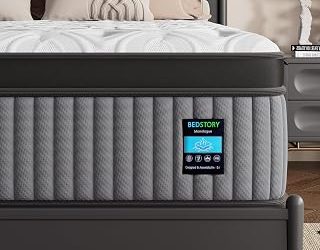
Sleepmax 14″ Cooling Hybrid
This mattress’s five-zone pocket spring architecture is purpose-built for lateral sleepers—its upper third is noticeably softer than the lumbar region, which lets the shoulder and upper arm sink without the lower back sagging into misalignment. The gel-infused foam layer dissipates heat effectively, a meaningful benefit since shoulder pain sufferers tend to toss and reposition more frequently, generating friction and warmth. At 14 inches, it provides ample travel depth, and the 365-night trial paired with a lifetime warranty signals serious manufacturer confidence in its foam durability.
Nectar 12″ Memory Foam
Nectar’s medium-firm profile won’t be the right density for every shoulder-pain sleeper, but its adaptive memory foam does a credible job of distributing pressure across the glenohumeral region at this price tier. The slightly lower 12-inch height makes it easier to get in and out of bed—a practical consideration if shoulder pain is limiting your range of motion. We’d note that sleepers over 200 pounds may compress through the comfort layer faster, reducing the effective pressure relief window over the mattress’s lifespan.
Sweetnight CoolNest 14″ Cooling Memory Foam
The CoolNest’s five-zone ergonomic foam system is one of the more thoughtfully engineered pressure maps in this roundup. Shoulder and hip zones are calibrated to compress independently, which matters enormously for side sleepers whose shoulder-to-hip ratio creates asymmetric loading. The enhanced breathability comes from a perforated cover design that allows real airflow rather than relying solely on gel bead marketing. CertiPUR-US certification rounds out what is, on paper, a very complete package for lateral sleepers managing chronic shoulder discomfort.
Sealy Dreamlife 14″ Mattress-in-a-Box
Sealy’s proprietary SealyComfort gel memory foam is specifically tuned for conformity without the “quicksand” feeling that heavier side sleepers often report from competing foams. The SealySupport transition layer beneath it acts as a firmness buffer—it prevents the shoulder from sinking too far and compressing the brachial plexus, a common cause of numbness in side sleepers with existing shoulder pathology. The king-size format gives wider sleepers the lateral space needed to maintain proper spinal alignment throughout the night.
Sleepmax 14″ Enhanced Deep Sleep Hybrid
A step up from the standard Sleepmax hybrid, this Enhanced version uses higher-density comfort foams paired with reinforced perimeter coils that hold their shape under sustained lateral loading. The fiberglass-free construction is worth highlighting—a significant number of competing hybrids still use fiberglass fire barriers that can migrate through fabric covers over time. For shoulder pain sufferers who also contend with skin sensitivity, this is a material safety advantage that goes beyond simple comfort metrics.
Frequently Asked Questions
Why does my shoulder hurt more on a firm mattress?
A firm mattress resists deformation under your body weight, which means the shoulder’s rounded contour is forced against a rigid surface rather than being cradled. This concentrates mechanical stress on the acromioclavicular joint and the bursa tissue surrounding it. For side sleepers, the ideal firmness is firm enough to prevent spinal misalignment but compliant enough at the shoulder zone to allow at least two inches of localized sink.
Can a mattress actually fix shoulder pain, or just reduce it?
A mattress cannot correct structural issues like a torn rotator cuff or chronic impingement syndrome—that requires clinical intervention. What a properly engineered mattress does is eliminate one of the compounding aggravators: sustained nocturnal pressure on already inflamed tissue. Many readers report that switching to a zoned or hybrid mattress reduced their morning pain intensity enough to make physical therapy exercises more effective, because they’re no longer starting each day with amplified inflammation.
What’s the ideal firmness rating for a side sleeper with shoulder pain?
Most ergonomics literature and clinical sleep recommendations converge on a medium feel—roughly 5 to 6 on a 10-point firmness scale. This range provides enough surface conformity to offload the shoulder while maintaining enough resistance to keep the thoracic and lumbar spine in neutral alignment. Going softer than a 5 often creates excessive hip sink that causes its own set of lower-back problems over time.
How long does a quality hybrid mattress typically last before needing replacement?
A well-constructed hybrid with density-rated foams and tempered coils should maintain functional pressure relief for seven to ten years, depending on sleeper weight and usage patterns. The key durability indicator isn’t surface feel—it’s whether visible indentation or body impressions appear in the comfort layer beyond the manufacturer’s stated tolerance (usually around 1.5 inches). That’s where extended warranties genuinely matter, and why the lifetime coverage offered by brands like Sleepmax carries real practical weight.
Final Thoughts
For side sleepers navigating shoulder pain, the Sleepmax 14″ Cooling Hybrid stands out as our top overall pick thanks to its five-zone spring architecture, generous 365-night trial, and lifetime warranty that reflects genuine material confidence. The Sweetnight CoolNest 14″ is a close runner-up for its independently zoned foam system and superior breathability, while the Sealy Dreamlife 14″ earns a strong recommendation for heavier side sleepers who need a transition layer calibrated to prevent excessive shoulder penetration. Any of these three addresses the core biomechanical problem—the rest comes down to your body weight, your sleep surface preferences, and how much room you need to move.