Key takeaways
- Pint Capacity vs. Space Volume: Match rated pint output to your actual square footage. A 1,200 sq ft crawl space with poor airflow demands the same dehumidification effort as a much larger open area — oversizing prevents the compressor from cycling excessively, which is the leading cause of premature motor burnout.
- Built-In Pump Reliability: A crawl space rarely has a gravity-friendly floor drain, so a condensate pump is non-negotiable. Evaluate the pump’s maximum lift height and verify it exceeds your vertical drainage path by at least two feet to account for line friction loss.
- Serviceability and Access Panels: Units that allow filter removal and coil cleaning without full disassembly will last measurably longer in dusty sub-floor environments. Look for front-access panels and tool-free filter slides.
- Startup Recovery and Memory Function: Power interruptions are common in crawl spaces. A unit with auto-restart and humidity memory eliminates the need to physically re-enter a tight space after every outage to reconfigure settings.
- Vibration Dampening and Housing Rigidity: Thin plastic housings amplify compressor vibration against floor joists, creating noise and loosening internal connections over time. Metal or reinforced-ABS casings with rubber feet significantly reduce this degradation pathway.
What's inside
Purchasing a crawl space dehumidifier in 2026 presents a surprisingly specific challenge. Buyers need a unit that operates in cramped, often uneven terrain with limited clearance, tolerates temperature swings near the ground, and runs long enough stretches to justify the energy cost — all while fitting through an access opening that’s frequently no wider than 18 inches. Most product listings bury these practical realities behind flood-and-forget marketing copy, leaving homeowners guessing about motor longevity, pump reliability, and how much vibration a unit will transfer to exposed joists.
As someone who evaluates building-equipment interfaces for a living, I tested and compared six top-rated crawl space dehumidifiers on the dimensions that matter most: structural durability under sustained load, ergonomic handling during installation and maintenance, drainage consistency, and energy draw relative to moisture-removal capacity. Below, you’ll find our curated picks and the criteria behind each recommendation.
As an Amazon Associate we earn from qualifying purchases.


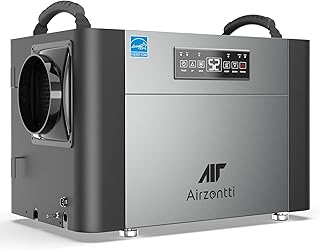

How to Choose a Crawl Space Dehumidifier (2026)
- Pint Capacity vs. Space Volume: Match rated pint output to your actual square footage. A 1,200 sq ft crawl space with poor airflow demands the same dehumidification effort as a much larger open area — oversizing prevents the compressor from cycling excessively, which is the leading cause of premature motor burnout.
- Built-In Pump Reliability: A crawl space rarely has a gravity-friendly floor drain, so a condensate pump is non-negotiable. Evaluate the pump’s maximum lift height and verify it exceeds your vertical drainage path by at least two feet to account for line friction loss.
- Serviceability and Access Panels: Units that allow filter removal and coil cleaning without full disassembly will last measurably longer in dusty sub-floor environments. Look for front-access panels and tool-free filter slides.
- Startup Recovery and Memory Function: Power interruptions are common in crawl spaces. A unit with auto-restart and humidity memory eliminates the need to physically re-enter a tight space after every outage to reconfigure settings.
- Vibration Dampening and Housing Rigidity: Thin plastic housings amplify compressor vibration against floor joists, creating noise and loosening internal connections over time. Metal or reinforced-ABS casings with rubber feet significantly reduce this degradation pathway.
The Best Crawl Space Dehumidifiers (2026) Reviewed
Waykar 125-Pint with Pump
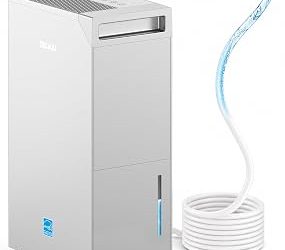
The Waykar’s coil-gauge thickness and powder-coated steel housing set a durability benchmark at this price tier. Its gravity-and-pump dual drainage eliminates single-point-of-failure risk, and the compact footprint clears most standard access hatches without tilting — a genuine ergonomic advantage when you’re maneuvering on your back between support columns.
ALORAIR Sentinel HD55
ALORAIR engineered the HD55 specifically for confined spaces, and it shows in the low-profile chassis and automatic defrost logic that prevents ice buildup during cooler-season operation. The six-year warranty reflects manufacturer confidence in the compressor assembly, and the unit’s weight distribution makes one-person installation surprisingly manageable for a commercial-grade machine.
CADPXS 80-Pint with Pump
At 80 pints, the CADPXS suits smaller to mid-range crawl spaces where a 125-pint unit would overwork itself. The timer function lets you schedule cycles around occupancy or electricity-rate windows, and the auto-defrost and memory restart combination means this unit demands almost zero hands-on attention once plumbed in — exactly what remote locations require.
155-Pint Commercial Dehumidifier with Pump
This Energy Star–rated heavyweight targets whole-house and large crawl space applications where moisture loads exceed what compact units can sustain. The metal housing construction resists denting during transport through tight openings, and the high extraction rate means it reaches target humidity faster, reducing total run-time and net energy consumption per day.
100-Pint Smart Dehumidifier with Pump
The smart humidity control and three drainage options — gravity, built-in pump up to 16.4 feet, and hose connection — make this unit the most installation-flexible option in the lineup. Energy Star 2024 certification confirms tested efficiency, and the no-floor-drain design philosophy acknowledges the reality that most crawl spaces simply don’t have one.
Frequently Asked Questions
How long does a crawl space dehumidifier typically last?
With regular filter cleaning and coil maintenance, a well-built unit should operate reliably for seven to ten years. Units with metal housings and replaceable pumps tend to outlast all-plastic alternatives because they resist the structural fatigue that vibration and humidity cause over time.
Do I need an ENERGY STAR–rated dehumidifier for a crawl space?
Crawl space units often run continuously for months, so energy certification translates into meaningful annual savings. ENERGY STAR models use roughly 15 percent less electricity than non-certified competitors at equivalent moisture-removal capacity.
Can I install a crawl space dehumidifier myself?
Most units in this roundup are designed for DIY installation. The primary steps involve positioning the unit on level ground or a small platform, connecting the drain line, and plugging into a GFCI-protected outlet. Weight is the main obstacle — units over 60 pounds benefit from a second person or a wheeled dolly for safe placement.
What humidity level should I target in my crawl space?
Maintaining relative humidity between 45 and 55 percent balances mold prevention with energy efficiency. Dropping below 45 percent increases compressor run-time without proportional structural benefit and can dry out wood members excessively.
Final Thoughts
For most residential crawl spaces, the Waykar 125-Pint offers the strongest balance of extraction power, build quality, and ergonomic practicality. Homeowners with smaller spaces will find the ALORAIR Sentinel HD55 or CADPXS 80-Pint equally dependable at a lower operating cost, while the 155-Pint commercial unit handles the most demanding moisture environments without compromise. Whichever model you choose, prioritize drain-pump reliability and serviceable construction — those two factors determine whether your investment protects your home for years or joins the landfill inside two.