Key takeaways
- Seat Height and Accessibility: Look for a frame surface between 20 and 24 inches from the floor when paired with your mattress. Too high and you risk hip strain climbing in; too low and your knees take a beating getting back up.
- Lateral Stability: A king frame spans 76 inches — that width amplifies any weakness in the support system. Prioritize frames with closely spaced slats (no more than 3 inches apart) and cross-bracing that resists side-to-side sway.
- Weight Capacity and Distribution: Check the combined static load rating. A frame rated under 800 pounds for the surface alone may compress unevenly over time, creating the dreaded center dip.
- Noise Architecture: Metal-on-metal contact points are the primary source of squeaking. Frames that use rubber or foam gaskets at slat junctions, or that integrate upholstery between structural layers, solve this at the source rather than requiring aftermarket fixes.
- Headboard Height and Angle: If you read or watch screens in bed, an adjustable headboard lets you set an ergonomic upright angle that reduces neck flexion — a feature that most people underestimate until they try it.
What's inside
Shopping for a king size bed frame in 2026 means wading through hundreds of listings that all promise “sturdy” and “easy assembly” without explaining what that actually means for your body and your bedroom. The wrong frame sags after six months, wobbles during movement, or sits at a height that turns getting in and out of bed into a daily strain — problems most product pages never even acknowledge exist.
As someone who evaluates furniture through the lens of structural longevity and body mechanics, I narrowed the field to frames that hold up under real nightly use and support healthy posture from the moment you sit on the edge to the hours you spend asleep. This guide walks through what actually matters when choosing a king size foundation in 2026, followed by hands-on assessments of six standout options.
As an Amazon Associate we earn from qualifying purchases.


How to Choose a King Size Bed Frame in 2026
- Seat Height and Accessibility: Look for a frame surface between 20 and 24 inches from the floor when paired with your mattress. Too high and you risk hip strain climbing in; too low and your knees take a beating getting back up.
- Lateral Stability: A king frame spans 76 inches — that width amplifies any weakness in the support system. Prioritize frames with closely spaced slats (no more than 3 inches apart) and cross-bracing that resists side-to-side sway.
- Weight Capacity and Distribution: Check the combined static load rating. A frame rated under 800 pounds for the surface alone may compress unevenly over time, creating the dreaded center dip.
- Noise Architecture: Metal-on-metal contact points are the primary source of squeaking. Frames that use rubber or foam gaskets at slat junctions, or that integrate upholstery between structural layers, solve this at the source rather than requiring aftermarket fixes.
- Headboard Height and Angle: If you read or watch screens in bed, an adjustable headboard lets you set an ergonomic upright angle that reduces neck flexion — a feature that most people underestimate until they try it.
The Best King Size Bed Frames in 2026, Reviewed
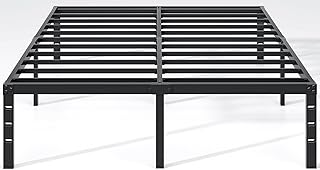
NEW JETO 18-Inch Metal Bed Frame
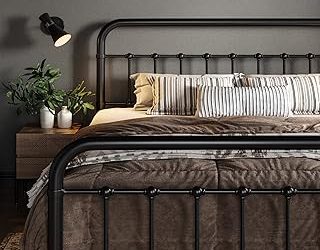
This all-steel frame sits at 18 inches, placing the mattress surface at an ideal ergonomic height once you add a standard mattress. The under-bed clearance of roughly 16 inches creates genuinely useful storage space, and the heavy-duty steel construction distributes weight without the center sagging that plagues thinner metal foundations. Assembly is straightforward with a tool kit included, and the black powder-coat finish resists the scuffs that inevitably happen when sliding storage bins underneath.
Novilla Upholstered Platform Bed
The Novilla’s linen-wrapped adjustable headboard is its defining ergonomic feature — you can lock it at multiple heights to match your reading angle, reducing neck strain without propping extra pillows. Wooden slats with roughly 3-inch spacing provide adequate mattress ventilation and support across the full king surface. The upholstered frame absorbs movement well, making it a quiet option for couples with different sleep schedules.
GRUSIGN Velvet Headboard Platform Bed
Velvet upholstery over a padded headboard gives the GRUSIGN a plush tactile quality, but the real value lies in its adjustable-height system and wooden slat support that can accommodate either a mattress alone or a mattress-box spring combination. The frame maintains structural rigidity without requiring a center support leg that would reduce under-bed storage access.
OHOHOLIVE Velvet Wingback Platform Bed
The 56-inch wingback headboard on this frame rises well above standard heights, offering genuine upper-body support when sitting upright — a meaningful ergonomic advantage for anyone who works from bed or spends extended time reading. Heavy-gauge steel internal framing pairs with wooden slats to create a noise-free foundation, and the deep gray upholstery hides wear better than lighter alternatives over years of use.
CypBed Farmhouse Platform with Storage Drawers
Two integrated drawers and a built-in LED lighting strip with charging ports make this the most functional frame in the roundup. The walnut-and-steel hybrid construction provides a rigid base that resists torsional flex, and the farmhouse wavy design panel serves as both a headboard and a visual anchor for the room. The drawers run on smooth-gliding rails that handle daily opening and closing without the track alignment issues that budget storage beds develop.
Frequently Asked Questions
Do I need a box spring with these bed frames?
None of the frames reviewed here require a box spring. Each uses an integrated slat or solid-panel system designed to support a mattress directly. Adding a box spring would raise the sleeping surface too high and defeat the ergonomic design intent.
How much weight can a king size metal bed frame typically hold?
Most heavy-duty metal king frames, like the NEW JETO, are rated between 2,500 and 3,000 pounds of total distributed weight. Wood-and-metal hybrids typically rate between 800 and 1,500 pounds, which is more than sufficient for two adults and a mattress.
What is the best bed frame height for knee and hip health?
Aim for a mattress surface between 20 and 24 inches from the floor. This range lets most adults sit on the edge of the bed with their feet flat and knees bent at roughly 90 degrees — the neutral position that minimizes joint stress during transitions.
How do I prevent bed frame noise over time?
Choose frames that include rubber or felt gaskets at every slat-to-rail contact point. If you already own a frame that has developed squeaking, felt furniture pads cut to size and placed at each junction point will restore quiet operation at virtually no cost.
Final Thoughts
For the best combination of durability, ergonomic height, and long-term structural performance, the NEW JETO 18-Inch Metal Frame stands out as the most reliable foundation in this roundup. The Novilla and OHOHOLIVE are top choices for anyone who prioritizes an adjustable headboard for upright sitting support, while the CypBed offers unmatched practicality with its integrated storage and built-in charging. Any of these six frames will serve you well, but matching the right one to your specific posture needs and bedroom routine is what turns a purchase into a genuine upgrade.