Key takeaways
- Zone-Specific Firmness: A mattress for side sleeping under heavier weight needs softer foam at the shoulder and hip contact points, paired with reinforced lumbar zoning — a single firmness rating across the entire surface won’t cut it when load distribution is uneven.
- High-Density Support Core: Look for pocketed coils with a minimum 13-gauge wire or high-density polyfoam base layers rated above 1.8 lb/ft³; lighter cores sag under sustained load, especially at the center third of the mattress where heavier side sleepers concentrate pressure.
- Hybrid Construction Advantage: All-foam mattresses under 12 inches tend to compress fully beneath heavier sleepers. A hybrid design combining responsive coils with comfort layers gives you both conformity and structural recovery between sleep cycles.
- Cooling Architecture That Actually Moves Air: Heavier bodies generate significantly more surface heat. Gel-infused foams alone aren’t enough — look for phase-change covers, copper or graphite conductive layers, or open-coil airflow systems that actively pull heat away from the sleep surface.
- Certified Materials and Trial Length: CertiPUR-US certification ensures foam emissions are safe and density specs are verified. A trial period of 365 nights gives you a full seasonal cycle to test durability under real-world conditions before committing.
What's inside
If you’re a side sleeper carrying extra weight, standard mattresses tend to collapse under the hip and shoulder zones within months, throwing your spine out of alignment and turning every night into a pressure-point guessing game. The foam layers that work fine for average-weight sleepers often bottom out quickly, leaving heavier individuals resting on a stiff support core with zero cushioning where it matters most.
This guide draws on principles of load distribution, foam density recovery rates, and zoned ergonomic design to identify mattresses that actually hold up under sustained lateral compression. Every pick here was evaluated for long-term durability under elevated body weight, side-sleeping pressure mapping, and whether the cooling architecture prevents the heat buildup that heavier sleepers reliably trigger.
As an Amazon Associate we earn from qualifying purchases.


How to Choose a Mattress For Overweight Side Sleepers (2026)
- Zone-Specific Firmness: A mattress for side sleeping under heavier weight needs softer foam at the shoulder and hip contact points, paired with reinforced lumbar zoning — a single firmness rating across the entire surface won’t cut it when load distribution is uneven.
- High-Density Support Core: Look for pocketed coils with a minimum 13-gauge wire or high-density polyfoam base layers rated above 1.8 lb/ft³; lighter cores sag under sustained load, especially at the center third of the mattress where heavier side sleepers concentrate pressure.
- Hybrid Construction Advantage: All-foam mattresses under 12 inches tend to compress fully beneath heavier sleepers. A hybrid design combining responsive coils with comfort layers gives you both conformity and structural recovery between sleep cycles.
- Cooling Architecture That Actually Moves Air: Heavier bodies generate significantly more surface heat. Gel-infused foams alone aren’t enough — look for phase-change covers, copper or graphite conductive layers, or open-coil airflow systems that actively pull heat away from the sleep surface.
- Certified Materials and Trial Length: CertiPUR-US certification ensures foam emissions are safe and density specs are verified. A trial period of 365 nights gives you a full seasonal cycle to test durability under real-world conditions before committing.
The Best Mattresses For Overweight Side Sleepers (2026) Reviewed
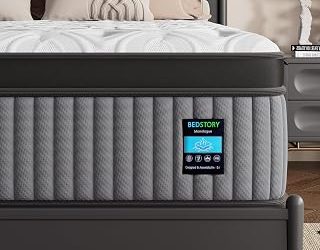
BedStory 14 Inch Hybrid
The BedStory stands out for its explicitly heavy-person-rated construction, with zoned lumbar support coils and a pocket spring system engineered to resist the center-sag that plagues most hybrids under elevated load. Its 14-inch profile delivers enough comfort-layer depth for genuine shoulder and hip relief without bottoming out, backed by a 10-year warranty that reflects real confidence in long-term coil resilience.
Beautyrest World Class Level Four Plush
At 15.25 inches, the Beautyrest Level Four offers the deepest comfort envelope of any mattress in this roundup, with a plush-to-support gradient specifically tuned for lateral spinal alignment. American manufacturing quality is evident in the coil gauge and foam density — this is a mattress designed for multi-year performance under demanding conditions, and its 100-night trial is backed by Beautyrest’s established brand accountability.
EGOHOME Copper Gel Memory Foam
The EGOHOME pairs copper gel infusion with a graphene-cool-tech cover, creating a dual-pathway heat extraction system that outperforms most competitors in side-sleeping thermal management. ICA endorsement carries weight for heavier sleepers specifically, as the organization evaluates spinal health impact under realistic load scenarios. Medium-firm calibration keeps the lumbar zone supported while allowing shoulder sinkage.
Sleepmax 14 Inch Deep Sleep Hybrid
Sleepmax’s approach prioritizes pressure-relief layering — its hybrid architecture stacks enough responsive foam over a coil base to genuinely cradle the hip and shoulder points that take the worst beating during side sleep. The fiberglass-free construction and CertiPUR-US certification address health-conscious buyers, while the 365-night trial provides the longest evaluation window in this group for testing durability claims.
Sweetnight CoolNest 14 Inch
The CoolNest’s 5-zone ergonomic system is the most granular zoning architecture here, dividing the sleep surface into distinct firmness bands that address neck, shoulders, lumbar, hip, and leg regions independently. Enhanced breathability woven into the comfort layers works in tandem with the open coil structure, making this a strong choice for heavier side sleepers who sleep hot. Medium feel strikes a workable balance for the weight range this roundup targets.
Frequently Asked Questions
What mattress firmness is best for overweight side sleepers?
A medium to medium-firm feel (around 5-6 on the firmness scale) works best for most heavier side sleepers, because it provides enough give for shoulder and hip relief while maintaining structural support through the lumbar region. Softer mattresses risk full compression, while anything above medium-firm can create painful pressure buildup at the contact points.
How thick should a mattress be for a heavier side sleeper?
13 to 15 inches is the sweet spot. Thicker mattresses give manufacturers room to stack multiple functional layers — a dense support core, transition zone, and deep comfort layers — without any single component bottoming out under load. Mattresses under 12 inches rarely hold up long-term for heavier sleepers in side-sleeping positions.
Do hybrid mattresses last longer than all-foam for heavier sleepers?
Generally yes, because coil cores resist permanent compression far better than polyfoam bases. Under repeated heavy loading, all-foam mattresses develop body impressions faster, while pocketed coil systems flex and recover thousands of times before showing measurable degradation. That said, coil gauge and foam density specs matter more than the hybrid label itself.
How often should heavier side sleepers replace their mattress?
Plan for a 6-8 year replacement cycle, which is shorter than the typical 10-year industry estimate. Elevated body weight accelerates foam cell breakdown and coil fatigue, especially in the center third of the mattress. If you notice visible sagging, morning hip pain, or the impression doesn’t recover when you’re out of bed, replacement is overdue regardless of age.
Final Thoughts
For the heaviest sleepers prioritizing maximum durability, the BedStory 14 Inch Hybrid offers the most purpose-built construction with its heavy-person-rated coils and reinforced zoning. The Beautyrest World Class Level Four is the premium pick for those who want the deepest comfort layers and American-made quality assurance. And for hot sleepers who need serious cooling performance alongside strong ergonomic support, the EGOHOME’s copper-graphene thermal system delivers measurable results.