Key takeaways
- Coverage Area (AHAM-Rated Square Footage): Always match the purifier’s AHAM-verified clean air delivery rate to your actual bedroom size, including ceiling height. A unit rated for 1,074 ft² in a 200 ft² room will cycle air faster and quieter; undersizing forces the motor to run at higher speeds, increasing noise and wear on the fan bearings.
- Decibel Profile Across All Speeds: Sleep-mode dB ratings matter, but check medium and high settings too—many buyers crank up the speed during allergy flare-ups. Units consistently below 30 dB on low won’t disrupt light sleepers or infants; anything above 35 dB becomes noticeable in a quiet room.
- Filter Type and Replacement Cost: True H13 HEPA captures particles down to 0.3 microns with verified efficiency, whereas “HEPA-style” or ionizer-only units may skip the mechanical filtration step entirely. Factor in annual filter costs—a budget purifier with a $45 six-month cartridge can outprice a pricier unit with annual $25 replacements.
- Build Materials and Long-Term Durability: Look for reinforced ABS or polycarbonate housings that resist yellowing and warping from heat exposure near windows. Cheaper injection-molded shells crack around the grill after repeated filter changes; units with metal accents or tighter panel tolerances tend to survive three-plus years of nightly cycling.
- Placement Ergonomics and Footprint: A bedroom purifier needs to coexist with nightstands, humidifiers, and charging stations. Consider intake and exhaust orientation—360° intake models like the FULMINARE series offer flexible placement against walls or in corners, while front/back-ducted units demand at least 12 inches of clearance on each side for unobstructed airflow.
What's inside
If you’ve ever woken up congested, noticed pet dander settling on your nightstand, or wondered whether your bedroom air is actually clean, you’re not alone. Most shoppers searching for a bedroom air purifier face a wall of near-identical claims—H13 HEPA this, 99.97% that—while struggling to gauge what actually matters for a room where you spend roughly a third of your life breathing at close range. Noise floor, filter longevity, placement ergonomics, and genuine airflow coverage often get buried under marketing noise.
This guide draws on an air-quality and product-durability lens to cut through the clutter. We evaluated six popular bedroom air purifiers on filtration performance, decibel levels during sleep cycles, build materials, filter replacement costs, and how each unit holds up over months of nightly use. Below you’ll find our curated picks alongside a concise buyer’s framework so you can match a purifier to your specific bedroom conditions—not just a spec sheet.
As an Amazon Associate we earn from qualifying purchases.



How to Choose an Air Purifier For Bedrooms (2026)
- Coverage Area (AHAM-Rated Square Footage): Always match the purifier’s AHAM-verified clean air delivery rate to your actual bedroom size, including ceiling height. A unit rated for 1,074 ft² in a 200 ft² room will cycle air faster and quieter; undersizing forces the motor to run at higher speeds, increasing noise and wear on the fan bearings.
- Decibel Profile Across All Speeds: Sleep-mode dB ratings matter, but check medium and high settings too—many buyers crank up the speed during allergy flare-ups. Units consistently below 30 dB on low won’t disrupt light sleepers or infants; anything above 35 dB becomes noticeable in a quiet room.
- Filter Type and Replacement Cost: True H13 HEPA captures particles down to 0.3 microns with verified efficiency, whereas “HEPA-style” or ionizer-only units may skip the mechanical filtration step entirely. Factor in annual filter costs—a budget purifier with a $45 six-month cartridge can outprice a pricier unit with annual $25 replacements.
- Build Materials and Long-Term Durability: Look for reinforced ABS or polycarbonate housings that resist yellowing and warping from heat exposure near windows. Cheaper injection-molded shells crack around the grill after repeated filter changes; units with metal accents or tighter panel tolerances tend to survive three-plus years of nightly cycling.
- Placement Ergonomics and Footprint: A bedroom purifier needs to coexist with nightstands, humidifiers, and charging stations. Consider intake and exhaust orientation—360° intake models like the FULMINARE series offer flexible placement against walls or in corners, while front/back-ducted units demand at least 12 inches of clearance on each side for unobstructed airflow.
The Best Air Purifiers For Bedrooms (2026) Reviewed
LEVOIT Core 300-P
The Core 300-P remains the benchmark for bedroom-focused air purifiers in its price class, and for good reason: its compact cylindrical footprint slides onto a nightstand without hogging surface area, while the 24 dB sleep mode sits below typical ambient room noise. The 3-in-1 H13 filter stack is straightforward to swap—quarter-turn unlock, pull, replace—and the motor assembly has demonstrated consistent performance over extended daily use without the rattling that plagues cheaper alternatives. Its 1,073 ft² AHAM rating provides comfortable overkill for standard bedrooms, meaning it can run at lower fan speeds and still cycle air effectively.
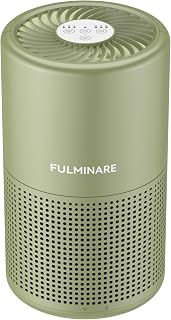
FULMINARE H13 True HEPA
FULMINARE’s compact purifier earns its place for buyers who want portability without sacrificing genuine H13 filtration. The cylindrical body with 360° intake lets you tuck it into tight spaces—bookshelf corners, between a lamp and wall—without starving the filter of air. Night-light integration is a thoughtful touch for nurseries and kids’ rooms. Build quality is adequate rather than premium; the plastic housing feels lightweight, but the seams hold up under normal handling. Where this unit falls short is long-term value—its smaller filter media clogs faster in homes with heavy pet traffic, so expect more frequent replacements than bulkier competitors.
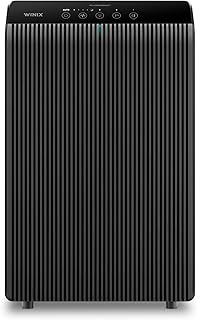
WINIX 5510
The WINIX 5510 is the overachiever in this lineup, covering up to 1,881 ft² per hour—useful if your “bedroom” is an open loft or large master suite. The high-deodorization carbon filter handles cooking and litter-box odors that travel through shared living spaces into bedrooms, and the auto-mode sensor adjusts fan speed based on real-time particulate levels so you don’t have to fumble with controls at 2 a.m. App connectivity adds convenience for scheduling but introduces a connectivity dependency that some buyers find unnecessary. The unit’s larger footprint demands dedicated floor space rather than nightstand placement, so plan accordingly if your bedroom layout is tight.
FULMINARE Sage Green H13
The Sage Green variant shares its sibling’s 360° intake advantage but adds a three-speed manual selector and programmable timer—small upgrades that meaningfully improve bedtime routine control. At 24 dB on the lowest setting, it matches the LEVOIT’s whisper profile, and the night light can be toggled independently rather than locked to fan operation. The sage green finish is genuinely pleasant and avoids the clinical-white or matte-black monotony of most competitors, which matters more than it sounds when the unit lives in a styled bedroom. Durability is comparable to the standard FULMINARE: acceptable for two to three years of nightly use before motor noise gradually increases.
KNKA APH4000
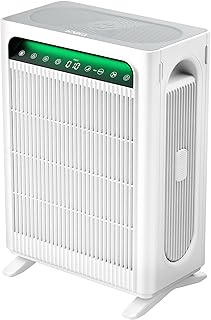
The APH4000 stands out for its AQI display—a real-time visual indicator that removes guesswork about when the filter is working hard versus coasting. The washable pre-filter captures larger particles like pet fur and lint before they reach the H13 media, extending filter life and lowering your annual cost. A dedicated Pet Mode boosts fan speed intermittently to tackle dander surges, which is more effective than simply running at maximum continuously. Coverage up to 1,695 ft² gives it room to breathe in large bedrooms, and the AHAM verification adds a layer of trust that budget competitors often lack. The trade-off is a slightly larger chassis that works best on the floor rather than elevated surfaces.
Frequently Asked Questions
Should I run my bedroom air purifier all night or just before bed?
Running the purifier continuously at a low or sleep-mode speed is ideal. Shutting it off after pre-sleep filtration means airborne particles that entered afterward—pet dander, dust disturbed by movement, open-window pollen—remain unsettled until morning. Modern low-speed modes consume as little as 5–10 watts, so the energy cost of overnight operation is negligible compared to the air-quality benefit of a consistently clean sleep environment.
How often should I replace H13 HEPA filters in a bedroom setting?
Most H13 filters in bedroom purifiers last six to twelve months depending on room conditions. Homes with multiple pets, smokers, or high-pollen exposure through open windows will push filters toward the shorter end. Rather than guessing, monitor your unit’s performance: if you notice reduced airflow at high speed, increased noise from the motor straining, or a return of allergy symptoms, the filter is likely saturated. Units with washable pre-filters like the KNKA APH4000 can extend main filter life by capturing coarse debris before it reaches the HEPA media.
Will a bedroom air purifier actually reduce allergy symptoms?
A properly sized purifier with a verified True H13 HEPA filter demonstrably reduces airborne allergen concentrations—dust mite fragments, pet dander, mold spores, and pollen—within hours of operation. Clinical studies on HEPA filtration in bedroom environments show measurable reductions in nighttime congestion, morning sneezing, and overall sleep disruption for allergy sufferers. The key word is “properly sized”: a unit that’s too small for the room won’t cycle air frequently enough to make a perceptible difference.
Are air purifiers with ionizers safer or more effective than HEPA-only models?
Ionizers can produce trace amounts of ozone, which irritates airways—particularly problematic in a sealed bedroom where you’re breathing concentrated air for hours. HEPA-only mechanical filtration avoids this concern entirely while capturing particles with verified efficiency. If an ionizer feature appeals to you, check whether the unit is CARB-certified (California Air Resources Board), which limits ozone output to safe thresholds. For most bedroom buyers, a straightforward H13 HEPA system delivers better outcomes with fewer side effects.
Final Thoughts
For most bedrooms, the LEVOIT Core 300-P hits the strongest balance of quiet operation, reliable filtration, and compact form factor—its nightstand-friendly design means you’re actually more likely to keep it running every night. The KNKA APH4000 is the smarter pick for pet owners who want lower long-term filter costs and a real-time air quality display, while the WINIX 5510 earns the nod for larger bedrooms and open layouts where its superior coverage area and auto-sensing intelligence justify the bigger footprint. Pick the one that matches your room size and lifestyle, keep the filter fresh, and let it do its quiet work while you sleep.