Key takeaways
- Two to four servings: Look for 250–400 square inches. A drum smoker or compact kamado is usually enough.
- Five to eight servings: Aim for 450–750 square inches, especially if you want ribs, chicken, and vegetables in the same cook.
- Large family gatherings: Choose at least 700 square inches or a tall cabinet with multiple racks. Extra vertical space is valuable when the smoker is narrow.
- Brisket and full racks of ribs: Check grate dimensions, not just total area. A smoker can advertise a large total area while having racks too short for a full brisket.
The best charcoal smokers for backyard cooking depend on three measurements: how much food you cook at once, how long you need the fuel to last, and how much patio space you can give the smoker.
| Smoker type or example | Approx. cooking area | Fuel capacity | Temperature control | Typical footprint | Best match |
|---|---|---|---|---|---|
| Vertical bullet smoker, such as Weber Smokey Mountain | Approx. 480–730 sq. in., depending on size | Approx. 8–18 lb. charcoal | Four adjustable vents; water pan helps stabilize heat | About 19–24 in. wide | Small patios and cooks for 2–8 people |
| Drum smoker, such as Oklahoma Joe’s Bronco | Approx. 275–350 sq. in. | Approx. 8–15 lb. charcoal | Adjustable intake and exhaust vents | About 25–30 in. wide | Compact footprint with strong airflow and long cooks |
| Kamado grill, such as Kamado Joe Classic | Approx. 250–450 sq. in. | Approx. 5–8 lb. lump charcoal | Highly adjustable top and bottom vents; ceramic retains heat | About 26–28 in. wide on a cart | Smoking, grilling, and baking in one cooker |
| Insulated cabinet smoker | Approx. 700–1,200 sq. in. | Approx. 8–16 lb. charcoal | Precise vents, but some models need a temperature controller | About 24–32 in. wide | Large batches and steadier all-day smoking |
| Char-Griller Akorn-style kamado | Approx. 400–450 sq. in. | Approx. 5–8 lb. lump charcoal | Dual adjustable vents with insulated steel construction | About 25–30 in. wide | Kamado-style performance at a lower weight and price |
Choose by batch size first
Cooking area is more useful than the manufacturer’s people rating. A 300-square-inch grate may hold two pork shoulders, a rack of ribs cut in half, or several chicken pieces, but it will not comfortably hold a large brisket and side dishes at the same time. A 500- to 700-square-inch vertical smoker gives more usable rack space without taking up the floor area of a wide offset smoker.

Dyna-Glo DGO1176BDC-D Vertical Offset Charcoal Smoker
Included for 'Best Charcoal Smokers for Backyard Cooking' as a relevant option in this category; details come from the product listing.
View on Amazon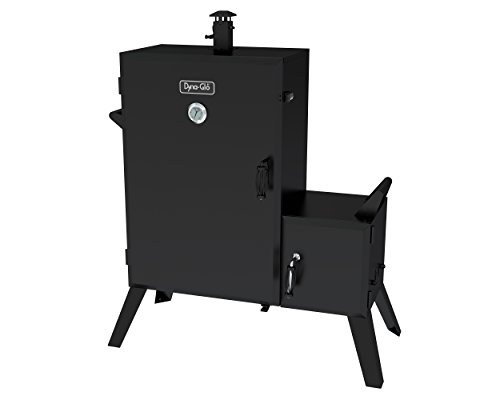
Dyna-Glo DGO1890BDC-D Wide Body Vertical Offset Charcoal Smoker,Black
Included for 'Best Charcoal Smokers for Backyard Cooking' because the listing specifies Black, details this guide uses to compare options.
View on Amazon
Realcook Charcoal BBQ Smoker Grill - 20 Inch Vertical Smoker
Included for 'Best Charcoal Smokers for Backyard Cooking' because the listing specifies 20 Inch Vertical Smoker, details this guide uses to compare options.
View on Amazon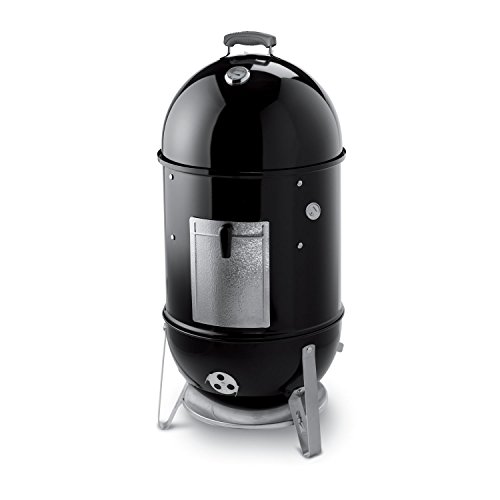
Weber® Smokey Mountain Cooker Smoker, 18" Charcoal Smoker
Included for 'Best Charcoal Smokers for Backyard Cooking' because the listing specifies 18" Charcoal Smoker, details this guide uses to compare options.
View on Amazon- Two to four servings: Look for 250–400 square inches. A drum smoker or compact kamado is usually enough.
- Five to eight servings: Aim for 450–750 square inches, especially if you want ribs, chicken, and vegetables in the same cook.
- Large family gatherings: Choose at least 700 square inches or a tall cabinet with multiple racks. Extra vertical space is valuable when the smoker is narrow.
- Brisket and full racks of ribs: Check grate dimensions, not just total area. A smoker can advertise a large total area while having racks too short for a full brisket.
Best choices by backyard situation
| Your situation | Best fit | Why | Watch for |
|---|---|---|---|
| Small patio or townhouse yard | Vertical bullet smoker | Uses roughly 3–4 sq. ft. of floor space while offering multiple racks | Verify that the door, lid, and vent clearance do not face a wall |
| Cooking for a crowd | Large cabinet smoker | Wide, tall racks make it easier to load several cuts at once | Full units can weigh 150 lb. or more and may need two or three people to move |
| You want to grill steaks too | Kamado grill | Can smoke at low heat and sear at high heat with strong fuel efficiency | Ceramic models are heavy and vulnerable to impact during moving |
| You move homes or rent | Drum smoker or insulated steel smoker | Steel construction is easier to transport than ceramic | Measure stairways and doorways; carts may not fit through a 30-inch door |
| Children or pets use the yard | Stable vertical or cabinet smoker | A narrow, weighted base reduces the chance of accidental tipping | Handles and metal surfaces remain hot; use a physical safety zone |
Head-to-head: the main charcoal smoker designs
Vertical bullet smokers: the space-saving choice
Vertical bullet smokers are usually the easiest recommendation for a compact backyard. The cooking racks stack above a water pan and charcoal bowl, so the smoker can provide substantial capacity in a footprint close to 20 inches wide. A full charcoal load may run for many hours at smoking temperatures, although wind, outside temperature, charcoal type, and vent settings all affect the result.
The trade-off is access. Removing the upper rack may be necessary to reach food below it, and the small door on some models makes adding fuel or wood less convenient. Water pans also add cleanup time because rendered fat and seasoning collect in the pan.
Drum smokers: efficient airflow and a compact width
Drum smokers use a charcoal basket near the bottom and a grate above it. Their direct, vertical airflow can produce a clean fire with relatively little fuel, and their simple construction has fewer parts to break. Oklahoma Joe’s Bronco is a recognizable example of this format.
They are less versatile than a kamado or kettle grill because they are primarily designed for smoking. The cooking grate may also be smaller than expected, so confirm the diameter before buying. Ash removal is often easier than on a water-pan smoker, but grease can collect beneath the grate and still requires regular washing.
Kamado grills: the multipurpose premium option
Kamado cookers, including the Kamado Joe Classic and similar Char-Griller Akorn models, are sealed, insulated cookers that can smoke at low temperatures, grill at high temperatures, and hold heat efficiently. Their thick ceramic walls resist temperature swings, which is useful during long overnight cooks.
Ceramic insulation comes with practical costs. A ceramic kamado and cart can weigh several hundred pounds, depending on size, and should be moved slowly over smooth ground. Replacement gaskets, fire rings, and heat deflectors eventually wear or crack. Steel insulated kamados are lighter, but their coatings and internal parts may show wear sooner than ceramic.
Cabinet smokers: the batch-cooking specialist
Cabinet smokers place several horizontal racks behind a front door. They are a strong choice for ribs, poultry, jerky, and meal preparation because food is easy to load and inspect without removing upper racks. Insulated models usually consume less charcoal than thin-walled offset smokers and hold temperatures more steadily.
Their height and weight make delivery and placement important. Before ordering, measure the narrowest gate, doorway, and turn in the path to the patio. Leave at least 24 inches of working clearance in front of the door and about 12 inches on the sides and rear, unless the manufacturer specifies more. Do not place any charcoal smoker beneath a roof, low awning, or overhanging branches.
Temperature control: vents matter more than extra features
Every charcoal smoker regulates heat by controlling oxygen. A lower intake vent affects how vigorously the fire burns, while an upper exhaust vent helps draw air through the cooker. A smoker with adjustable, tight-fitting vents is generally easier to control than one with a large, leaky lid or door.
Water pans can moderate temperature changes and add humidity, but they do not replace proper airflow control. Ceramic and insulated steel cookers recover heat quickly after the lid is opened, while thin steel models may react faster to wind and cold weather. If overnight consistency matters, choose a model that can accept a temperature controller, but budget for the controller, fan adapter, and a protected power source.
Cleanup, fuel, and long-term ownership
- Charcoal bowl: Empty ash only after the fuel and cooker are completely cold. Ash left in a metal bowl can attract moisture and accelerate rust.
- Cooking grates: Scrape while warm, then wash periodically with a degreasing soap. Avoid leaving wet cast iron unused.
- Water pans: Line them with foil for easier cleanup, but replace the liner between cooks rather than allowing grease to harden.
- Gaskets: Kamado lid gaskets and cabinet-door seals compress or deteriorate over time. A leaking seal makes temperature control harder and increases fuel use.
- Exterior finish: Painted steel can eventually chip or rust, especially around handles, hinges, and the base. Ceramic bodies resist rust but can crack from impact.
For general market pricing, compact bullet and drum smokers usually cost about $150–$400, steel kamado-style cookers about $300–$700, established ceramic kamados about $700–$1,500 or more, and large insulated cabinets commonly $500–$1,500. Include a cover, charcoal chimney, heat-resistant gloves, an accurate grate-level thermometer, and replacement seals in the ownership budget.
Bottom line
Choose a vertical bullet smoker when patio space and rack capacity matter most. Choose a drum smoker for efficient, uncomplicated smoking in a compact steel body. Choose a kamado when you want one cooker for smoking, grilling, and baking and can manage its weight. Choose an insulated cabinet when the priority is large, repeatable batches. Whichever design fits, reserve a noncombustible location with room to open the cooker, move around it safely, and clean out ash without carrying hot equipment across the yard.