Key takeaways
- Peak brightness: 300-400 nits is fine for a dark bedroom, but you need 500+ nits for a bright living room with windows. Budget QLED models from TCL, Hisense, Samsung, and LG now hit 450-700 nits in this range.
- Contrast and dimming: Look for QLED with local dimming or Mini-LED backlighting instead of basic edge-lit LED. It controls blooming and improves black levels without the cost of OLED. Expect 32-128 dimming zones in affordable Mini-LED sets.
- HDR format support: HDR10 and HLG are standard. Dolby Vision and HDR10+ add dynamic metadata and are worth prioritizing if you watch Netflix, Disney+, or Apple TV+ — they make a bigger visible difference than extra nits at this price.
- Refresh rate: A native 60Hz panel is enough for movies and sports, but 120Hz with HDMI 2.1 (ALLM, VRR) is the value sweet spot if you game on PS5, Xbox Series X/S, or PC.
The best affordable 4K TV for most homes is a 55-inch QLED TV with full-array or direct-lit dimming, 400-600 nits peak brightness, and a native 120Hz panel with HDMI 2.1, which usually costs $350–$600 and covers living rooms, bedrooms, and gaming without paying for OLED prices.
What Makes a Budget 4K TV Actually Good in 2026
Resolution is no longer the differentiator — nearly every budget TV is true 4K. What separates a good value from a disappointment is brightness, contrast control, and processing. For the best affordable 4k tv, focus on these four specs before you look at brand names:

INSIGNIA 43" Class F50 Series LED 4K UHD Smart Fire TV, Voice Remote with Alexa, Stream Live TV Without Cable
Included for 'Best Affordable 4K TVs for Every Room' because the listing specifies Voice Remote with Alexa and Stream Live TV Without Cable, details this guide uses to compare options.
View on Amazon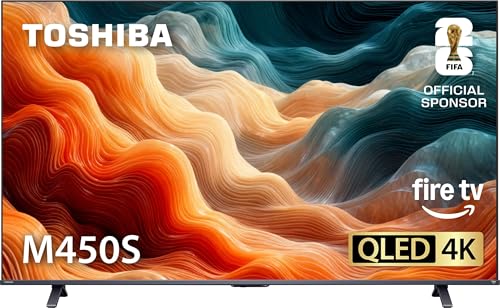
TOSHIBA 43" Class M450 Series QLED 4K UHD Smart Fire TV, Voice Remote with Alexa, Stream Live TV Without Cable
Included for 'Best Affordable 4K TVs for Every Room' because the listing specifies Voice Remote with Alexa and Stream Live TV Without Cable, details this guide uses to compare options.
View on Amazon
Roku 50-Inch Select Series Smart TV 2026-4K (2160p) QLED TV TV
Included for 'Best Affordable 4K TVs for Every Room' as a relevant option in this category; details come from the product listing.
View on Amazon
Amazon Ember 55" 4-Series with Fire TV (newest model), 4K Ultra HD smart TV with Alexa Remote, HDR10+, fast processor, Dolby Audio, Ambient Experience, free and live TV, find shows faster with Alexa+
Included for 'Best Affordable 4K TVs for Every Room' because the listing specifies 4K Ultra HD smart TV with Alexa Remote and HDR10+, details this guide uses to compare options.
View on Amazon- Peak brightness: 300-400 nits is fine for a dark bedroom, but you need 500+ nits for a bright living room with windows. Budget QLED models from TCL, Hisense, Samsung, and LG now hit 450-700 nits in this range.
- Contrast and dimming: Look for QLED with local dimming or Mini-LED backlighting instead of basic edge-lit LED. It controls blooming and improves black levels without the cost of OLED. Expect 32-128 dimming zones in affordable Mini-LED sets.
- HDR format support: HDR10 and HLG are standard. Dolby Vision and HDR10+ add dynamic metadata and are worth prioritizing if you watch Netflix, Disney+, or Apple TV+ — they make a bigger visible difference than extra nits at this price.
- Refresh rate: A native 60Hz panel is enough for movies and sports, but 120Hz with HDMI 2.1 (ALLM, VRR) is the value sweet spot if you game on PS5, Xbox Series X/S, or PC.
Smart platforms are largely interchangeable for streaming quality. Roku TV, Google TV, Fire TV, and Samsung Tizen or LG webOS all offer the same major apps in 4K HDR. Choose based on interface preference and remote layout, not picture quality.
Choosing Size by Room and Furniture
TV size should be matched to viewing distance and the furniture it sits on or hangs above, not just wall space. A too-large screen in a small room forces eye strain, while a too-small screen on a long media console looks lost.
Use this fit guide for common home layouts. Distances are measured from eyes to screen:
| Screen Size | Ideal Viewing Distance | Minimum Wall Width Needed | Stand Width / Feet Span | TV Weight (typical) |
|---|---|---|---|---|
| 43-inch | 5.5 – 7.5 ft | 48 inches | 28 – 32 inches | 18 – 22 lbs |
| 50-inch | 6.5 – 8.5 ft | 54 inches | 32 – 42 inches | 24 – 30 lbs |
| 55-inch | 7 – 9.5 ft | 60 inches | 36 – 48 inches | 28 – 35 lbs |
| 65-inch | 8 – 11.5 ft | 68 inches | 44 – 56 inches | 38 – 48 lbs |
| 75-inch | 9.5 – 13 ft | 78 inches | 52 – 62 inches | 55 – 72 lbs |
Furniture Clearance and Placement Rules
For a furniture site, these numbers matter more than specs:
- Media console width: Your console should be 6-12 inches wider than the TV’s feet span. A 55-inch TV with 40-inch wide feet needs at least a 48-inch console to look balanced and leave space for a soundbar. In a 10×12 ft living room, a 55-65 inch TV with a 58-66 inch console leaves 18-24 inches of walkway clearance on each side — the minimum for comfortable traffic flow.
- Height: Eye level from a standard sofa (seat height 17-18 inches) is about 36-42 inches from the floor. The center of the screen should sit in that zone. That means a TV on a 24-inch high console places a 55-inch screen’s center at roughly 42 inches — ideal. Wall-mounting? Mount so the bottom third of the screen is at 36-40 inches.
- Depth and heat: Leave 3-4 inches behind the TV for ventilation and cables. If your console is only 14-15 inches deep, check the TV’s stand depth — many 65-inch budget models have feet that are 11-13 inches deep and will overhang shallow furniture.
- Wall mounting weight limits: Most drywall with studs supports 80-100 lbs per mount point. All affordable 43-65 inch TVs are well under that, but a 75-inch Mini-LED at 65+ lbs plus a full-motion mount needs lag bolts into two wood studs or a masonry anchor — not drywall anchors alone.
Best Affordable 4K TV Picks by Room and Situation
Instead of one winner, match the TV to where it will live:
For Bright Living Rooms: 55 or 65-inch QLED / Mini-LED
This is the workhorse category. Models like the TCL Q7 Series, Hisense U7 Series, Samsung QLED Q70 series, and LG QNED80 series usually sit in the $400–$700 range for 55-65 inches. They offer 500-800 nits, local dimming, and 120Hz for sports and gaming. Choose 55-inch for apartments and 10×12 to 12×16 ft rooms, 65-inch for 14×18 ft and larger open-plan spaces. If your room has direct window light opposite the screen, prioritize a model with a low-reflection matte coating — often listed as anti-glare or wide viewing angle layer.
For Bedrooms and Small Apartments: 43 or 50-inch LED / QLED
In a 9×11 ft bedroom where you watch from 6-7 ft away in bed, a 43-inch TV is sharper and less fatiguing than a 50-inch. Look for a compact stand footprint under 30 inches wide so it fits a 32-42 inch dresser, and a panel under 22 lbs if the dresser is particleboard rather than solid wood. These sizes usually cost $230–$400. Hisense A6 Series, TCL S4/S5 Series, Samsung CU7000/CU8000 series, and LG UR80 series are common affordable options with Google TV or Roku built in. You can save money here by accepting 60Hz and 300-400 nits — you watch in the dark, so extreme brightness is not needed.
For Gaming Dens and Multi-Use Rooms: 55-inch 120Hz with HDMI 2.1
If a PS5, Xbox, or gaming PC will be connected, do not compromise on HDMI 2.1 features. You want at least two HDMI 2.1 ports, Auto Low Latency Mode (ALLM), Variable Refresh Rate (VRR), and input lag under 15ms at 60Hz. Most budget 120Hz QLEDs now include a dedicated Game Mode that hits 10-12ms. This is also the best type for a home office that doubles as a media room — text from a PC looks cleaner on a 120Hz panel at 4K. Expect to pay $380–$650 for a proper 120Hz budget model; 60Hz-only TVs are cheaper but will limit next-gen gaming.
For Big Wall Movie Nights on a Budget: 75-inch Direct-Lit LED
A 75-inch budget LED stretches your dollar for scale over premium contrast. Prices have dropped to usually $600–$900 for entry QLED versions. You will get fewer dimming zones and 60Hz in this price tier, but from 10-11 ft away the immersion outweighs the spec trade-off. Check your doorway first — box dimensions for a 75-inch are typically 68 x 42 x 7 inches and weigh 70-85 lbs boxed. It will not fit through a 28-inch apartment doorway without tilting and may not fit in a sedan or small SUV for transport. Measure stairwell turns as well.
Panel and Build Trade-Offs at Budget Prices
| Technology | Strengths | Limitations | Best For |
|---|---|---|---|
| Standard LED (Direct-lit) | Lowest price, usually $250–$450 for 55-inch, light weight | Lower brightness, no local dimming, grayish blacks | Bedrooms, kitchens, secondary rooms |
| QLED with Local Dimming | Higher color volume, 450-700 nits, better durability than OLED | Blooming around bright objects, viewing angle narrower than OLED | Bright living rooms, daily family use |
| Mini-LED QLED | More dimming zones, better contrast, less blooming than standard QLED | Slightly heavier, costs $100–$200 more than standard QLED | Best value for movie lovers and gamers |
| Budget OLED (e.g., LG B4/C4 entry) | Perfect blacks, infinite contrast, thin panel | Usually $800+ for 55-inch, risk of burn-in with static images, lower peak brightness than Mini-LED | Dark-room cinema, not strictly budget |
For families with kids and pets, QLED and Mini-LED are more forgiving than OLED — no permanent image retention from paused games or news tickers, and the screen coating is easier to wipe clean. For renters who move often, a direct-lit LED or standard QLED under 35 lbs is easiest to re-wall-mount without patching large anchor holes.
Decision Matrix: Match Your Situation to the Right TV
| Your Situation | Recommended Size and Type | Why |
|---|---|---|
| Small apartment / 10×12 ft room / viewing under 7 ft | 43-50 inch QLED, 60Hz | Fits narrow consoles, avoids eye fatigue, lower power draw |
| Bright living room with windows / open plan | 55-65 inch QLED or Mini-LED, 500+ nits | Fights glare, maintains color at wide angles for sectional seating |
| Kids, pets, heavy daily use | 55-inch QLED with VA panel and robust feet | More durable than OLED, stable on low consoles, easy to clean |
| Renter who moves yearly | 50-55 inch LED under 30 lbs, wide feet not center stand | Lighter box, fits standard doorways, no need for heavy wall anchors |
| Gamer (console/PC) or sports fan | 55-65 inch 120Hz Mini-LED with HDMI 2.1 VRR | Smooth motion, low input lag, no tearing during fast pans |
| Back pain / viewing from bed or recliner | 55-inch with center pedestal stand + tilting mount | Allows higher placement without neck strain, single foot fits small dressers |
Setup, Moving, and Durability Realities
Budget TVs save money on materials — plastic backs, two small feet instead of a heavy center stand. That keeps weight down but makes handling trickier. Unbox with two people for any 55-inch and larger; the panel flexes if lifted by one corner. Keep the foam spacers until the stand is secured. For doorway clearance, add 2 inches to the boxed width for your hands. What wears first is not the panel but the feet screws and the remote — stripped screw holes from over-tightening and sticky buttons after two years are common failures. Use a surge protector, dust the vents monthly, and avoid max backlight at 100% for 12 hours daily — running at 70-80% extends LED life significantly.
Finally, measure before you buy: tape the screen width and height on your wall, sit where you will watch, and check that bottom edge clearance leaves 4-6 inches above a soundbar or console decor. That 10-minute test prevents the most common regret with the best affordable 4k tv — buying a size that dominates the furniture instead of fitting it.