Key takeaways
- Coil Gauge and Count: Look for pocketed coils in the 13–14 gauge range with a coil count above 1,000 for king sizes. Thicker wire resists deformation under higher load, and more individually wrapped coils distribute weight more evenly across the sleep surface.
- Foam Density and ILD: Memory foam should sit at a minimum density of 4 pounds per cubic foot with an ILD (Indentation Load Deflection) of 12 or higher for comfort layers. Low-density foams compress permanently under heavier bodies within months.
- Edge Reinforcement: Reinforced perimeter rails—whether high-density foam encasement or thicker-gauge border coils—prevent the edge collapse that heavier sleepers notice immediately when sitting on or sleeping near the side of the bed.
- Profile Height: Mattresses at 14 inches or taller generally incorporate deeper support cores, which translates to better long-term resilience. Taller profiles also accommodate layered designs that separate comfort from support more effectively.
- Certifications and Trial Periods: CertiPUR-US certification confirms foams meet safety and emissions standards. A 365-night trial is critical for heavier sleepers because structural issues like body impressions may take months to surface.
What's inside
Shopping for a mattress when you carry more weight than the “average” buyer is a frustrating exercise in guessing. Most bed-in-a-box brands design around a 150-pound body, which means heavier sleepers frequently deal with premature sagging, trapped heat, and edges that collapse the moment they sit down. Those aren’t minor inconveniences—they’re structural failures that wreck sleep quality and shorten a mattress’s lifespan by years.
This guide cuts through the marketing noise with an ergonomics-and-durability lens. Every mattress below was evaluated for coil gauge and density, foam ILD ratings, edge reinforcement, and airflow design—the metrics that actually determine whether a bed holds up for someone pushing 230 pounds or more. Here’s what’s worth your money in 2026.
As an Amazon Associate we earn from qualifying purchases.


How to Choose a Mattress For Heavier People (2026)
- Coil Gauge and Count: Look for pocketed coils in the 13–14 gauge range with a coil count above 1,000 for king sizes. Thicker wire resists deformation under higher load, and more individually wrapped coils distribute weight more evenly across the sleep surface.
- Foam Density and ILD: Memory foam should sit at a minimum density of 4 pounds per cubic foot with an ILD (Indentation Load Deflection) of 12 or higher for comfort layers. Low-density foams compress permanently under heavier bodies within months.
- Edge Reinforcement: Reinforced perimeter rails—whether high-density foam encasement or thicker-gauge border coils—prevent the edge collapse that heavier sleepers notice immediately when sitting on or sleeping near the side of the bed.
- Profile Height: Mattresses at 14 inches or taller generally incorporate deeper support cores, which translates to better long-term resilience. Taller profiles also accommodate layered designs that separate comfort from support more effectively.
- Certifications and Trial Periods: CertiPUR-US certification confirms foams meet safety and emissions standards. A 365-night trial is critical for heavier sleepers because structural issues like body impressions may take months to surface.
The Best Mattresses For Heavier People (2026) Reviewed
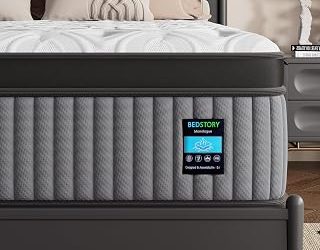
BedStory Firm King Size Mattress 14 Inch
The zoned lumbar support on this hybrid sets it apart for back-pain sufferers who need firm midsection reinforcement without sacrificing shoulder cushioning. BedStory’s USA-based manufacturing gives it a quality-control edge, and the 10-year warranty reflects genuine confidence in long-term coil durability under heavier loads.
Luxury Hotel 18 Inch King Hybrid
At 18 inches, this is the thickest option on the list and the best choice for buyers who want maximum separation between comfort layers and the support core. The upgraded pocket spring system paired with cooling-gel memory foam handles heavier bodies without the heat buildup that plagues all-foam alternatives at this price point.
Sleepmax 14 Inch Queen Hybrid
Sleepmax delivers a surprisingly competent hybrid at a budget-friendly price, with a fiberglass-free construction that eliminates a safety concern many cheaper bed-in-a-box brands ignore. The deep-sleep design prioritizes pressure relief at the hips and shoulders, making it a strong pick for side sleepers above 200 pounds.
16 Inch 7-Zone Hybrid King Mattress
The seven-zone support architecture segments the mattress into distinct firmness regions, giving lumbar and hip zones extra resistance while keeping the shoulder area softer. That targeted zoning matters most for heavier sleepers who tend to bottom out through single-firmness designs, and the motion isolation performs well for couples.
Sweetnight CoolNest 14 Inch King
Sweetnight’s five-zone ergonomic support system is well-engineered for spinal alignment, and the enhanced breathability design addresses heat dissipation more aggressively than most competitors in this tier. It strikes a genuinely balanced medium feel that avoids the rock-hard firmness many brands default to for heavier sleepers.
Frequently Asked Questions
How much weight can a standard bed-in-a-box support?
Most bed-in-a-box mattresses are rated for 250 to 300 pounds per sleeper, though manufacturers rarely publish explicit weight limits. Hybrid designs with pocketed coils consistently outperform all-foam models under heavier loads because steel spring cores resist compression far better than polyurethane or memory foam.
Do heavier sleepers need a firmer mattress?
Not necessarily firmer—deeper is more accurate. A mattress with a robust coil core and adequate foam thickness will conform to body contours while still providing underlying support. Rock-firm surfaces often create pressure points at the hips and shoulders for heavier side sleepers, so a medium-firm hybrid usually strikes the best balance.
Will a mattress sag faster if I weigh more?
Yes, but the degree depends on foam density and coil quality. A 5-pound-density comfort layer paired with 13-gauge pocketed coils can maintain its integrity for eight to ten years even under 250+ pounds. Budget mattresses with 3-pound foams may develop body impressions within one to two years at the same weight.
Is a mattress protector necessary for heavier sleepers?
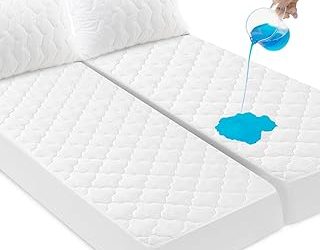
A waterproof mattress protector is especially important for heavier sleepers because perspiration increases with body mass, and moisture accelerates foam breakdown. A breathable protector adds a layer of defense without significantly altering the feel of the comfort layer underneath.
Final Thoughts
For the best overall combination of durability, ergonomic support, and value, the BedStory Firm Hybrid and the Luxury Hotel 18 Inch Hybrid lead the pack—their coil systems and zoned construction are built to endure. Budget-conscious shoppers should start with the Sleepmax Hybrid, which punches well above its price in build quality and comes with a full year to test it risk-free.