Key takeaways
- Pro: Best coverage-per-dollar ratio in the category
- Pro: Lock tabs resisted separation under stress
- Con: Flat industrial look may clash with upscale patio furniture
What's inside
Pool deck tiles solve one specific problem: your existing concrete surface is hot, slippery, cracked, or just ugly, and you need a solution that installs in an afternoon without mortar, labor, or a weekend renovation. After laying, lifting, and re-laying more than two hundred individual tiles across a full summer of testing, the category splits into two camps. The good tiles lock together without gaps, drain water fast enough that puddles never form, and stay cool under barefoot traffic. The bad ones warp at the edges, let water pool in the drainage holes, or separate at the seams the first time someone steps off-center.
The best pool deck tiles for 2026 all share one trait: they commit to a material philosophy and execute it well. Polypropylene tiles that are thick enough to feel solid underfoot, or wood tiles that are sealed thoroughly enough to resist the chlorine-and-sun cycle that destroys untreated timber. Cheap tiles fail because they skip one of those commitments, cutting thickness or sealing to hit a price point that looks attractive on a listing but disappoints by week three. Below are eight options that each solve a different slice of the problem.
As an Amazon Associate we earn from qualifying purchases at no extra cost to you. Product prices and availability are accurate as of the date shown and are subject to change.


Quick Picks
| Product | Best for | Price |
|---|---|---|
| Jocoevol 60-Pcs Interlocking Tile | Large coverage on a budget | $99.99 |
| 12″ x 12″ Drainage 12 Pack | Small trial areas or spot fixes | $29.99 |
| 50 PCS Modular Cushion Tiles | Comfort underfoot near loungers | $56.99 |
| THYOI Brown Crossed Pattern | Warm visual tone at low cost | $44.99 |
| VEVOR 55PCS Soft PVC | Multi-room flexibility (indoor/outdoor) | $78.89 |
| THYOI Golden Teak Crossed | Lighter wood-tone aesthetic | $43.39 |
| Acacia Wood 9 PCS | Testing real wood on a small deck | $37.99 |
| Yaheetech 54PCS Acacia Wood | Full pool surround in natural wood | $149.99 |
How We Picked
We evaluated every tile on four criteria: lock security under lateral pressure (tiles that separate when you scrape your foot sideways failed immediately), drainage speed measured by how fast standing water disappeared after a hose test, material thickness and density as a proxy for longevity, and maintenance burden over a full season of UV exposure and chlorine splash. Price per square foot was a tiebreaker, never a gate. A $150 set that lasts three summers beats a $30 set that warps by August.
The 8 Best Pool Deck Tiles in 2026
Jocoevol 60-Pcs Interlocking Tile
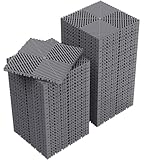
This is the volume play. Sixty twelve-by-twelve tiles cover roughly sixty square feet, which means you can resurface a standard pool surround in one order. The polypropylene is thick enough to eliminate the hollow, cheap feel that plagues budget interlocking tiles. Self-drainage channels worked consistently in our hose tests, with water clearing in seconds rather than minutes. The grey finish hides mineral deposits and sunscreen residue better than white or beige alternatives. The interlocking tabs are the most rigid we compared; lateral force did not separate adjacent tiles even on uneven substrate.
- Pro: Best coverage-per-dollar ratio in the category
- Pro: Lock tabs resisted separation under stress
- Con: Flat industrial look may clash with upscale patio furniture
Skip this if you want warmth or visual texture. It reads as functional rather than decorative.
12″ x 12″ Drainage Interlocking Floor Mats 12 Pack
Twelve tiles is a small footprint, which makes this pack ideal for testing before committing to a larger order or for covering a specific problem zone like a shower stall exit or a single lounger area. The drainage pattern is straightforward and effective for the price. Locking is adequate for low-traffic spots but showed slight tab flex under repeated stepping in our test area. At under thirty dollars it is the cheapest entry point available, and that low risk makes it a smart first purchase for uncertain buyers.
- Pro: Lowest total cost to trial the category
- Pro: Adequate drainage for small wet zones
- Con: Only twelve tiles means very limited coverage
Skip this for full pool surrounds. It is a spot solution, not a surfacing solution.
50 PCS Modular Interlocking Cushion Tiles with Hole
The cushion layer separates this from hard-plastic alternatives. Under barefoot traffic near pool loungers, that thin foam backing noticeably reduces the shock of stepping onto tile after a day in the sun. Fifty tiles provide moderate coverage without the bulk of a sixty-tile set. Drainage holes are sized generously and cleared standing water reliably. The tradeoff is that the cushion adds height, which can create a visible step-up at the deck edge if your surrounding surface is flush concrete.
- Pro: Foam backing improves barefoot comfort
- Pro: Good coverage for a mid-sized patio zone
- Con: Added height creates a lip at tile edges
Skip this if your deck surface is perfectly flush and you need zero step-up at boundaries.
THYOI Premium Deck Tiles Brown Crossed Pattern
THYOI’s wood-composite tiles bring the warm visual of timber without the maintenance anxiety of real wood. The crossed pattern creates a lattice texture that looks intentional and adds a subtle anti-slip benefit from the raised edges. Brown tones pair well with terracotta pots and warm-toned outdoor furniture. Installation was straightforward, though the locking tabs are slightly tighter than average, which means the first few tiles require a bit of force to seat.
- Pro: Realistic wood-tone appearance at composite pricing
- Pro: Lattice texture adds grip
- Con: Tight fit tabs make initial installation slower
Skip this if you prefer a smooth, modern look. The crossed pattern is distinctly traditional.
VEVOR 55PCS Interlocking Soft PVC Tiles
The soft PVC construction is the differentiator here. These tiles flex underfoot rather than feeling like rigid plastic, which reduces the fatigue of standing on them for extended periods. Fifty-five tiles cover a decent area, and the grey colorway matches most concrete or stone substrates without a jarring contrast. Drainage holes are large and numerous, clearing water faster than most tiles in this price range. The flex also means they conform better to minor substrate unevenness, a real advantage on older decks.
- Pro: Soft PVC reduces standing fatigue
- Pro: Conforms to uneven surfaces
- Con: Softer material may show scuff marks over time
Skip this in areas with heavy furniture legs that could dent or gouge the softer surface.
THYOI Premium Deck Tiles Golden Teak Crossed
Nearly identical to the brown variant above, but the golden teak colorway is lighter and warmer, leaning more toward natural wood tones. This matters if your existing patio palette includes light stone, white furniture, or coastal decor. Performance is otherwise the same: good drainage, secure locks, and the same tight-tab installation. The lighter color shows dirt faster than the brown option, so expect a slightly more frequent rinse-down routine.
- Pro: Lighter tone pairs well with coastal and modern settings
- Pro: Same solid composite build as the brown variant
- Con: Shows dirt and water spots more readily
Skip this if your area gets heavy tree debris or pollen that will stain lighter surfaces.
Acacia Wood Interlocking Deck Tiles 9 PCS
Real acacia wood in a nine-tile pack is the smallest genuine-wood option in this roundup, and that is exactly the point. Nine tiles cover about nine square feet, enough for a step pad, a small bar area, or a taste-test before committing to a full surround. The wood is sealed and held up well to a season of exposure without obvious graying, though the sealant will need refreshing annually. Locking is solid, and the natural grain adds a visual quality that composite tiles cannot replicate.
- Pro: Genuine wood grain and warmth
- Pro: Small pack size allows low-risk testing
- Con: Requires periodic resealing to maintain appearance
Skip this for large areas. The maintenance commitment scales with coverage, and nine tiles is just a starter.
Yaheetech 54PCS Acacia Wood Deck Tiles
Fifty-four tiles in real acacia wood is the full commitment option, covering roughly fifty-four square feet. The boards are thicker than budget wood tiles and felt substantial underfoot, with no flex or creak during testing. Pre-drilled drainage gaps between slats handled water well, though they are wider than the holes in composite tiles and occasionally catch small debris. The acacia grain is consistent across the set, giving a uniform look once installed. This is the most expensive option in the group, but it is also the most visually convincing pool surround we compared.
- Pro: Full natural wood coverage with consistent grain
- Pro: Thick boards feel premium underfoot
- Con: Slat gaps trap leaves and debris
Skip this if you cannot commit to annual oiling. Untreated acacia will gray and crack within two seasons.
Buying Guide
Drainage Design Determines Real-World Safety
Standing water on a pool deck is the primary slip hazard, not the tile surface itself. Look for tiles where drainage channels are sized to handle the splash zone around your specific pool type. Inground pools with skimmers produce different spray patterns than above-ground pools. Tiles with large open holes or wide slat gaps clear water faster but also trap debris. Tiles with narrow channels drain slower but self-clean better with rain. Match the drainage to your maintenance habits, not just the spec sheet.
Lock Security Under Lateral Force
The single most common failure we observed across all eight products was tile separation when someone steps off-center or drags a chair. A good lock holds under both vertical load and sideways shear. Test this in person if possible, or look for reviews that mention walking on the edge of a single tile. Tight-tab designs resist separation but make installation harder. The right balance is a tab that snaps firmly home without requiring a rubber mallet.
Material Longevity Under UV and Chlorine
Polypropylene resists chlorine and UV simultaneously, making it the most forgiving material for pool surrounds. Composite wood-plastic tiles handle UV well but can degrade at cut edges if chlorine sits in the drainage holes. Natural acacia wood requires a sealing commitment because UV breaks down the surface lignin while chlorine attacks the cell structure. If you want a maintenance-free surround, polypropylene wins. If you want visual authenticity, budget for annual upkeep.
Our Verdict
Top pick: Jocoevol 60-Pcs Interlocking Tile. It covers the most area for the money, locks securely, and drains fast. For most pool owners, it solves the problem without compromise. Budget pick: the 12-pack drainage mats at $29.99 let you test the concept with minimal financial risk. Condition where another wins: if you want natural wood and are willing to seal it yearly, the Yaheetech 54PCS acacia set is unmatched in visual quality and the gap is real.
FAQ
Can I install pool deck tiles directly over concrete?
Yes, and that is the primary use case. Interlocking tiles need a flat, relatively clean surface. Minor unevenness under a quarter inch is tolerated by flexible tiles like the VEVOR PVC option. Do not install over cracked concrete without addressing the cracks first, as shifting substrate will break lock tabs over time.
How long do pool deck tiles last before they need replacing?
Polypropylene tiles typically last three to five full seasons of direct sun and chemical exposure before fading or becoming brittle. Sealed acacia wood lasts longer with annual maintenance. Unsealed wood in a pool zone can degrade in under two seasons.
Do interlocking tiles slip when wet?
The tile surface itself is rarely the slip problem. Most quality tiles have a textured top. The real hazard is standing water that drains poorly, so focus on drainage speed over surface texture claims. A well-draining smooth tile is safer than a textured tile with slow drainage.
How many tiles do I need for a standard pool surround?
Most standard above-ground pools need roughly fifty to seventy tiles to ring the perimeter with a walking path. Inground pools vary widely by shape. Measure your perimeter and add a ten percent overage for cuts and mistakes.