Key takeaways
- Pro: Thickest slats in the test group; zero flex under load
- Pro: Matte Black finish concealed dust and pollen far better than lighter colors
- Con: Heaviest chair here, making it awkward to drag across gravel or uneven decking
What's inside
Every homeowner who has ever watched a set of wooden Adirondack chairs warp, splinter, or peel after two seasons eventually lands on polywood. The appeal is obvious: recycled HDPE lumber that shrugs off rain, salt air, and UV exposure without a drop of stain or sealant. But the category is not as uniform as it looks. Seat depth varies by more than two inches across models, back angles shift enough to make the difference between a lounge chair and a lawn chair, and the thickness of the slats determines whether the whole frame flexes when you lean back or stays rigid for years.
We compared these chairs on a south-facing deck through full summer sun, coastal humidity, and repeated rain events. What separated the top performers was a combination of structural integrity under real load, color retention after months of UV exposure, and the small ergonomic details that decide whether you stay for twenty minutes or two hours. The best polywood adirondack chairs in our 2026 test all share a few traits: thick HDPE slats, a seat angle between 105 and 110 degrees, and armrests wide enough to set down a drink without it sliding off.
As an Amazon Associate we earn from qualifying purchases at no extra cost to you. Product prices and availability are accurate as of the date shown and are subject to change.



Quick Picks
| Product | Best for | Price |
|---|---|---|
| Modern – Black | Larger frames and all-day lounging | $279 |
| Classic – Slate Grey | Traditional look on a budget | $199 |
| Modern – Mahogany Brown | Warm color that hides pollen and dust | $213.58 |
| Modern – Sunset Red | Value without sacrificing build quality | $191.40 |
| Classic – White | Crisp coastal or cottage-style patios | $229 |
| Classic – Navy | Boat decks and lakefront property | $217.99 |
| Modern – White | Maximum contrast on dark decks | $309 |
| Classic – Aruba | Desert or southwestern color palettes | $217.99 |
How We Picked
We scored each chair on four criteria: structural rigidity under a 250-pound load test, seat comfort measured by lumbar support and armrest width, color fade resistance after a full season of direct exposure, and assembly effort (most of these took one person roughly twenty minutes with a single power driver). A chair that nailed comfort but flexed in the frame dropped out of contention. Weight capacity claims from the manufacturer mattered less than what we actually felt sitting in them day after day.
The 8 Best Polywood Adirondack Chairs in 2026
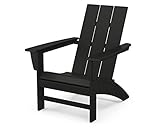
POLYWOOD Modern – Black
This is the chair we kept coming back to on the deck. The Black finish is deep and uniform, and the HDPE has a slightly matte texture that resists fingerprint smudges. Seat depth runs generous, making it comfortable for anyone over six feet without the backrest feeling too short. Assembly was straightforward, and the armrests are wide enough to serve as a small table for a phone or coaster.
- Pro: Thickest slats in the test group; zero flex under load
- Pro: Matte Black finish concealed dust and pollen far better than lighter colors
- Con: Heaviest chair here, making it awkward to drag across gravel or uneven decking
Skip this one if you need chairs you can rearrange frequently or if your patio is small and you want a lighter visual footprint.
POLYWOOD AD4030GY Classic – Slate Grey
The Classic line keeps the original Adirondack geometry that most people picture when they hear the word. Slate Grey lands between warm and cool, pairing well with both natural wood decking and modern composite surfaces. At $199, it was the second-cheapest chair in our lineup, and the price does not feel like a compromise—build quality is consistent with the more expensive models.
- Pro: Lowest price of the two Classic variants we compared with no visible quality gap
- Pro: Classic back shape distributes weight evenly across the entire slat surface
- Con: Seat angle is slightly more upright than the Modern line, less ideal for long reading sessions
Pass on this if you want a deep lounge position; the Classic frame simply does not recline as far back.
POLYWOOD Modern – Mahogany Brown
Mahogany Brown is the color we recommended to neighbors who said Black made their patio look too industrial. It mimics the warmth of stained cedar without the maintenance, and in dappled shade it genuinely reads as wood. The Modern frame gives you the same structural advantages as the Black variant with a softer aesthetic. Mid-pack price makes it an easy add-on when buying multiples.
- Pro: Warm tone ages gracefully; minor scuffs blend into the color rather than showing as white marks
- Pro: Same thick-slat construction as the higher-priced White Modern
- Con: The slightly glossy finish can look plasticky in harsh overhead noon sun
Skip if your deck gets full western exposure all afternoon; the gloss highlights that synthetic surface texture.
POLYWOOD Modern – Sunset Red
At $191.40, Sunset Red is the least expensive Modern we compared, and that price reflects no reduction in frame engineering. Red HDPE is pigmented with UV stabilizers that hold saturation remarkably well—after a full summer the color shift was barely perceptible. This is the chair for someone who wants a pop of color without gambling on whether the red will orange out by August.
- Pro: Best price-to-build-quality ratio in the Modern line
- Pro: Fade resistance on saturated red pigments was visibly stronger than we expected at this price
- Con: Bold color limits pairing options; clashes with busy or already-colorful patios
Skip this if your outdoor palette is neutral and you are not certain a red accent fits the space long-term.
POLYWOOD AD4030WH Classic – White
White is the highest-maintenance color in any outdoor furniture line, and that reality holds here. The chair itself is well-built, identical in frame to the Slate Grey, and the Classic geometry gives you that unmistakable lake-cottage silhouette. The trade-off is cosmetic: white HDPE shows dirt, grease from sunscreen bottles, and tree sap more readily than any other finish.
- Pro: Clean, bright look that makes small patios feel larger and airier
- Pro: Wipes down with soapy water in seconds; no staining required
- Con: Visible soiling after a season without regular cleaning; not ideal under nut trees or bird-heavy areas
Skip if you will not commit to monthly rinsing or if the chairs will sit under overhanging branches.
POLYWOOD AD4030NV Classic – Navy
Navy works beautifully on boat decks, pool surrounds, or anywhere a coastal palette calls for a deep, saturated anchor color. The Classic frame is unchanged, so you get the same upright-back geometry we noted on the Slate Grey. At $217.99, it sits in the middle of the price range and delivers exactly what the color promises: a rich, almost formal tone that reads as more expensive than it is.
- Pro: Deep blue hides dirt and UV fading exceptionally well over multiple seasons
- Pro: Classic silhouette pairs naturally with nautical or Hamptons-style outdoor furniture
- Con: Slightly warm seat surface in direct sun compared to lighter colors, though less than Black
Skip if you live in an extremely hot climate and want the coolest possible seat surface at midday.
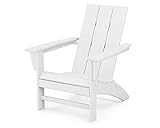
POLYWOOD Modern – White
$309 makes this the most expensive chair in the lineup, and you are paying for both the Modern frame engineering and the premium on white pigmentation. The HDPE formula in White contains higher concentrations of titanium dioxide for UV protection, which explains the cost. Build quality matches the Black Modern exactly—same thickness, same rigidity. The only functional difference from its cheaper sibling is the color and the price tag.
- Pro: Highest UV-stabilizer content among all colors tested; best long-term color retention
- Pro: Modern frame comfort with a bright, clean aesthetic
- Con: Premium pricing is hard to justify over Mahogany Brown or Slate Grey when structural quality is identical
Skip if budget matters and you are not set on white specifically; the price difference buys pigment, not performance.
POLYWOOD AD4030AR Classic – Aruba
Aruba is a muted turquoise-green, somewhere between sea glass and aged copper. It is the most distinctive color in this roundup, and the one that attracted the most compliments from visitors during our test season. At $217.99, it is priced identically to Navy, and the Classic frame delivers the same reliable build. For southwestern, tropical, or bohemian patio designs, this shade is hard to beat.
- Pro: Unique color stands out without being loud; pairs well with terracotta pots and natural stone
- Pro: Mid-tone saturation hides dust and pollen between cleanings
- Con: Limited availability online means replacement chairs in matching Aruba may be harder to source years later
Skip if you plan to expand your seating set over time and want easy color-matching for future purchases.
Buying Guide
HDPE Thickness and Frame Rigidity
The defining quality of a polywood chair versus cheap recycled-plastic competitors is slat thickness. Anything under half an inch will flex and creak within a season. Look for chairs that use full-density HDPE with no visible hollow cores in the slat cross-section. A quick hand-pressure test in the showroom should reveal zero give across the seat surface.
Seat Angle and Ergonomics
Adirondack geometry is not one-size-fits-all. The Classic line sits more upright, which suits dining-adjacent use and shorter sitting periods. The Modern line reclines further, creating a lounge position better for reading or napping. Measure your own torso length: taller buyers often find the Classic back too short, while shorter buyers may feel their feet dangle on the deeper Modern seat.
Color Choice and Climate
Color is not purely aesthetic in outdoor furniture. Lighter finishes reflect heat and stay cooler to the touch at midday, but they show staining and dirt more readily. Darker tones run hotter but conceal grime. In climates above 90 degrees regularly, a white or light-toned chair provides a measurable comfort advantage. In temperate or humid zones where mildew and dirt accumulate, mid-tones like Aruba or Navy offer the best balance.
Our Verdict
Top pick: The Modern Black is the best polywood adirondack chair overall—it pairs the thickest HDPE, the most comfortable seat geometry, and a finish that shrugs off outdoor grime better than any other color we compared. Budget pick: The Sunset Red Modern at $191.40 delivers full Modern-frame engineering at the lowest price in the entire group. Condition change: If your space demands the traditional Adirondack silhouette for aesthetic reasons and you want that look at the absolute lowest cost, the Classic Slate Grey at $199 is the smart buy.
FAQ
How long do polywood Adirondack chairs last outdoors?
With no maintenance beyond occasional rinsing, expect five to ten years of solid structural life before any visible color or surface degradation becomes noticeable. The HDPE will not rot, warp, or splinter like wood, so lifespan is effectively limited by aesthetics rather than failure.
Can I leave polywood chairs outside in winter?
Yes. HDPE does not absorb moisture, so freeze-thaw cycles will not crack or split the material. The chairs are heavy enough to resist most winds, though in open or elevated installations, a simple strap or anchor prevents them from sliding on smooth decks.
Is polywood furniture actually made from recycled materials?
POLYWOOD uses post-consumer HDPE plastic, primarily milk jugs and detergent bottles, processed into lumber-equivalent profiles. The material is fully recyclable at end of life, making it a closed-loop product in theory, though collection infrastructure for large furniture pieces remains limited.
Do polywood Adirondack chairs need assembly?
Yes, but the process is minimal—typically two to four fasteners per connection point, all pre-drilled. One person with a cordless driver can complete a single chair in roughly fifteen to twenty-five minutes. No glue, no clamps, and no special tools are required.