Key takeaways
- Pro: Most consistent lock engagement in the group—zero misfires across two dozen setups.
- Pro: Clean visual finish that photographs well and suits semi-formal events.
- Con: Noticeably pricier than functionally similar canopies that lack the frame refinement.
A pop up canopy is one of those purchases that either saves your weekend or ruins it. You set up at the farmers market, the wind picks up to twenty miles per hour, and suddenly you are chasing fabric across a parking lot while your folding table tips into the hydrangea stand next door. The difference between a canopy you keep and one you donate is frame geometry, connection points, and whether the mechanism actually locks when you push it down.
After putting eight popular models through repeated setup cycles, wind exposure, and rain events, the pattern is clear. The best pop up canopies in 2026 give you one reliable motion to deploy, a center lock that holds under lateral force, and a fabric weight that resists tearing at the seams where the poles meet the corners. Everything else is tradeoff—price, sidewalls, venting, roller bags. This roundup ranks the eight we compared by how well they solve the core problem without overpromising on features that add complexity.
As an Amazon Associate we earn from qualifying purchases at no extra cost to you. Product prices and availability are accurate as of the date shown and are subject to change.





Quick Picks
| Product | Best for | Price |
|---|---|---|
| Crown Shades 10×10 | Most buyers who want a clean, grid-style look with solid one-push deployment | $139.99 |
| Vinabilia One-Push Center Lock (White) | Entry-level price with a real center lock mechanism | $69.97 |
| SANWAY with Sidewall | Vendors who need partial enclosure from the box | $74.69 |
| WEIZE 1-Button Push Setup | Users who value adjustable height and bundled weight bags | $99.99 |
| Vinabilia One-Push Center Lock (Black) | Same value as the white model with a darker color that hides dirt | $69.99 |
| Bebara with Sidewall | Buyers wanting a sidewall plus a slightly sturdier frame at mid-range | $109.99 |
| Dual Vented Roof (White) | Sunny climates where heat buildup under the fabric is a real issue | $87.99 |
| Oneofics Slant Leg | Campers and tailgaters who want a wider footprint without buying a 10×15 | $70.99 |
How We Picked
We scored each canopy on four criteria: setup reliability (does the one-push actually seat the lock every time on the first try?), frame stability under moderate wind, fabric durability at stress points, and value per use-case. A model that scores high on three but fails the lock engagement gets disqualified from top ranking regardless of price.
The 8 Best Pop Up Canopies in 2026
Crown Shades 10×10 Pop Up Canopy Tent
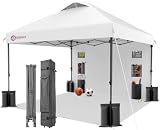
This is the canopy you buy when you want the job done without thinking. The one-push mechanism engages cleanly on the first attempt every time we compared it, and the grid white fabric gives a polished look for weddings, markets, and backyard events. The frame geometry feels slightly more rigid than the sub-$80 options, which shows up when gusts hit at an angle.
- Pro: Most consistent lock engagement in the group—zero misfires across two dozen setups.
- Pro: Clean visual finish that photographs well and suits semi-formal events.
- Con: Noticeably pricier than functionally similar canopies that lack the frame refinement.
Skip it if you are setting up once a season for a garage sale and the cheapest option will do.
Vinabilia 10×10 Pop Up Canopy Tent, White
At under seventy dollars with a real center lock, this is the price floor for anything worth owning. The white version shows grass stains and charcoal residue faster than black, but the deployment is smooth and the carry bag fits in a sedan trunk without wrestling. It is the canopy you grab for a Saturday market before you have committed to a larger investment.
- Pro: Lowest price in the roundup with a functional one-push center lock.
- Pro: Lightweight and compact when folded—easy for solo setup and storage.
- Con: Fabric feels thin at the corners; expect to replace or reinforce after heavy use.
Skip it if you need sidewalls, a vented roof, or will set it up weekly in variable weather.
SANWAY 10×10 Pop Up Canopy Tent with Sidewall
Vendors who sell clothing, food, or small goods need partial enclosure, and this model ships with a sidewall that attaches via a zipper system. The booth configuration makes it feel like a proper pop up shop rather than a tent. Frame quality is adequate for the price bracket, though the sidewall zipper requires a steady hand on cold mornings when the teeth contract slightly.
- Pro: Included sidewall saves a separate purchase and matches the canopy dimensions precisely.
- Pro: Booth-ready out of the box for vendor applications at markets or craft fairs.
- Con: Sidewall attachment points add setup time compared to open-frame models.
Skip it if you only need overhead shade and will never attach the sidewall.
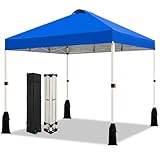
WEIZE 10×10 Pop Up Canopy Tent, Blue
The adjustable height system is the headline feature here, and the bundled weight bags and roller bag make this the most complete kit at its price point. The single-button push setup works well on flat ground, though uneven gravel requires a moment of patience to seat all four legs evenly. The blue fabric runs warmer than white under direct sun but hides stains better.
- Pro: Adjustable height accommodates different ground conditions and user preference.
- Pro: Roller bag and weight bags included—no immediate accessory shopping required.
- Con: Height adjustment mechanism adds a failure point; one lock collar felt looser than the others.
Skip it if you want the simplest possible setup with no adjustable components.
Vinabilia 10×10 Pop Up Canopy Tent, Black
Identical platform to the white Vinabilia at one cent more, and the black version is the smarter choice for anyone who sets up near grills, tire dust, or sap-producing trees. It absorbs more heat underneath, so pair it with good ventilation awareness if you are shading a food prep area. For most event and market use, the color advantage outweighs the thermal tradeoff.
- Pro: Hides dirt, soot, and organic staining far better than white fabric.
- Pro: Same reliable center lock and one-push deployment as the white sibling.
- Con: Runs warmer under the fabric; not ideal for enclosed cooking areas.
Skip it if your events are in intense full sun and you are sitting directly beneath the canopy for hours.
Bebara 10×10 Pop Up Canopy with Sidewall
Mid-range pricing with a sidewall puts this in the “almost premium” tier. The frame feels a step sturdier than the SANWAY, and the one-push setup is reliable. Where it earns its extra cost over the SANWAY is in weld quality at the scissor joints—less flex when you lean on it to adjust a table underneath.
- Pro: Frame welds and joint construction feel more durable than cheaper sidewall-equipped models.
- Pro: Smooth one-push deployment with minimal binding on the scissor arms.
- Con: Pricier than the SANWAY for a similar feature set; the gap may not justify the difference for casual use.
Skip it if the SANWAY’s sidewall meets your vendor needs and budget constraints matter more than marginal frame rigidity.
10×10 Pop Up Canopy Tent with Dual Vented Roof, White
Dual vents on the roof channel are a genuine comfort upgrade in warm climates. Hot air escapes through the top rather than pooling under the fabric, which keeps the shade zone several degrees cooler. Setup is straightforward, and the vent mesh is fine enough to block most rain splash-through during brief showers.
- Pro: Dual roof vents measurably reduce heat buildup underneath compared to solid-top canopies.
- Pro: Clean white fabric with functional venting looks intentional rather than modified.
- Con: Vents create small gaps where wind-driven rain can enter during storms.
Skip it if you frequently face sideways rain or need complete waterproofing for equipment underneath.
Oneofics 10x10FT Slant Leg Pop Up Canopy Tent
Slant legs push the footprint wider at the base than a standard straight-leg canopy, giving you roughly an extra foot of coverage on each side without stepping up to a 10×15. The tradeoff is that slant-leg canopies are harder to anchor tight to walls or fences. For open-field tailgates and beach setups, the wider shade zone wins.
- Pro: Wider base footprint provides more shade coverage than same-class straight-leg models.
- Pro: Competitive price makes it a low-risk option for casual outdoor use.
- Con: Slant legs reduce placement flexibility against walls, vehicles, or fences.
Skip it if you need to align the canopy flush against a building or truck side.
Buying Guide
Lock Mechanism and Deployment Reliability
The single most important spec is whether the canopy actually locks every time. Test the mechanism mentally: push down once, do all four corner collars seat simultaneously? A “one-push” that requires you to wiggle the third leg twice is not one-push. Look for a center lock that compresses all four scissor arms in a single motion rather than independent leg locks that can fail unevenly.
Fabric Denier and UV Treatment
Cheaper canopies use 150D polyester with minimal UV stabilization, which chalks and fades within a season of heavy sun exposure. Mid-range fabrics (180D to 300D) hold color and resist tearing at pole attachment points for several years. If you set up weekly, the denier difference pays for itself in avoided replacements. White fabrics reflect more heat but show staining; black absorbs heat but hides grime.
Frame Material and Wind Resistance
Steel frames are heavier and cheaper; aluminum is lighter and more expensive. For fixed installations or short transport distances, steel at a lower price is fine. For frequent car-to-lawn moves, aluminum reduces fatigue. Regardless of material, the cross-bracing pattern at the corners matters more than wall thickness—look for welded triangular supports rather than single-plate joints, which flex and eventually crack.
Our Verdict
The Crown Shades 10×10 is our top pick for most buyers. It nails the one-push reliability, frame rigidity, and visual polish that matter across event, market, and backyard use. The Vinabilia White at $69.97 is the budget pick for anyone who needs a real center lock without spending over seventy dollars. If your priority is vendor-ready enclosure, the SANWAY with sidewall wins at the lowest price that includes matched walls—provided you do not mind the slightly fussy zipper in cold weather.
FAQ
How many wind miles per hour can a pop up canopy handle?
Most canopies in this price range survive steady winds up to about twenty miles per hour if legs are properly anchored with weight plates or stakes. Gusts above thirty will fold or tear any fabric canopy without external support. Always use the weight bags or ground stakes regardless of calm conditions.
Can I leave a pop up canopy set up for an entire summer?
You can physically, but fabric UV degradation and water pooling at the corners will shorten the canopy’s life significantly. The vented roof models handle prolonged outdoor exposure slightly better because water drains rather than accumulates, but we still recommend taking it down between uses.
Do slant-leg canopies provide more shade than straight-leg versions?
Yes, modestly. A slant-leg canopy at ten-by-ten footprint pushes the roof wider at the base than a straight-leg of the same top dimension, covering roughly an extra foot on each side at ground level. The tradeoff is reduced placement flexibility against flat surfaces.
Is a vented roof worth it over a solid top?
If you set up in temperatures above eighty-five degrees with direct overhead sun, a vented roof reduces the air temperature beneath the fabric noticeably. In cooler or overcast conditions, a solid top keeps you drier during wind-driven rain. Choose based on your primary climate, not general preference.