Key takeaways
- Hinge and dome assist: A ceramic lid weighs 30–50 lb. Spring or counterweight assistance is the difference between one-handed peeking and a two-person job — and it protects the gasket from slamming.
- Gasket and band hardware: Look for a felt or fiberglass gasket you can source as a replacement part, plus stainless band bolts. Rusted carbon-steel bands are the most common structural failure on budget kamados.
- Ash management: Slide-out drawers and dedicated ash tools keep airflow consistent across a 14-hour cook. Grills that require you to rake ash out through the lower vent choke themselves overnight.
- Cart and caster quality: Check caster diameter and whether at least two lock. Small hard wheels bind on pavers and flagstone; locking casters stop the grill drifting while you lean on a shelf.
- Multi-level cooking and deflectors: Two-tier grids and a two-piece heat deflector let you run indirect heat without lifting a full grate of meat to reach the coals — the single biggest ergonomic win in real use.
What's inside
The Kamado Joe Classic Joe Series II is the best overall kamado ceramic grill for serious low-and-slow barbecue, with the Primo Large Round Ceramic Kamado as runner-up. The Classic Joe II earns it on ergonomics: an air-lift hinge that drops dome lifting effort to a few pounds, a sliding ash drawer that saves you from scooping hot debris by hand, and a divide-and-conquer rack system that adjusts without you reaching into a 250°F chamber.
Most kamado buyers shop on cooking area and wall thickness, then discover the parts that actually fail: a gasket that cooks off in one season, a stamped cart whose casters seize in wet grass, a hinge that needs two hands and a prayer at hour eleven of a brisket. After years of assessing outdoor gear for load paths, fastener quality, and repeated thermal cycling, my filter is simple — how much effort does the grill demand from your body, and which components can you replace when they wear out? This guide ranks six ceramic kamados on that basis, from patio-sized to competition-grade.
As an Amazon Associate we earn from qualifying purchases.




Quick Comparison
| Product | Best For | Standout Feature | Rating |
|---|---|---|---|
| Kamado Joe Classic Joe II 18″ | All-round low-and-slow | Air-lift hinge and slide-out ash drawer | Excellent |
| VEVOR 18″ Kamado Smoker | First-time kamado owners | Four wheels, two lockable, on a full cart | Very good |
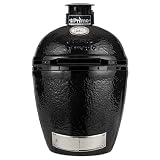
| Primo Large Round Kamado PGCRH | Long-haul durability | American-made ceramic body | Excellent |
| London Sunshine 15″ Kamado | Balconies and small patios | Locking casters and folding shelves | Good |
| Saffire Carbon Kamado 19″ | Precision smoke control | Smokin’ Chip Feeder and crucible firebox | Very good |
How to Choose a Kamado Ceramic Grill for Serious Low-and-Slow Barbecue
- Hinge and dome assist: A ceramic lid weighs 30–50 lb. Spring or counterweight assistance is the difference between one-handed peeking and a two-person job — and it protects the gasket from slamming.
- Gasket and band hardware: Look for a felt or fiberglass gasket you can source as a replacement part, plus stainless band bolts. Rusted carbon-steel bands are the most common structural failure on budget kamados.
- Ash management: Slide-out drawers and dedicated ash tools keep airflow consistent across a 14-hour cook. Grills that require you to rake ash out through the lower vent choke themselves overnight.
- Cart and caster quality: Check caster diameter and whether at least two lock. Small hard wheels bind on pavers and flagstone; locking casters stop the grill drifting while you lean on a shelf.
- Multi-level cooking and deflectors: Two-tier grids and a two-piece heat deflector let you run indirect heat without lifting a full grate of meat to reach the coals — the single biggest ergonomic win in real use.
The Best Kamado Ceramic Grills for Serious Low-and-Slow Barbecue Reviewed
Best Overall: Kamado Joe Classic Joe Series II 18-inch
The Classic Joe II pairs 250 square inches of primary grate with the best hardware package at this size: air-lift hinge, sliding ash drawer, and stainless grates on a stable cart. It suits the cook who runs overnight briskets and pork butts regularly and wants a grill whose wear parts are all replaceable.
Best Budget: VEVOR 18″ Kamado Charcoal Smoker
VEVOR delivers thick ceramic, a built-in thermometer, and a four-wheel cart with two lockable casters at an entry price. It is the sensible choice for someone testing whether kamado cooking fits their routine before committing to premium hardware.
Best Premium: Primo Large Round Ceramic Kamado PGCRH
Primo’s American-made ceramic and heavy-gauge hardware are built for a decade of thermal cycling, and the parts pipeline is genuinely long-term. Choose it if you cook year-round in a harsh climate and want a body you will never think about again.
Best for Small Patios: London Sunshine 15-inch Kamado
At 15 inches with foldable side shelves and locking casters on a tall stand, this one works on balconies and narrow decks where a full-size kamado simply will not fit. Best for one or two people cooking ribs and chicken rather than whole packer briskets.
Best for Smoke Control: Saffire Carbon Kamado 19″
The Smokin’ Chip Feeder lets you add wood mid-cook without opening the dome, and the crucible firebox plus two-piece deflector give unusually stable indirect temperatures. Ideal for the cook who layers smoke deliberately across a long session.
Frequently Asked Questions
How long will a ceramic kamado actually last?
The ceramic body commonly outlasts 10–15 years with care. Gaskets, felt, and fireboxes are consumables — expect to replace a gasket every two to four seasons of heavy use.
Do I need a cover?
Yes. Trapped moisture inside the ceramic is what causes cracking on the first hard freeze, and covers also protect cart hardware and casters from corrosion.
Can one person move these safely?
Only on smooth, level surfaces. Ceramic kamados run 150–300 lb assembled; move them empty, unlock the casters, and push rather than pull across thresholds.What temperature range should I expect?
A well-gasketed kamado holds 225–250°F for 12 hours or more on a single load of lump charcoal, and will also reach searing temperatures above 600°F.
Final Thoughts
For most serious barbecue cooks, the Kamado Joe Classic Joe Series II offers the strongest blend of ergonomics and replaceable hardware, while the Primo Large Round is the buy-once choice for punishing climates. If space is the constraint, the London Sunshine 15-inch delivers real ceramic performance on a footprint that fits a balcony.