Key takeaways
- Ergonomic Keyboard and Mouse Tray: Installs underneath a…
- Compatibility: If installing to a height adjustable desk,…
- Deluxe Universal 25" x 10" Tray: Fits most…
Carpal tunnel syndrome rarely arrives overnight. It builds over months of typing with wrists bent upward and forearms unsupported, until the tingling and numbness in your fingers becomes impossible to ignore. The good news is that the biomechanics behind it are well understood, and the single most effective preventive change you can make in 2026 is to get your keyboard off the desktop and into a neutral position, either on an under-desk tray or behind a proper gel wrist rest.
This buyer’s guide explains what “neutral wrist posture” actually means, how to choose between an under-desk platform and a wrist-rest solution, and which features genuinely reduce strain. Whether you lean toward a full VIVO Adjustable Computer Keyboard & Mouse Platform Tray or a simpler Gimars Gel Memory Foam Keyboard Wrist Rest Set, the goal is the same: keep your wrists straight, not cocked back.
Our top picks


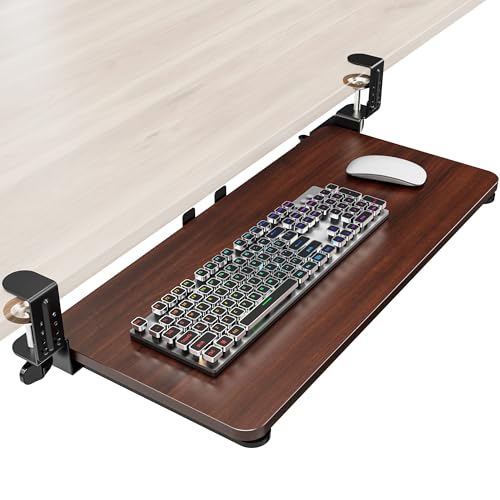
 VIVO Adjustable Computer Keyboard & Mouse Platform
- Ergonomic Keyboard and Mouse Tray: Installs underneath a…
- Compatibility: If installing to a height adjustable desk,…
- Deluxe Universal 25" x 10" Tray: Fits most…


As an Amazon Associate we earn from qualifying purchases at no extra cost to you. Ratings are shown as listed on Amazon.
⚡ Save on Your Next PC — Amazon Prime
Prime members get fast free shipping on the systems above, plus early access to Prime Day & Black Friday PC deals. New members get a 30-day free trial.
Watch: Ergonomic Keyboard Trays: A Buyer’s Guide for Carpal Tunnel Prevention — Video Review
Why Wrist Angle Matters
The carpal tunnel is a narrow passage in your wrist through which the median nerve runs. When you type with your wrists extended upward, that tunnel compresses and pressure on the nerve rises sharply. Research consistently shows that keeping the wrist within roughly 15 degrees of neutral dramatically lowers that pressure. A keyboard sitting flat on a standard-height desk almost forces the wrong angle, which is exactly the problem an ergonomic tray or wrist rest is designed to fix.
Under-Desk Tray vs. Wrist Rest
An under-desk keyboard tray, like the VIVO platform tray, mounts beneath your desktop and drops the keyboard 3 to 5 inches lower, letting your elbows fall to a relaxed 90-degree angle with wrists floating straight. It is the gold standard for prevention but requires screw-in mounting. A wrist rest is the no-install alternative: a gel or memory-foam pad that fills the gap under your wrists so they rest level instead of bending. For renters or shared desks, a rest such as the WENPIC Ergonomic Keyboard Stand with Wrist Rest is the practical pick.
Key Features to Look For
- Negative or flat tilt capability, so the tray angles slightly away from you and keeps wrists neutral.
- Gel or memory-foam padding that supports without creating a hard pressure point at the wrist crease.
- A separate mouse platform, so your mouse hand shares the same neutral plane as your typing hand.
- A non-slip base that keeps the rest from creeping forward during long sessions.
Material and Comfort Considerations
Gel wrist rests feel cool and contour firmly, while memory foam is softer and molds to your wrist over time. The Gimars Upgrade Enlarge Silky Gel Memory Foam Keyboard Wrist Rest Set combines both approaches with a fabric-topped memory-foam pad, and at under $15 it is an easy entry point. If you type all day, prioritize a rest tall enough to match your keyboard’s front-edge height, otherwise your wrists will still angle up over the keys.
Tips
- Set your keyboard so your elbows sit at 90 degrees and your wrists float level, not resting hard on the pad while typing.
- Use the wrist rest for pauses between bursts of typing, not as a constant anchor.
- Pair a keyboard tray with a matching mouse surface to avoid twisting one wrist upward.
- Take a 30-second stretch break every 30 minutes; no accessory replaces movement.
Frequently Asked Questions
Can a keyboard tray actually prevent carpal tunnel?
It cannot guarantee prevention, but by keeping your wrists in a neutral position it removes the main mechanical cause of nerve compression, which is the biggest modifiable risk factor for typists.
Should my wrists rest on the pad while I type?
No. The pad is meant to support your wrists during pauses. While actively typing, your wrists should hover just above it so your hands can move freely across the keys.
Gel or memory foam, which is better?
Gel offers firmer, cooler support that holds its shape; memory foam is softer and molds to you. Combination pads like the Gimars set give you both. Choose based on whether you prefer firm or plush.
Do I need a mouse wrist rest too?
If you mouse for long stretches, yes. Supporting only the typing hand leaves the mouse wrist bent, so a 3-in-1 keyboard-and-mouse rest set keeps both hands aligned.
Conclusion
Preventing carpal tunnel is far cheaper and easier than treating it, and the fix comes down to one principle: keep your wrists straight. If you can mount hardware, an under-desk tray like the VIVO platform is the most complete solution; if you cannot, a quality gel or memory-foam wrist rest set is a genuinely effective, sub-$40 safeguard. Combine either with regular movement breaks and your hands will thank you for years.